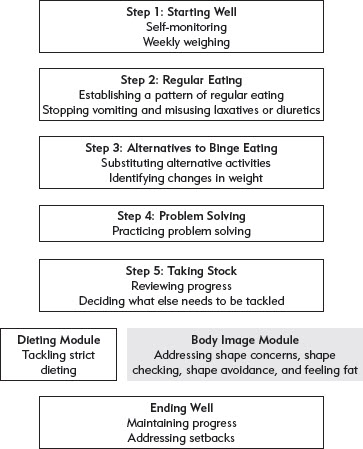
Most people who binge are concerned about their shape and weight. Indeed, these concerns may be so strong that their life becomes dominated by them—nothing else is of such importance. As I explained in Chapter 4, this “overconcern” plays a major role in maintaining many people’s binge eating problem. When this is the case it must be addressed. The starting point, therefore, is to consider whether you are concerned about your shape or weight, and to what extent.
IDENTIFYING OVERCONCERN ABOUT SHAPE AND WEIGHT
What does overconcern mean? To restate what was said in Chapter 4, it all centers on how you evaluate yourself. Whereas the majority of people evaluate themselves on the basis of how they are performing in various aspects of life (e.g., the quality of their relationships, their performance at work, their athletic accomplishments), people with eating problems judge their self-worth largely, or even exclusively, in terms of their shape and weight and their ability to control them. A good way of illustrating this is to draw a pie chart in which each slice represents an area of life that you value, its size being in proportion to its significance relative to other aspects of your life. Figures 27 and 28 show two such pie charts, one from a young woman with no eating problem and the other from someone with overconcern about shape and weight.
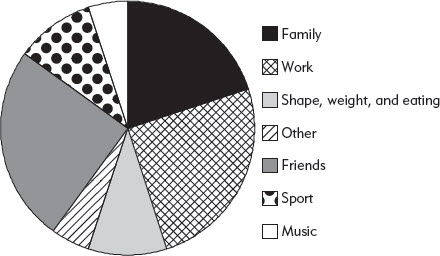
FIGURE 27. The pie chart of a young woman without an eating problem.
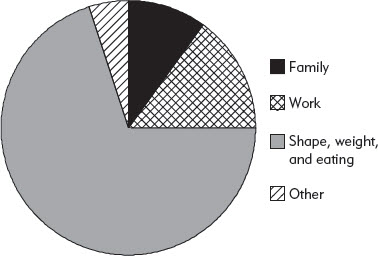
FIGURE 28. The pie chart of a young woman with an eating problem.
To assess your degree of concern about shape and weight try creating your own pie chart. This involves the following five steps:
1. List the things that are important to you in how you evaluate or judge yourself as a person. These are the things in which you try to perform well. To give you some ideas, they may include the quality of your relationships and friendships, your performance at work, your level of fitness, and your performance in other areas of life that you value. If you think carefully about this matter, your list may also need to include your shape and weight, assuming they are important to how you evaluate yourself as a person. Think hard about your list and be honest with yourself. Do not put things on the list just because you think that they ought to be there.
2. Rank the items on your list in terms of their relative importance. You may find this task difficult but you will discover a hierarchy embedded within your list. It is just a matter of detecting it. A good indication of the importance of a particular feature is how much time and energy you invest in it, as well as how much it would disturb you if this aspect of your life was not going well. For example, how much would it unsettle you if you were told your work was not up to standard? Would this bother you more or less than having an argument with your best friend, being dropped from your sports team, or discovering that an article of clothing was now too tight?
3. Draw your pie chart. Each item on your list should be allocated a slice, and its size should be in proportion to its importance in how you evaluate yourself. Make sure that your pie chart reflects how you really are, rather than how you think you ought to be.
4. Review your pie chart on several occasions over the next week. Is it accurate? Does it represent how you really do evaluate yourself? If it doesn’t, make whatever adjustments are appropriate.
5. Examine your pie chart and think about its implications. Is there a slice representing your shape or weight? If so, how big is it? Is it on the large side? If it occupies a third or more of your pie chart, you are almost certainly overconcerned about your shape or weight.
Overconcern about shape and weight is a problem for three main reasons. The first is that it is “risky” being largely dependent on one area of life to feel good about yourself. You have too many eggs in one basket. By this I mean that if this area of life is not going well, you will inevitably feel bad about yourself. The second reason why overconcern about shape and weight is a problem is that there will always be people who seem slimmer or more attractive than you. Therefore, if you judge your self-worth along these lines you will perpetually feel that you are failing. For these two reasons, and the fact that this overconcern plays a major role in maintaining your eating problem, it needs to be addressed. How to do so is the topic of this module. This said, even if you are not overconcerned about shape and weight, you might find aspects of this module of interest and value.
ADDRESSING OVERCONCERN ABOUT SHAPE AND WEIGHT
In principle, there are two ways of reducing overconcern about shape and weight. It is best to do both because they complement each other. The two strategies involve:
1. Increasing the importance of other areas of your life.
2. Decreasing the importance of shape and weight.
While doing this, it is absolutely essential that you continue to practice what you learned in Steps 1 through 4 of the program.
Increasing the Importance of Other Areas of Your Life
Look again at your pie chart. If you are overconcerned about your shape and weight, this will stand out because there will be a dominant slice representing this overconcern. Are there any other obvious problems with your pie chart? It is likely that there are two. First, as a result of having a dominant slice, there is likely to be little room for much else—to put this more clearly, if your pie chart is accurate, it is likely that you do not value much else other than your shape and weight. The second problem is that there may be few other slices (of whatever size) indicating that there is not much else in your life that you value.
Is this right?
Are you happy with this?
Is this the “real you”?
Both of these problems are worth addressing. It is helpful to get more into your life (i.e., more slices) and it is especially helpful if these new areas of life become important to you as a source of self-esteem (i.e., the new slices become big ones).
If you conclude you do need to get more into your life, you should follow the following three steps.
1. Identify potential new activities. Make a list of activities or interests that you used to enjoy, things that you think you might like to try, and things that you have been meaning to do. If you are struggling to come up with ideas, it might help to think what your friends, family, or colleagues do in their spare time. Are any of these activities things that you would like to do? If so, write them down. At this stage it is best not to dismiss anything. Examples might include joining a pottery class, hiking club, or reading group, or going to a film club or dance class.
2. Next, identify one (or possibly two) activities that you would be willing to try in the coming week. It does not matter what the activity is so long as it is not a single, one-time event. Ideally it should take place every week. It is also a good idea to give priority to those activities that involve meeting new people.
3. Commit yourself to engaging in these activities on a regular basis. Do not let obstacles get in your way; problem-solve them if necessary. As a general rule, only abandon an activity once you have tried it on three separate occasions. If then you still do not like it, choose something else from your list.
If you follow these guidelines, your life should gradually become broader and richer—not overnight, of course, but over a matter of months. The “real you” will emerge. And this will become evident in your pie chart. The number of slices will increase and they will occupy more space. But for this to happen the oversized slice, the one representing your shape and weight, will need to shrink. In other words, you will need to decrease the importance that you place on your shape and weight.
Decreasing the Importance of Shape and Weight
The best way of decreasing the importance of shape and weight is to tackle its so-called “expressions.” As we discussed earlier, in Chapter 4, these are the behaviors and experiences that stem from the overconcern and maintain it (as illustrated in Figure 29). The main ones are body checking, body avoidance, and feeling fat. If they are successfully addressed, this will undermine your overconcern and it will gradually fade.
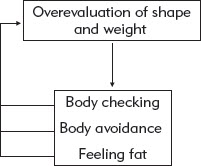
FIGURE 29. The vicious circles maintaining overconcern about shape and weight.
To begin this process, you first need to think which of these behaviors and experiences are relevant to you. You might think that this should be obvious, but in practice it often isn’t. Many people are unaware of the extent of their shape checking or how often they “feel fat.” You will therefore need to do some additional recording—and you may well find this interesting—but before doing this it would be a good idea to read through the rest of this module to get an idea of the types of behavior and feelings you should be looking out for.
Having read through this module, identify two coming days, a workday and a day off from work, and on these two days plan to do some particularly detailed recording. The initial goal will be to identify every time you do or experience the following:
Check your body or aspects of it.
Become particularly aware of your body.
Inspect someone else’s body.
Compare your body to that of others.
Avoid your body.
“Feel fat.”
To do this, you will need an additional recording sheet for this specific purpose (see Figure 30). Instructions for completing the body image record are given in Table 11. Do your best to do this recording in real time, and do not be surprised or upset if you have a lot to write down. Just try to capture everything, however tempting it might be to leave things off. Figure 31 shows an example of a completed body image record.
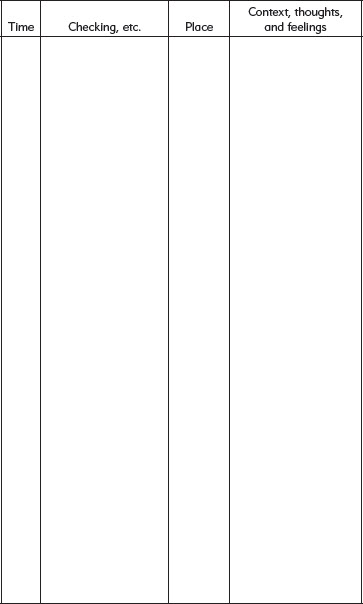
FIGURE 30. A blank body image record. An enlarged version of this figure may be downloaded from www.credo-oxford.com.
TABLE 11. Instructions for completing body image records.
Column 1: Record the time of day.
Column 2: Record every time you check or avoid your body, become particularly aware of your body, compare your body to that of others, inspect someone else’s body, or “feel fat.” At these times note down exactly what you did and, in brackets, the number of minutes the feeling or behavior lasted.
Column 3: Record where you were at the time.
Column 4: Record the context, thoughts, and feelings that accompanied the behavior or experience.
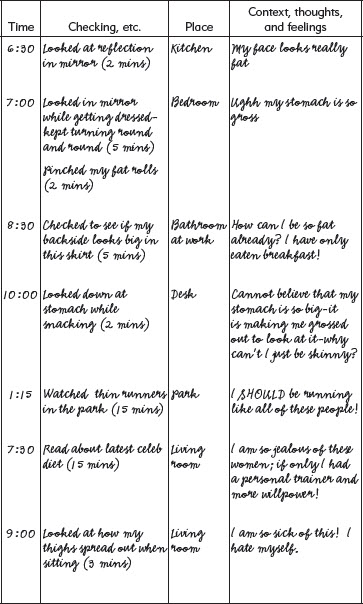
FIGURE 31. A completed body image record.
Once the 2 days of recording are over you should review your records. If they show that you body check, body compare, body avoid, or “feel fat,” and that this is frequent, then it is likely to be fuelling your concerns about your shape and weight, and would therefore be well worth tackling. If several of these phenomena are occurring, as is often the case, begin by tackling one and then after a couple of weeks start addressing another. Tackling the expressions of your overconcern will make you feel much better about yourself and will reliably reduce the extent of your overconcern.
ADDRESSING SHAPE CHECKING
As we discussed in Chapter 4, there are many forms of shape checking. Common ones include studying specific parts of your body in the mirror, pinching or touching your body, assessing the tightness of particular items of clothing or accessories (such as watches or rings), and looking at the extent to which your thighs spread out when you sit down. If you are male you may be more concerned about your build and muscularity (or lack of it) and your checking may therefore focus on this aspect of your body.
Shape checking is unhelpful either when it is extreme (e.g., when it involves scrutiny) or when it is frequent because both forms of checking tend to exaggerate concerns about shape and appearance. Remember the magnifying effect of scrutiny that we discussed in Chapter 4 and the complexities involved in interpreting what you see in the mirror? Remember also that if you look for fatness, you will find it.
There is also the matter of weight checking, that is, checking the number on the scale. As it happens, you have already addressed this habit and its counterpart, weight avoidance, with the introduction of weekly weighing at the beginning of the program (Establishing Weekly Weighing). If you were someone who frequently weighed yourself, or avoided knowing your weight, you should now be appreciating the benefits of weekly weighing. Shape checking is approached in much the same way.
So, having identified your various forms of shape checking, and how often you engage in them, write them down and put them into one or the other of two groups: behaviors that would be best stopped completely, and behaviors that need to be modified. Things that are best stopped completely include anything that is particularly unusual—for example, repeatedly measuring or photographing your body, or studying aspects of yourself. Consider including any form of behavior that would embarrass you if others knew about it. Such behavior is best stopped. Admittedly, it will be difficult doing this, and it will temporarily increase your preoccupation with your shape, but it will get easier quite quickly and ceasing such behavior has many benefits. It will lessen your degree of concern about shape; it will remove a behavior that is secretive and perhaps distressing; and it will improve your self-regard.
Mirror Use
More commonplace forms of shape checking require a different strategy, one’s mirror use being the best example. It would not be appropriate or realistic to never look in a mirror as avoidance is as problematic as repeated checking. Instead, the behavior needs to be modified.
As always, the first step is to find out what you are currently doing. Below are the key questions to ask yourself:
How often do I look in the mirror?
How long do I take?
What exactly do I do when looking in the mirror?
What am I trying to find out? (This is an interesting question that merits some thought.)
Can I find it out this way?
At home, how many different mirrors do I use?
These are questions you may have never considered before. Think carefully about them. If you are someone who looks into the mirror a lot, why do you do it? What are you hoping to find out? Unless you have a photographic memory, you won’t be able to detect changes in your shape this way. It is better to rely on your weight graph for this purpose.
Now think about the additional questions below, each of which is accompanied by the types of answer I give my patients.
What are good reasons to look in the mirror?
To check one’s hair and clothing.
Women need a mirror to apply and remove makeup; men need a mirror to shave.
Are there any other good reasons to look in the mirror?
No. For people with an eating problem there are no reasons to look in the mirror other than those given above.
Mirrors are “risky” for people with an eating problem. They are best used judiciously.
How many mirrors is it best to have at home?
One for the face and another full-length one for the body.
It is best to get rid of the others unless they are purely decorative. It is difficult to avoid excessive mirror use if there are a large number of mirrors around. Full-length mirrors in the bedroom are particularly problematic.
How can I avoid the “magnification” that comes from scrutiny?
When looking in the mirror, ensure that you do not focus on particular parts of your body, and especially parts that you dislike. Look at the whole of your body including more neutral areas (e.g., hands, feet, knees, hair). In addition, look at the background environment as this helps give you a sense of scale.
What about looking at myself naked in the mirror?
Not a good idea, unless you are going to admire yourself!
People with binge eating problems are most unlikely to be admiring themselves. Rather, they tend to focus on disliked parts and scrutinize them.
It is also not a good idea to dress or undress in front of a mirror.
I need a mirror to help me choose what clothes to wear, especially if I am going out.
Perhaps, but some people spend an inordinate amount of time doing this, trying on three or more outfits. This is typically accompanied by a progressive increase in their dissatisfaction with their appearance and a decline in their self-confidence. If this applies to you, try to choose your outfit before putting it on (e.g., by laying it out on the bed).
Your aim should be to become aware of your mirror use in real time and seriously question yourself before engaging in it. And do the same with regard to other forms of shape checking while keeping in mind the crucial information in Chapter 4 on Shape Checking. With regard to mirrors, use them judiciously and try to become better at interpreting what you see.
ADDRESSING COMPARISON MAKING
Comparison making is a particular form of shape checking that involves repeatedly comparing your body or appearance with that of other people. It includes comparisons with images in newspapers and magazines and with those on the Internet. As we discussed in Chapter 4 (Comparison Making), what is striking about such comparison making is that it often results in the person concluding that he or she is unattractive relative to others. This conclusion is the result of the inherent bias in the way that the comparison takes place.
If you are prone to repeated comparison making and it makes you feel bad about yourself, this is a habit well worth addressing. To do so, you should follow these steps.
Go over your records and consider how fair your comparison making is and how it makes you feel. Does it lead you to conclude that your body is unattractive relative to others? If so, are there reasons to question this conclusion? Scrutiny may have led you to believe that your body looks “worse” than it actually does, whereas you may be uncritical when evaluating other people—for example, when passing them on the street. Remember that it is difficult to get the same view of someone else’s body as you have of your own. Do you ever look down to see how much your stomach bulges out? Have you ever had the same view of anyone else’s body? Do you ever study in detail some part of your body? Have you looked at anyone else’s in this exact way? Scrutinizing your body is very different from glancing at someone else’s. Can you see that there is a bias here? You study your body in detail and from a particular perspective (looking for faults), whereas you look at other peoples’ bodies differently and in a way that is less critical.
There is also an additional source of bias. Many people with binge eating problems compare themselves with a select group, those who are unusually attractive or thin.
Start identifying when and how you make comparisons. Record your comparisons on your usual monitoring records along with the context in which they occur. Then go through each instance with the following two questions in mind:
Who did I compare myself with, and how did I select him or her?
How did I assess the person, and what aspect did I focus on?
Explore the possibility that you may choose a biased group to compare yourself with. With this in mind, you can perform an interesting experiment. Walk down a busy street and compare yourself with every third person who passes you (of your gender and approximate age). You are likely to discover that there is much more variation in body shape and attractiveness than you have previously noticed. This is because you have been selectively comparing yourself with unusually slim or attractive people.
Consider whether the way you assess other people differs from the way you assess yourself. Do you subject other people to the same level of scrutiny? Again, an experiment can be revealing when thinking about this. Go to a public changing room at a swimming pool or gym where people are naked or wearing very little. Then select someone (of your gender and approximate age) who you view as reasonably attractive. Next, discretely scrutinize his or her body focusing exclusively on the areas that you tend to focus on. Do this for as long as you can . . . but do remember the “discrete” part! You are likely to discover that, on scrutiny, the person’s body is not as flawless as you initially thought—that he or she too has a protruding stomach or dimpled flesh.
From now on, question the conclusions that you draw from each episode of comparison making. Ask yourself whether the comparison was truly an accurate and fair one.
If your tendency is to compare yourself with images in the media, try resisting this for the time being. In the intervening period learn about the routine distortion of photographs by newspapers, magazines, and websites. Go on the Internet and explore the topic of “airbrushing.” Also, search for “Dove Evolution” and other videos illustrating photoshopping. We all need to learn to take media images with a pinch of salt. Many of them have been manipulated.
ADDRESSING SHAPE AVOIDANCE
As we discussed in Chapter 4, shape avoidance refers to behavior designed to prevent the person from seeing their body and being aware of it. It often includes avoidance of others seeing their body too. It stems from a strong dislike of how their body looks or feels. The major problem with shape avoidance is that it results in assumptions about the body going unchallenged. As a consequence it is self-perpetuating. When extreme it can be profoundly impairing; for example, it leads to some people being unable to socialize normally or to have intimate relationships.
Shape avoidance is best addressed by progressive “exposure.” This involves getting used to the sight and feel of your body. This is best done in steps. You should follow the guidelines below, moving through the various steps as rapidly as you can. It is liberating to free yourself from shape avoidance. It is far better to know your own body than to avoid it.
If you get dressed and undressed in the dark. Begin by putting candles in the bedroom and work your way toward getting dressed with the lights on.
If you avoid touching your body. Begin by washing your-self in a conscious way. You might want to start by washing yourself with a sponge, focusing on neutral body parts like your feet or hands. You should work toward being able to wash your whole body using your hands.
If you try to avoid being aware of your body. Do things that increase your body awareness or involve some degree of body exposure. For example, you could apply body lotion on a daily basis; you could have a regular massage; you could go swimming or join a dance class. And try to avoid wearing baggy, formless clothes.
ADDRESSING FEELING FAT
As we discussed in Chapter 4, “feeling fat” is important. Not only is it distressing, but it is common for people to equate feeling fat with being fat, with the result that their concerns about shape and weight are reinforced. And what is especially noteworthy about feeling fat is that the experience fluctuates greatly, both from day to day and within a day. This is quite unlike the overconcern with shape and weight, which tends to be relatively stable (as illustrated in Figure 32).
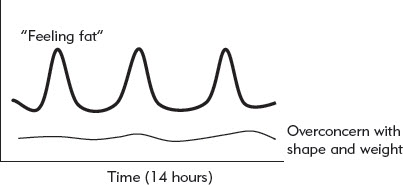
FIGURE 32. “Feeling fat” fluctuates.
If you “feel fat” at times and it is a source of distress or it leads you to diet, then the phenomenon needs to be tackled. To do so, you need to learn more about the experience. You need to find out what triggers it, and what else you are feeling at the same time. This is because feeling fat seems to be the result of the mislabeling of unpleasant emotions and bodily experiences. To help you discover what underlies your experiences of feeling fat, follow these four steps.
1. Start by identifying the times when you have “peaks” of feeling fat. Note these down in the last column of your normal monitoring records. Also write down what else you were feeling and doing at these times, and what you were doing in the hour beforehand. Try to capture these times “live” because doing so may uncover important information.
2. Once you have collected a few examples, which may take several days or a week or so, go through each one during one of your review sessions. Ask yourself the following two questions with regard to each episode:
Was there a trigger? Did something happen in the hour beforehand that might have resulted in me feeling fat?
What else was I feeling or doing at the time that I felt fat?
Common triggers or accompanying experiences are:
Feeling bored, sleepy, lonely, depressed, or hungover
Becoming aware of one’s body as a result of shape checking, body comparisons, feeling hot or sweaty, feeling one’s body wobble, bodily contact, one’s clothes feeling tight
Feeling full, bloated, or premenstrual
3. Continue to monitor (in real time) your peaks of feeling fat, but now try to identify their cause there and then. Each time you feel fat ask yourself what might have triggered the feeling and what sensations “feeling fat” might be masking. Gradually, a consistent pattern is likely to emerge. Also remind yourself that the feeling has nothing to do with “being fat.” Your body will not have suddenly changed.
4. Continue to identify the peaks and their origins, but now practice addressing their underlying cause. This task may involve a simple commonsense solution, such as loosening your clothing, changing into something else, taking a shower, or napping. Or it may involve using the problem-solving approach we practiced in Step 4.
Persist with addressing feeling fat for the next month or so. You will find that the feeling progressively declines in its frequency and intensity. It will also lose its significance as you come to appreciate that it has nothing to do with being fat.
BODY IMAGE REVIEW SESSIONS
At each weekly review session you should study your monitoring records and summary sheet and ask yourself the two questions below in addition to those relating to Steps 1 through 4 and, if applicable, the dieting module.
1. Am I getting more into my life? Am I doing new things?
2. Am I addressing the three main “expressions” of overconcern about shape and weight?
Shape checking (including comparison making)
Shape avoidance
Feeling fat
Also, remember to complete your summary sheet each week. Classify as a “change day” any day on which . . .
You monitored accurately.
You adhered to weekly weighing.
You did your best to stick to your planned pattern of eating (Step 2).
You used your list of alternative activities to deal with any urges to eat or vomit (Step 3).
You practiced problem solving at every available opportunity (Step 4).
You tackled strict dieting (if applicable).
You engaged in a new activity.
You made progress in addressing shape checking, shape avoidance, and feeling fat.
WHEN TO MOVE ON
Changing body image takes months. After all, you are trying to change how you see and evaluate yourself as a person. Do persevere, however, as otherwise you will remain vulnerable to binge. It will be worth it. In the meantime, you may also be addressing your dieting, the other module at this stage in the program.
One final point. Do not forget to complete the final module, “Ending Well.” It will help to ensure that the changes you have made persist in the long term.