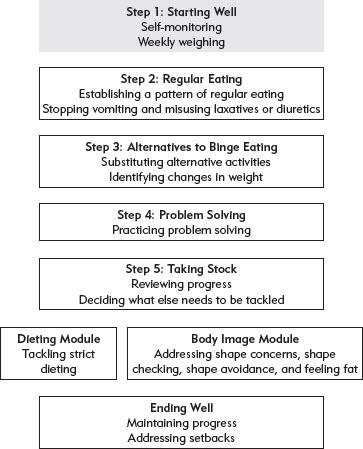
You are now ready to start the program. But before doing so, remember that the program assumes you are familiar with the information in Chapters 1, 4, and 5 of the book. Do refresh your memory of them. This is important. Having done this you are ready to embark upon Step 1 which has two components, self-monitoring and weekly weighing.
STARTING SELF-MONITORING
Self-monitoring is central to the program. It serves two essential purposes:
1. Monitoring provides you with important information about your eating problem. You may say that you are all too aware of the problem and in a sense, of course, this is true. But accurate monitoring almost always highlights features that were not obvious to you beforehand. Monitoring gives you answers to these questions:
Exactly what do I eat during my binges? How does it compare with what I eat at other times? Do my binges consist of foods that I am trying to avoid eating?
Exactly when do my binges occur? Is there a predictable pattern? For example, do they always occur in the evening? Are weekdays different from weekends?
Are there any triggers for my binges? Do my binges tend to occur under certain circumstances? Do they occur when I am bored, depressed, lonely, or anxious?
Do my binges appear to serve any function? For example, do they relieve feelings of tension? Are they a way of punishing myself?
For reasons that I will explain later, you need answers to these questions to overcome your binge eating problem.
2. Monitoring also helps you change. When done properly, monitoring also helps people change. Monitoring your eating accurately and at the time you are doing it will gradually reveal that apparently automatic, out-of-control behavior is nothing of the sort. You do not have to binge whenever you feel tense or angry, or whenever you break one of your dietary rules. You have just grown so used to doing this that doing anything else seems impossible. Monitoring along the lines recommended will show you that you have options other than binge eating. Monitoring will help you change.
Why You Should Monitor, Despite Any Reservations
You may find yourself reluctant to monitor. Perhaps you have one or more of these reservations.
I have kept food records before, and it did not help. It is most unlikely that you have monitored in the way recommended by this program. Give it a good try and see what happens.
Monitoring sounds like too much of a chore. You may feel that you are too busy or that your lifestyle makes it impossible to monitor. It is certainly true that monitoring is demanding in terms of time and effort, but I have never encountered anyone whose lifestyle made it truly impossible to monitor. Your willingness to monitor is a test of your commitment to change.
I am too embarrassed about my eating to monitor. If you feel like this, monitoring may indeed be particularly difficult. Nevertheless, if you are to overcome your binge eating problem, you have no alternative but to face up to it, and monitoring is the first step. Perhaps it helps to know that it will become second nature within a few weeks.
Monitoring will make me even more preoccupied with my eating. This is true, but only in the short term (for a matter of weeks). The effect rapidly fades. And in any case the preoccupation is constructive because it focuses you on how to overcome your binge eating problem.
How to Use the Monitoring Records
A blank monitoring record is shown in Figure 15. You may download a copy from the www.credo-oxford.com website. You will need a fresh record for each day, and you will need to carry it with you wherever you go. You may be tempted to record your eating by using your smart phone or some other electronic device. This is not a good idea. When using devices of this type people note what and when they eat, but they tend not to record other important matters such as the circumstances at the time and any accompanying thoughts and feelings.

FIGURE 15. A blank monitoring record. An enlarged version of this figure may be downloaded from www.credo-oxford.com.
Instructions for completing the monitoring records are given in Table 9, which are available for downloading as well.
TABLE 9. Instructions for completing the monitoring records.
Do your best to be accurate and record things as closely as possible to the time when they occurred. In other words, try to record in “real time.”
Column 1: Note here the time when you ate or drank anything.
Column 2: Record exactly what you ate and drank, including everything consumed in binges. Leave nothing out. Do not record calories. Instead, write down a simple description of what you ate and drank, and do so as soon as possible afterwards, preferably immediately. Trying to recall what you ate or drank some hours earlier is unreliable and will not help you change. For example, if you are out for a meal, it is a good idea to record between courses, perhaps by briefly popping outside to get some privacy. Only in this way will monitoring help you change your behavior. Also in column 2 identify with brackets those episodes of eating that you view as “meals.” Do not bracket snacks or other episodes of eating.
Column 3: Specify where you were when you consumed the food or drink. If in your home, specify the room.
Column 4: Place an asterisk in this column opposite the food that you felt at the time was excessive. Binges will therefore be distinguished by a chain of asterisks.
Column 5: Use the V/L column to record when you vomit or misuse laxatives or diuretics.
Column 6: Use this column somewhat like a diary to note anything that seems to be influencing your eating. For example, whenever you put an asterisk in column 4, you should record in column 6 the circumstances at the time, the purpose being to identify the triggers of each episode of “excessive” eating. Perhaps you had just had an argument with someone and were angry. Or you may have been under social pressure to eat. Also use column 6 to record your weight each time you weigh yourself.
An enlarged version of this figure may be downloaded from www.credo-oxford.com.
Figure 16 shows a monitoring record completed by a woman with bulimia nervosa. You can see that she ate almost nothing until the evening, when she had a large binge. Figure 17 shows a record from someone with binge eating disorder. It shows the typical overeating upon which binge eating is superimposed.
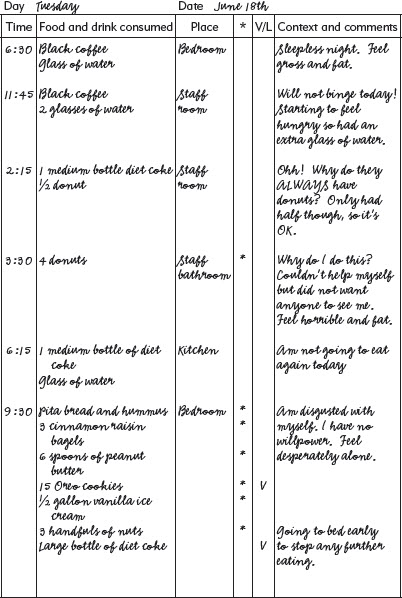
FIGURE 16. A monitoring record completed by someone with bulimia nervosa.
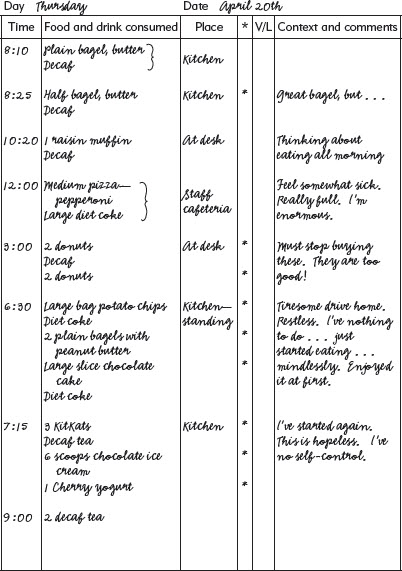
FIGURE 17. A monitoring record completed by someone with binge eating disorder.
Starting Self-Monitoring: What to Do
Start monitoring just as described, but do not try to change your eating just yet. It is important to begin the program by getting into the swing of accurate monitoring. You will be changing your eating in Step 2. Monitoring will need to become a habit since you will be doing it for the duration of the program. Do not take days off from monitoring (or from the program itself) and make sure not to omit binges from your records. This may be difficult, but it is essential that you are honest with yourself. To overcome a binge eating problem you need to confront the whole problem, and not a sanitized version of it.
Keep your monitoring records somewhere private and keep them all together so that you can look back over them. Reviewing your records will allow you to detect changes over time. (If you are using the guided self-help approach described earlier, you will need to review your monitoring records with your therapist.)
So, begin the program by monitoring until your first review session in 3 or 4 days’ time. This will be described shortly.
ESTABLISHING WEEKLY WEIGHING
Most people with binge eating problems are concerned about their weight, that is, the number on the scale, and often this is a major concern. Knowing their weight may be very important to them. As we discussed in Chapter 4, many go through a period of weighing themselves frequently, in some cases many times a day. However, weighing as often as this can become intolerable, and consequently some switch over to not weighing at all while remaining highly concerned about their weight.
As a result of following this program, your eating habits will change. You will therefore want to know what is happening to your weight. You may be afraid to find out, but avoiding knowing is a bad idea—you are left with your worst fears and no information. It is far better to monitor your weight as you progress through the program. The best way to do this is to weigh yourself once each week. Do not pay too much attention to individual readings since, as we discussed earlier, in Chapter 5, body weight fluctuates from day to day, and even within the day, in ways that are independent of changes in body fat. Individual readings on the scale can therefore be misleading as you may have hit a peak or trough in your weight fluctuations. Instead, you should look for trends over time, the minimum time period being several weeks (i.e., three or four individual weekly weight readings) because only in this way will you be able to distinguish genuine changes in weight from the day-to-day fluctuations taking place in the background.
A good way of identifying changes in your weight is to plot each reading onto a weight graph. Figure 18 shows the weight graph of a woman 8 weeks into the program. Overall, it seems that her weight is not changing, although it is fluctuating somewhat. (Printable graph paper can be downloaded from the Internet; see, e.g., www.printablepaper.net/category/graph).
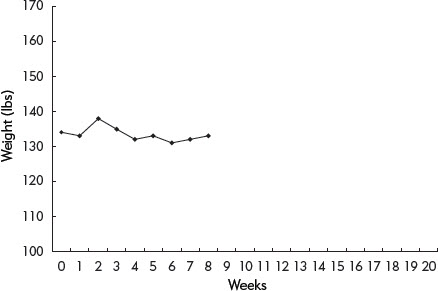
FIGURE 18. The weight graph of someone who is 8 weeks into the program.
Establishing Weekly Weighing: What to Do
Start weighing yourself once a week on a fixed morning of your choice. A weekday is usually best since on weekends you may dwell on any changes that have occurred. Do your best not to weigh yourself between these weekly weigh-ins.
Many people find this advice difficult to follow. On the one hand, if you are used to weighing yourself more often than weekly, you may feel uneasy reducing your frequency of weighing. You may be afraid that your weight will go up without you knowing. On the other hand, if you have been avoiding weighing yourself, you may be afraid that restarting weighing will lead you to become preoccupied with your weight, and as a result you will want to weigh yourself more and more often. Whether or not either concern applies to you, do your best to weigh yourself once a week, and only once a week, on a preset day.
You may need to buy a scale. A normal domestic bathroom scale is perfectly adequate. Some people always weigh themselves when naked in an attempt to get as accurate a figure as possible. This is not necessary. As I stressed already, individual readings on the scale are difficult to interpret because of the influence of hydration and other factors including the state of one’s bowels. Weighing yourself in light indoor clothing is absolutely fine.
If you are tempted to weigh yourself between your planned weekly weigh-ins, keep the scale out of sight and relatively inaccessible so that the temptation is easier to resist.
STEP 1 REVIEW SESSIONS
Your Step 1 review sessions should focus on the two elements of Step 1, monitoring and weekly weighing. You should hold the first review session after you have followed the Step 1 guidelines for 3 or 4 days and the next one after a further 3 or 4 days.
Each Step 1 review session should have two parts to it. The first is rereading Step 1 to remind yourself what you have been attempting to do, and the second is asking yourself the following four questions.
1. Have I been monitoring? If your answer is yes, you have made a good start. If your answer is no, there is a serious problem. Carefully consider your reasons for not monitoring, and perhaps reread the section on why monitoring is important. (It is a good idea, in fact, to reread the entire program at regular intervals. It is especially important to reread those sections on which you get stuck or make limited progress.)
Perhaps you should reconsider the advantages and disadvantages of deciding to change. If the advantages outweigh the disadvantages, you should make a fresh commitment to monitor as you are most unlikely to make significant progress without monitoring. Remember, monitoring provides you with important information and it helps you change.
2. Can I improve my monitoring? Study your monitoring records to see whether there is any room for improvement. Have you been following all the guidelines? For example, has your monitoring been accurate? Have you written everything you have eaten and drunk as soon as possible after their consumption? Have you bracketed meals? Have you used the asterisks in the way described? Have you been writing in column 6?
3. Am I weighing myself once a week? If so, well done! Record the number in column 6 of your records as well as on your summary sheet (described shortly). If you are weighing yourself more often than this, you should think why this is happening—you may need to put the scale out of sight or make it relatively inaccessible. If you are not weighing yourself at all, work out why. Remember you are embarking on this program in order to regain control over your eating, and your weight may change as a result. It is much better to know what is happening than to keep your head in the sand and fear the worst.
4. Are any patterns in my eating becoming evident? Try to answer the following questions as carefully as possible. Doing so will increase your understanding of your binge eating problem and will highlight the things that need to be changed.
Have I had any binges? Have they had anything in common? Have they happened at the same time of day? What about their triggers? Can I identify them?
What have I eaten in my binges? Is there anything characteristic about the food? Why am I eating these particular foods? Are they foods I am avoiding at other times?
What am I eating outside my binges? Am I attempting to limit my eating in any way? Am I delaying eating or avoiding eating? Am I eating normal meals?
Are all my days the same, or do they differ? Are there days on which I diet and days when I binge?
Deciding When to Move on to Step 2
It is best not to move on to Step 2 immediately after your first review session. However, at the second review session (3 or 4 days later), you should ask yourself the same four questions:
Have I been monitoring?
Can I improve my monitoring?
Am I weighing myself once a week?
Are any patterns becoming evident?
Having done this, you are ready to make the first entry on your summary sheet. A blank sheet is shown in Figure 19 (which can also be found at my website). You will be using the summary sheet to chart your progress as you go through the program and to decide when to move on.
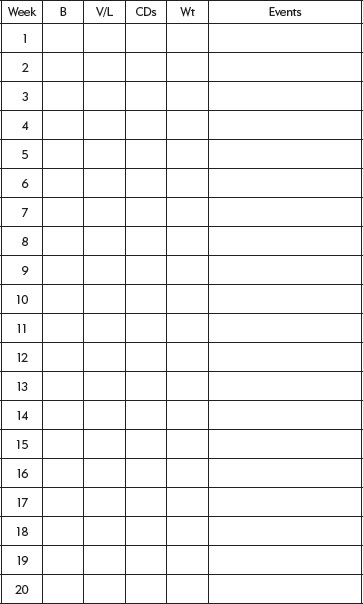
FIGURE 19. A blank summary sheet. An enlarged version of this figure may be downloaded from www.credo-oxford.com.
Guidelines for completing the summary sheet are given in Table 10. It should be filled in at the end of each week.
TABLE 10. Instructions for completing the summary sheet.
Column 1: This indicates how many weeks you have been following the program. You have now completed your first week.
Column 2: Here record how many “binges” (B) you had over the last 7 days. You should obtain this figure from your monitoring records.
Column 3: This column is for recording the number of times you practiced any extreme method of weight control, such as self-induced vomiting or the misuse of laxatives or diuretics (V/L). Record each behavior separately. Again, you should get these figures from your monitoring records.
Column 4: Here record how many “change days” (CDs) you have had during the week. A change day is one on which you did your best to follow the program. Therefore at this point in the program a change day is one on which you monitored accurately and you adhered to weekly weighing. It does not matter whether or not you binged that day. The definition of a change day will alter as you work your way through the program.
Column 5: Record your weight (Wt) in this column. If you weighed yourself more than once during the week, record the weight on the day on which you had intended to weigh yourself.
Column 6: Here you should record other points of note. For example, note down when you move from one step of the program to the next. Also note any events that significantly influenced your eating; for example, being ill or away from home.
Look at Figure 20, a partly completed summary sheet. It shows the progress of someone who is 6 weeks into the program. Now look at your own summary sheet. How many “change days” have you had? If you have had six or seven, you are ready to move on to Step 2. In that case, read through Step 2 and follow its advice while continuing with the two elements of Step 1, monitoring and weekly weighing. On the other hand, if you have had fewer than six or seven change days, try to work out why and continue with Step 1 until your next review session in a further 3 or 4 days’ time. Then, once more, reexamine your progress and decide whether or not to move on.
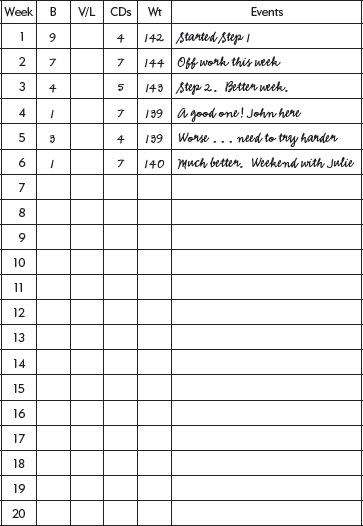
FIGURE 20. A summary sheet completed by someone who is 6 weeks into the program.
Lastly, remember that it is important not to rush through the program. To get maximum benefit, you need to accomplish each step before moving on to the next.