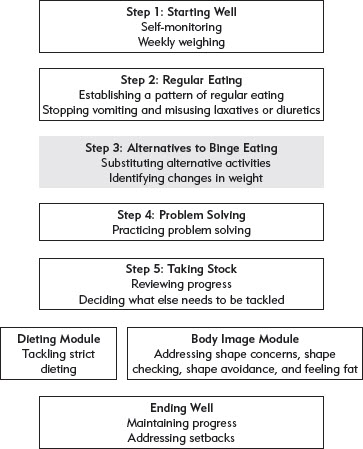
In essence, there are two aspects to establishing a pattern of “regular eating.” One is introducing the planned meals and snacks, and the other is not eating in the gaps between them. Step 3 is designed to help you not eat in the gaps. It also provides advice on how to tell whether your weight is changing or not.
When starting to adopt a pattern of regular eating, it is common for there to be urges to eat between the meals and snacks, and perhaps urges to vomit following them. It is a common mistake to assume that these urges will mount and mount until they become impossible to resist. In reality, they will rise to a peak and then gradually decline. The challenge is not to give in to them for the hour or so when they are at their worst which is best done by actively distracting yourself. How to do this depends upon the circumstances, but it is useful to have prepared in advance a list of things you might do.
PREPARING TO USE ALTERNATIVE ACTIVITIES
The first step is to think of activities that might help you resist urges to eat or vomit. These will be needed for the hour or so when the urges are at their most intense. People’s choices of activities differ, but here are some typical ones:
Going for a brisk walk or bicycle ride
Telephoning or visiting friends or relatives
Exercising
E-mailing
Going on Facebook
Browsing the Internet
Playing a video game
Taking a bath or shower
Watching an engaging movie or a favorite television program
The goal is that you create a list of activities that suits you personally. In general, each activity needs to have three properties:
1. It is active (i.e., it involves doing something) rather than passive (such as watching whatever happens to be on television).
2. It is enjoyable (i.e., it doesn’t feel like a chore).
3. It is realistic (i.e., it is something that you are likely to do).
Here is another useful tip. Go through your music collection and identify pieces of music that you enjoy and are mood-enhancing. You may well find that music is good at changing your frame of mind and thereby at helping you deal with urges to eat or vomit. Keep such music at hand, ready for use at difficult times. Indeed, you might like to create a specific playlist for this purpose.
Once you have constructed your list of activities, write them down on a card or keep an e-note of them somewhere handy. Your list needs to be readily accessed whenever you have urges to eat or vomit.
You also need to get expert at identifying these urges. It is important to spot them early when they are easier to deal with. So, as soon as you detect an urge of this type, note it down in column 6 of your monitoring record and get out your list of alternative activities.
SUBSTITUTING ALTERNATIVE ACTIVITIES
Say it is 7:00 P.M., and you have eaten your evening meal. Perhaps you feel that you ate too much and you are tempted to vomit or to give up and binge. Perhaps you are also tired, having had a stressful day, and you have nothing planned for the evening. Clearly you are at risk. Now, if you are recording properly, you will be well aware that a potential problem is looming. You will be one step ahead of the problem. You will have written down your evening meal and also something in column 6 along the following lines: “Feel as if I’ve eaten too much. I’m tired, and there’s a long evening ahead of me. Strong urge to binge.” What should you do under such circumstances?
There are two related problems here. The first is your urge to vomit or binge, and the second is the fact that you have nothing to do. This step of the program, Step 3, addresses the first of these problems, the urge to vomit or binge. Step 4 is concerned with addressing day-to-day difficulties such as having nothing to do.
Returning to the urge to vomit or binge, two things need to happen:
1. Time must pass. These urges fade with time. Even half an hour may be long enough for the urge to decline sufficiently for you to be able to resist it easily.
2. You need to engage in something distracting—something that is active, enjoyable, and realistic.
So, you need to get out your list of activities and review it. It is 7:00 P.M., and you have no plans for the evening. What could you do? You decide to do two things. First, you decide to exercise since, although you don’t feel in the mood, you know that you will feel better for having done so, and you will not be tempted to eat while exercising. Also, exercising will help you unwind. But, before starting to exercise, you also decide to call some friends to see if it is possible to meet up later on. And all the time you are aware that you are going to have an evening snack at around 9:00 P.M.
With a plan like this it is likely that you will resist the urge to eat. Contacting friends will be distracting and, with any luck, will give you something positive to look forward to. Exercising and then taking a shower will occupy time and will make you feel better about yourself.
Plans like this work. At first, you may find that urges to eat or vomit take quite a while to subside. However, they will fade more and more quickly with practice. Eventually the urges will disappear altogether or become so weak that you can ignore them.
“Urge surfing,” as this process is sometimes called, can have one adverse effect. This is that you may become aware of unpleasant thoughts and feelings that were previously obscured by binge eating. In reality, this is a positive development because it enables you to address them directly rather than sweep them under the carpet. Step 4 discusses how to do this.
Substituting Alternative Activities: What to Do
You need to practice engaging in alternative activities when you experience urges to eat or vomit. Assess your progress at each of your review sessions. Also, remember to complete your summary sheet each week. Classify as a “change day” any day on which you monitored accurately; you adhered to weekly weighing; you did your best to stick to your planned pattern of regular eating, as described in Step 2, whether or not you also binged; and you used your list of alternative activities to deal with urges to eat or vomit.
STEP 3 REVIEW SESSIONS
At each review session you should study your monitoring records and summary sheet (completed weekly) and ask yourself the four questions below, in addition to those relating to Steps 1 and 2.
1. Have I devised a list of alternative activities? You should have created a list and be carrying it with you. If you are to intervene when you need to, you will need this list at hand. The list may well require amendment on the basis of experience: some activities may work; others may not.
2. Am I recording urges to eat or vomit? You should be recording these urges in column 6 of your monitoring records. If you are to intervene successfully, you must record these urges at the time that you experience them rather than some time afterwards.
Look through the monitoring records that you have completed since starting Step 3. Have there been urges to eat or vomit? Did you record them when they occurred? If you have been eating at times other than your planned meals and snacks, this suggests that you have had such urges.
3. Am I using my list of alternative activities when needed? If you have had an urge to eat between your meals and snacks, or to vomit, have you used your list of activities?
4. Could my use of alternative activities be improved? If you have attempted to intervene, how did it go? Did you intervene early enough? Did you engage in one or more of the activities on your list? Which activities worked, and which did not? Have you modified your list accordingly?
It is best to have a review session like this at least once or twice a week.
Deciding When to Move On to Step 4
It is impossible to specify how long you should spend on this step since you may or may not be having opportunities to practice using alternative activities. Certainly, if your review sessions indicate that you are having urges to eat or vomit, but you are not successfully addressing them, you should delay moving on. As stressed already, the successful use of alternative activities requires practice. It is important that you take every opportunity to do so.
WHAT IS HAPPENING TO MY WEIGHT?
By this point in the program it should be becoming clear what is happening to your weight. Most people find that there has been little or no change, although there may well have been fluctuations. As we discussed earlier, if you want to be scientific about this matter, plot your weekly weights on a graph. An example is shown in Figure 22. But before you do this, it is important to note that interpreting weight graphs is more difficult than many people realize. This is for three main reasons:
1. Each weight has a degree of uncertainty around it, mainly due to variation in the body’s state of hydration. It is impossible to know how hydrated you are when you weigh yourself, yet this has a big influence on your weight and how it changes from day to day (as I discussed in Chapter 5).
2. Until quite a few weeks have passed, it is more or less impossible to work out whether your weight is increasing, is decreasing, or is stable because there is insufficient information to reveal the emerging trend.
3. To work out what is happening to your weight, you need to focus on the past 4 or more weeks, rather than on the latest number on the scale. This is because individual readings are almost impossible to interpret due to the uncertainty that surrounds each one of them.
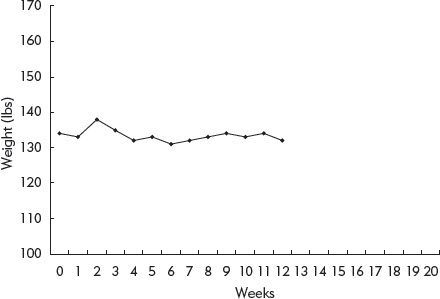
FIGURE 22. The weight graph of someone 12 weeks into the program.
With these points in mind, look at your weight graph and see if you can identify what is happening to your weight. If you have one, use a transparent ruler to identify the emerging trend. Figure 23 shows a weight graph in which the dotted straight line highlights the underlying trend (i.e., the line represents where the ruler would be placed). Note that the line does not intersect with the latest reading—this is often the case. Two tips are worth noting in this context. First, turning the weight graph 90 degrees and looking at it vertically can highlight a trend that was not apparent when the graph was inspected from the usual horizontal viewpoint. Second, if you are struggling to be objective, imagine the graph is of something of less personal significance (say, weekly rainfall over the past month).
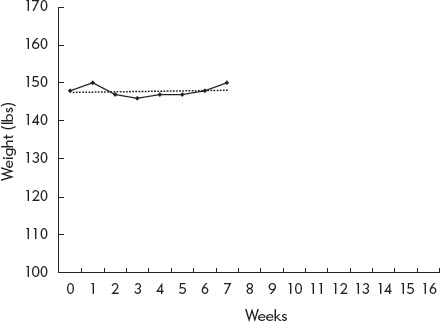
FIGURE 23. The weight graph of someone 7 weeks into the program. The dotted line highlights the underlying trend.
At this stage in the program, it is likely that you will conclude that there has been little or no change in your weight. However, we need to consider two possibilities.
1. Your weight has fallen consistently since starting the program, and you are now underweight (see Table 8). If this is the case, you should see your physician, explain what you have been doing, and get advice. The program may not be suitable for you. It is possible that you are eating too little during your meals and snacks. This is a potential problem since it will limit your ability to stop binge eating.
2. Your weight has risen consistently while following the program. If this applies, you need to check two things. The first is whether you are now “overweight,” medically speaking (see Appendix II). If this is the case, you might want to discuss this problem with your physician. If you decide to do this, you should explain that you are following a scientifically tested program that is designed to help you regain control over your eating. It is not a weight loss program. Appendix III discusses what to do if you have a binge eating problem and are overweight. As we noted earlier, you will be in a much better position to control your weight once you have control over your eating.
The second matter to consider is whether you were somewhat underweight when you started the program. If so, it is not unlikely that your weight is now increasing to a more healthy level. This is a good thing, although you may be finding it difficult to accept.
What you must not do is go on a strict diet because this would be likely to undo any progress you have made so far.