Chapter 32. Cohesion
Coupled elements should be subelements of the same containing element. That’s the first implication of cohesion. Shovel all the manure into one pile. The second implication of cohesion is that elements that aren’t manure (well, that aren’t coupled) should go elsewhere.
For example, suppose we have a module containing 10 functions. Three of those functions are coupled. Where do the other seven go? We have two options (Figure 32-1).
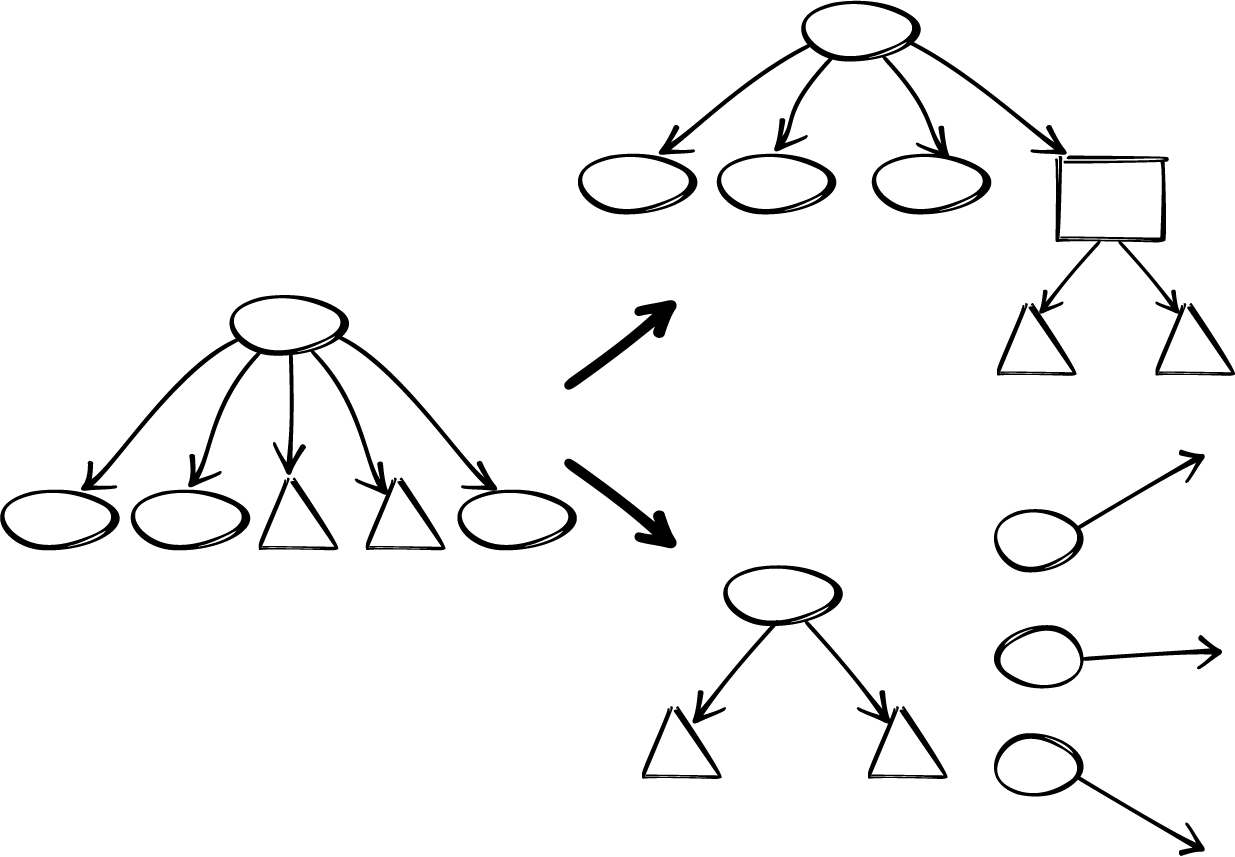
Figure 32-1. Incohesive element improved either by (top) extracting a cohesive subelement or by (bottom) moving uncoupled subelements elsewhere
The first is to bundle the coupled elements into their own subelement. We could create a submodule that only contained the three functions. That submodule would be cohesive because its elements were coupled. The original module might be less cohesive because now none of its elements would be coupled, but we won’t be in worse shape than before.
Extracting a helper function is this kind of “extract a cohesive subelement” approach. If the lines of the helper function have to be changed together, then the helper is cohesive, with all the benefits that come from cohesion: easier analysis, easier change, resistance to accidental behavior change.
The second option is to take the uncoupled elements and put them elsewhere. Where? This is where you get to be a designer. What are those functions coupled with? Move the functions closer to their siblings. Are they coupled with each other? Make another submodule for them to live in.
Make no sudden moves. You’re working with incomplete and changing information about what’s coupled with what. Don’t dramatically rearrange everything. Move one element at a time. Make the code tidier for the next person. If everyone follows the Scout rule (“leave it better than you found it”), the code will become more livable-with over time.