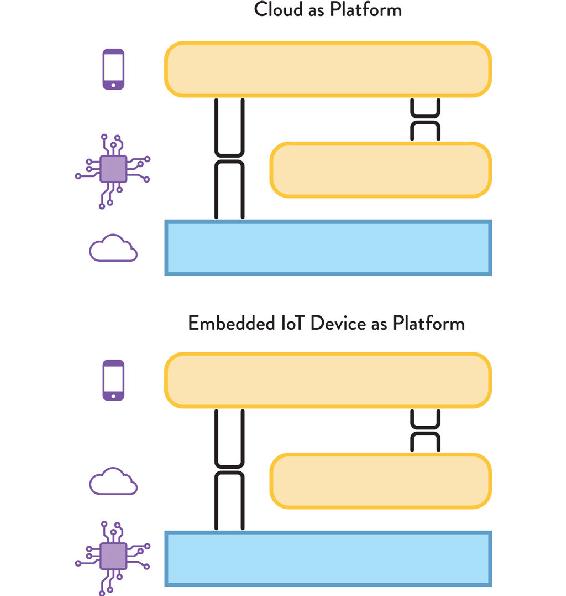
Figure 6.1: Mobile, Cloud, and IoT Technology Fracture Plane Scenario
With three very disparate technologies (mobile, cloud, and IoT), an organization must decide on an approach to fracture planes that makes sense based on the cognitive load and the change cadence in each area.
This approach will require regular coordination between teams for features that impact two or more technology areas. Changes might need to be scheduled to the cloud platform’s APIs before a new software version can be deployed to the embedded devices. This coordination, however, should also serve to establish common ways of working between the teams (e.g., semantic versioning, logging approaches, API-first development).
Over time, these shared practices and knowledge might enable a future restructure of team boundaries, as the pace of change becomes more similar across technologies.
Summary: Choose Software Boundaries to Match Team Cognitive Load
When optimizing for flow, stream-aligned teams should be responsible for a single domain. This is a challenge when domains are hidden in monolithic systems that include many different responsibilities and are mostly driven by technology choices, providing functionalities across multiple areas of business.
We need to look for natural ways to break down the system (fracture planes) that allow the resulting parts to evolve as independently as possible. Consequently, teams assigned to those parts will experience more autonomy and ownership over them.
Looking to align subsystem boundaries with (mostly independent) segments of the business is a great approach, and the domain-driven design methodology supports that approach nicely. But we need to beware and sense for other fracture planes, such as change cadence, risk, regulatory compliance, and so on. Often, a combination of fracture planes will be required.
Finally, we need to be aware of different types of monoliths impeding flow and causing unnecessary dependencies between teams. While we typically think of system architecture as a monolith, there are other, more subtle ways in which coupling creeps in, even when the system architecture is already modular (for example, shared databases, coupled builds and/or releases, and more). As Amy Phillips puts it, “If you have microservices but you wait and do end-to-end testing of a combination of them before a release, what you have is a distributed monolith.”10
When considering subsystem boundaries, the main aim should be to find software fracture planes that align to business domain bounded contexts, because most of these bounded contexts will map to streams of change that are natural for the organization. This, in turn, means that business-domain boundaries can be aligned to stream-aligned teams, helping to focus on flow across the organization.
Fracture planes can be chosen around specific challenges (e.g., technology, regulation, performance, geographic location of staff, user personas) to help avoid hand-offs between teams and promote flow.
In all cases, it is essential to make software segments team sized so that teams can effectively own and evolve their software in a sustainable way.