Give Them a Reason to Give You Their Email Address or They Won’t
Imagine meeting somebody you find interesting but not exchanging contact information. Unless you happen to meet again somewhere, you’re likely to forget about that person in a short period of time.
But sometimes those first encounters are awkward. It doesn’t feel quite right to ask for contact information or to give it out uninvited.
In business relationships, lead generators are a great excuse to exchange contact information without being awkward. Think of the exchange going something like this: “Hey, let me send you that information I was talking about. What’s your email address?”
Lead generators that capture emails make sure that when someone finds you interesting you are getting their contact info. Stop missing out on the opportunity to get those digits!
PEOPLE WANT TO STAY IN TOUCH WITH YOU IF YOU ARE INTERESTING AND CAN HELP THEM SURVIVE
Now that you have a one-liner and website, your potential customer is curious about how you can help them solve their problem and they want more information.
Now that you’ve earned the right to be heard, they will be willing to spend more time with you. A good lead-generating PDF should take about twenty minutes to read, which, while it doesn’t sound like much, is actually quite a commitment from any customer.
Congratulations. Because you’ve piqued your customers’ curiosity and positioned yourself as the guide, they’re willing to put skin in the game.
You’re officially in a committed relationship.
Think of the one-liner as the first introduction to somebody and your website as the first, second, and third date. Your lead generator, then, is going to be the first time your customer actually commits.
Of course it’s not time yet for a financial commitment, but when they gave you their email address, they definitely entered into a healthy business transaction with you.
While giving you their email address is not a financial commitment, don’t be fooled. It’s still a very big commitment.
Most people do not part with their email address easily. For a potential customer, parting with their email address is the equivalent of them giving you a ten or twenty dollar bill. They don’t want to receive junk mail or spam and they don’t want their email box to be cluttered with trash, so they give out their address sparingly.
In fact, most people don’t want to give out their email address at all, and fewer and fewer people are willing to do it. Still, that’s good news for you. Why? There is one reason: anybody who is willing to give you an email address is very interested in your product or service.
The more culture changes and the less people want to give you their email address, the better the lead they actually are.
How do we get somebody to give us their email address? We give them great value in return and we honor their inbox.
FREE VALUE LEADS TO TRUST
A lead generator is (usually) a free asset you offer potential clients as a way of building authority and trust.
Your lead generator can be a PDF, a video series, a free sample, a live event, or anything you can give your potential customer that helps them solve a problem.
We recommend starting with a lead-generating PDF.
StoryBrand, the marketing and messaging division of Business Made Simple, was built using a single PDF called “The Five Things Your Website Should Include.” This simple PDF was downloaded by thousands of people, and hundreds of them ended up coming to our live marketing workshops. Without that PDF, we’d have never gotten off the ground.
From that PDF, we created more sales funnels that offered more PDFs, and then we added free video courses and webinars and even free live teaching events. Soon, we were collecting hundreds of email addresses each day and our business started to grow quickly.
The great thing about starting with a lead-generating PDF is that they are cheap to create. Unlike the old days where you’d have to print a book, a lead generator can be short, visual, compelling, and helpful and yet can be created and designed in a weekend.
Lead generators should position you as the customers’ guide, answer your clients’ questions, solve their problems, pique their interest, stir a sense of reciprocity, build trust in what you have to offer, challenge a potential customer to take small action, give them a vision of the successful result they could experience, and ultimately lead them to a nurture campaign, a sales campaign, and hopefully a sale.
WHAT SHOULD A LEAD GENERATOR ACCOMPLISH?
A great lead generator should do the following things:
1. Position yourself as the guide. This is an opportunity to share empathy and authority with your potential customer. Show how you are the right guide to help them solve their problem.
2. Stake claim to your territory. Take this opportunity to differentiate from the crowd. Share your unique knowledge on a subject and demonstrate how you can solve the customer’s problem.
3. Qualify your audience. Your lead generator should speak to the specific audience you are trying to reach. If there are varying segments of people you’re reaching out to, you can create different lead generators to reach those different audiences. For instance, if you are a financial advisor who works with different types of clients, target those specific audiences. If one audience you are targeting is just getting started in investing, you can offer a lead generator titled “Five mistakes people make with their first investment.” If you are targeting a demographic that is further along in the process you can offer a lead generator titled “How to pass on your money without spoiling your children.” These will be downloaded by different demographics of people. Then you can create email campaigns that market to each specifically.
4. Create trust by solving a problem. We keep saying it over and over, so you should notice that it’s important. The purpose of any business is to solve somebody’s problem. Unless you talk about that problem, nobody will know why you exist. But even though your product solves a problem, your lead generator should also solve a problem. For free. Once you start solving your customers’ problems, they will trust you with more of their problems. For instance, you can share nutritional tips for eating organic in your lead generator and then invite people to classes teaching them to grow a backyard garden. Some marketing experts say it this way “Give away the why but sell the how.” I like that rule, but I also like giving away some of the how just to be generous. At StoryBrand we give more away in our podcast—Business Made Simple daily advice videos and lead-generators—than most universities sell in their MBA programs. But that’s okay. I don’t think it has cost us a thing. I’ve never been punished for being generous, and besides, not everybody has the money. But that doesn’t mean they don’t deserve a place at the table. Be kind and generous to your customers and they will remember you when they are successful.
5. Create reciprocity. When you give value for free, customers feel indebted to you and to your brand—even if it’s not conscious. When you give away great content and value, customers want to return the favor and are more likely to place orders.
6. Have an interesting title. Make sure to use a title people will want to download. Nobody wants to download a “white paper” or “case study,” but they do want to download “The five mistakes most people make when training a puppy” or “How Nancy doubled her revenue without leaving the house.” Make your title catchy and bold.
WHAT KIND OF LEAD-GENERATING PDFS CAN YOU CREATE?
Lead-generating PDF’s do not have to be complicated. Again, you should be able to create an effective lead generator in a long weekend. The key is not to overthink it.
The reality is, in your industry, you’re likely an expert. And if you aren’t an expert, you certainly know a lot more about whatever products you represent than your potential customers. By sharing some of that knowledge, you position yourself as their guide. And that’s half the battle.
Let’s look at ten ideas for PDFs that will be easy to create and offer terrific value to customers:
1. Capture an Interview With an Industry Expert
A great way to establish your authority and stake claim to your territory is to interview an expert with an intricate knowledge of your industry.
If you work within a specific niche, find an influencer and schedule some time to meet with that person. Ask questions that you know your customers are asking and guide the interviewee toward answers that contain practical knowledge that solve real problems.
For example, a pet shelter might sit down with their head of adoption and ask: “What are the seven things every family should consider before adopting a puppy?”
If you do marketing for a tax firm, interview a CPA and ask: “Tell me the five biggest mistakes people make when they do their own taxes.”
This interview isn’t just limited to a PDF, by the way. You can distribute the conversation via live webinar, audio recording, podcast, or PDF article.
Exercise
Who are three people you could interview who would provide exceptional value for your customers?
[Your Notes]
2. Checklist
A checklist is a great place to start if you want to try a lead-generating content strategy but don’t have a lot of time.
A checklist is simple. It walks your readers through a list of ideas to consider related to solving their problem.
Let’s say you run a health clinic. Your checklist could ask a series of health questions, such as:
“Do you get winded walking up the stairs?”
“Do you feel tired every day around 3:00 p.m.?”
“Do you ever have trouble sleeping at night?”
With each question, you can highlight the ways that your clinic can help them solve the problem they’ve identified.
If you sell cookware and kitchen supplies, your checklist might be built around the “fifty items every well-stocked pantry needs.”
A checklist is often a great way to make customers aware of what they’re lacking—and how you can help.
If you sell intellectual property or training, consider a checklist that informs your customer about how to become better at whatever rests in your area of expertise. If you’re a speaking coach, think about a PDF called “Ten terrific ways to start a speech” or “Three things that make a speaker look like an amateur.” Anybody interested in growing their speaking ability is undoubtedly going to download that checklist.
Exercise
What are some checklists you can create to help your customer realize they are missing the product you have?
[Your Notes]
3. Make a Worksheet Your Audience Will Use Over and Over
Think of an area in your clients’ lives that you can help facilitate, and create a repeatable worksheet that solves their problem.
A worksheet could be anything from a weekly marketing planner to a goal-setting page.
Daily or weekly worksheets might take something overwhelming and make it simple.
Have the worksheet be something they can use repeatedly so they’re reminded weekly or even daily that you exist and can help them.
Worksheet ideas can be anything from nutrition journals, homework schedulers, lawn maintenance journals, birthday reminders, to any other area in which a person might need to organize their thoughts.
Exercise
What are three areas in which your customers could use help organizing their thoughts and you could create a worksheet to help?
[Your Notes]
4. Host an Educational Event
Educational events aren’t always gimmicky. They can be extremely valuable if the offer helps your customers solve a problem.
A giveaway can also remind people what it is you offer. A free cooking class for a local catering company is a terrific idea. A seminar on how to save and buy your first home could be great for a mortgage company.
People are often hungry for more information before they are willing to buy. If you offer that information, they’re more likely to buy from you!
Exercise
What kinds of educational events could you host that might build trust with your customers?
[Your Notes]
5. The Sampler
Depending on the kind of products and services you offer, you may be able to give away a sample to your potential customers.
For example, if you’re selling an annual planner, you could feature a PDF about effective time management along with seven days of worksheets to fill out. This way, your lead receives something of value, but you’ve also created an opportunity to sell them on the annual planner.
If you have a food product or specialty product, see if there is a sample you can give away. Grocery stores give away samples for a reason. Samples lead to sales!
Other examples could be dinner recipes, cocktail recipes, a stylebook of new hairstyles, one free lawn mowing coupon, a free makeover, or even a free meal.
If you have a physical location, you can offer a coupon that is redeemable by coming into the store.
Exercise
What is something small you can give away to build trust with your potential customers and introduce them to the quality of your product or service?
[Your Notes]
6. Webinars
Webinars are a great way to engage your customers.
The goal of a webinar should be to offer training or information that will help your customer overcome a specific problem.
Your customers will attend the webinar for free—in exchange for their email address—and at the end of the webinar, you not only have the opportunity to make an offer for a paid product, you are also able to follow up with a nurture or sales campaign in the weeks and months that follow.
After the webinar is concluded, you can also take the exact same information you shared and turn it into a lead-generating PDF that is downloadable from your website.
Exercise
What are some topics you might be able to cover in a webinar?
[Your Notes]
7. Develop a Keynote Presentation Into a Lead-Generating Event
Delivering a keynote is an excellent way to generate demand for your services.
No matter what type of product or service you offer, find an area where you are an expert and create a speech you can deliver at events. You might even be able to create your own event and invite the public.
Creating talks like “Five mistakes accountants make that are costing you money” or “Get the most out of your team without killing them” will attract customers that likely need your respective products or services.
If you are B2C, find interesting facts or information that people don’t know. If you sell shoes, consider a talk called “Couch to 5k is easier than you think” or “How your shoes could be making you feel lazy!”
Exercise
What are three areas of expertise that you could turn into keynote presentations that position you as an expert?
[Your Notes]
8. Scratch the Curiosity Itch
We’ve all lost precious time by clicking on a link just because we were curious. What do those childhood celebrities look like now? How did they build the world’s biggest boat?
Without knowing it, by clicking on these clickbait titles we’ve lost five minutes of our lives we will likely never get back. But you have to admit they are kind of fun.
Once, while working with a global pet food brand, I recommended they turn their network of dog parks into lead generators. The company was incredibly generous to create dog parks all over the world, but none of them were being used as lead generators. My recommendation? Create a lead generator called “Five things your dog thinks about at a dog park” and allow people to download it to their phones. After all, most dog owners just stand around looking at their phones anyway. Might as well tell them why all those dogs are sniffing each other’s rears!
Exercise
What are your potential customers curious about as it relates to your product or service and how could you turn that curiosity into a lead generator?
[Your Notes]
9. Pitfall List
Much like the checklist, there are pitfalls and challenges that your potential customer is experiencing you can help them avoid.
Titles like “Five money mistakes to avoid making when buying a house” or “Three fatal mistakes managers make when coaching their teams” or “Ten interview blunders that will ensure you don’t get the job” help potential customers avoid pain and help you earn their trust as an expert.

Exercise
What are three titles that would represent lists of pitfalls you can help customers avoid?
[Your Notes]
10. Open House
You might be surprised to learn that open houses have nothing to do with selling that specific house and everything to do with the real estate agent building a relationship with potential clients.
For our real estate clients, open houses are a tremendous way to capture contact information and lead them into a nurture campaign where you begin solving problems.
An open house doesn’t have to just be for real estate agents, though. Offering a free product demonstration, cooking classes, craft nights, inviting people over to your home to hear about what you do, all create a sense of community and build relationships.
Exercise
What’s a good reason to invite people into your home or business to hear a pitch? What types of events could you host that might bring potential clients together?
[Your Notes]
NEVER STOP THINKING OF LEAD GENERATORS
Most people hate to sell, and one of the great thing about lead generators is it gives you an excuse to talk about your products and services without asking for money. If somebody downloads your lead generator or shows up to hear your speech, they want to know more, and it makes the sales conversation that comes later much more natural and authentic.
Never stop thinking about lead generators. You should probably spend about as much time thinking of lead generators as you do creating products. Why? Because without them you probably aren’t going to sell many products anyway.
I hope these ideas have been helpful.
With a lead generator, you’ll attract the kind of customers who really need and want the service you have to offer, you’ll dramatically grow your email list, and you’ll be able to close sales in a natural, nonsleazy way.
NOW LET’S MAKE YOUR LEAD-GENERATING PDF: HERE’S A STEP-BY-STEP GUIDE
Create Your Captivating Title
The first thing to consider is the title of your PDF. Again, you want it to be catchy and strong. Give people a reason to download the PDF by showing the value you’re offering right there in the title.
Here are some sample PDF titles that have been well received:
Five mistakes people make with their first million dollars. A downloadable PDF guide offered by a financial advisor who wanted to identify young, newly wealthy clients.
Building your dream home: Ten things to get right before you build. A free e-book offered by an architect who wanted to establish herself as a guide to families looking to build a custom home.
Cocktail club: Learn to make one new cocktail each month. This was a monthly event put on (surprisingly) by a garden center. They taught attendees how to infuse alcohol with herbs. The objective for the promotion was to create community and to educate people about how to grow an herb garden. Did it work? Business is booming—or should I say blooming!
How to become a professional speaker. A free online course offered by a business coach for those who wanted to become professional speakers. This generated leads for long-term subscriptions to his coaching service.
How to get your dog to stop barking when people knock at the door. This was offered by a pet store and helped establish them as an expert in dog training and pet care.
Five surprising aches and pains caused by your shoes (and how to fix them). A pitfall list offered by an athletic wear store to highlight how cheap shoes are not worth the low cost.
Five mistakes most managers make that are squashing productivity (I bet you did number three this morning). Another pitfall list offered by a management consultant.
Now that you’ve considered your title, let’s move on to the meat of the PDF. Remember, you do not have to use a great deal of text. You simply need to solve your customer’s problem and earn trust in the new relationship.
Content: The Meat in the Middle
There are a million ways to write a PDF, but I’m going to give you a little formula that will make it easy.
If you aren’t a professional writer, don’t worry. All you need to do is create a little outline and hire a copywriter to flesh it out. Believe me, this little outline is going to make the copywriter’s job much more easy, and the end product will be terrific.
Here we go:
Catchy Title: ____________________________
Section 1:
Paragraph 1: What’s a problem your customers are experiencing?
Paragraph 2: What is an empathetic statement you can make about their pain? And what have you accomplished that would elicit trust that you can solve their problem?
Section 2:
Paragraph 1: Agitate the problem a little further. Speak, perhaps, to the emotional frustration a person may experience when dealing with the challenge you help solve.
Paragraph 2: Offer a solution to the problem. Three tips, a paradigm shift, a recipe or formula, something that resolves the conflict for your customer.
Section 3:
Spell out the solution in a step-by-step plan or in a list of tips. Offer the five tips, expert advice, or worksheet that can help your customers overcome their problem. This is the main content of the PDF.
Step/Tip 1 ____________________________
Step/Tip 2 ____________________________
Step/Tip 3 ____________________________
Section 4: Define the Stakes
What’s at stake if they do or don’t heed your advice? What will be won or lost if they don’t take action on what you’ve recommended?
Paragraph 1: List the negative consequences that might happen if they don’t act on your advice followed by the happy ending they may receive if they do.
Paragraph 2: Call them to action. What should they do next?
This is a basic template for creating a lead-generating PDF, but it works quite well.
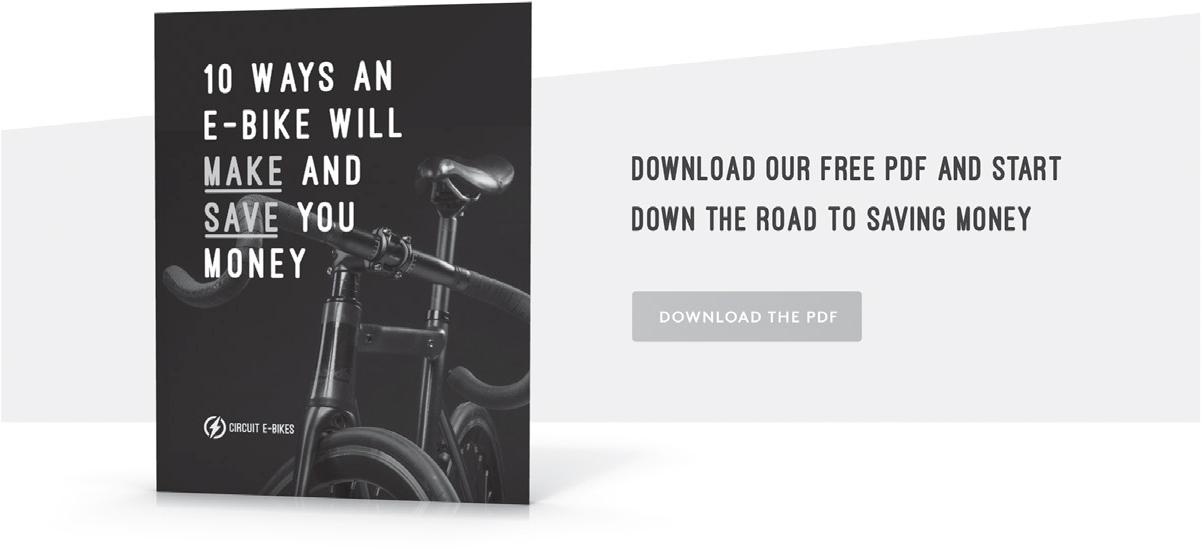
Here is the actual text from a lead-generating PDF we created for a fake e-bike company. We used this very template:
Now It’s Your Turn
Create the four sections that will give you the foundation you need to create a great lead-generating PDF. Feel free to use this section of the book as a rough draft and then transfer your results over to the lead-generating PDF outline you downloaded at MarketingMadeSimple.com. Work with your designer or visit MarketingMadeSimple.com to hire a certified StoryBrand guide who can create a PDF for you.
Catchy Title: _________________________________
Section 1:
Paragraph 1: (Problem)
[Your Notes]
Paragraph 2: (Empathetic statement and elicit trust)
[Your Notes]
Section 2:
Paragraph 1: (Agitate the problem)
[Your Notes]
Paragraph 2: (Offer a solution)
[Your Notes]
Section 3: (Step-by step plan or list of tips)
[Your Notes]
Section 4:
Paragraph 1: (Negative consequences if they don’t act and include a happy ending if they do)
[Your Notes]
Paragraph 2: (Call them to action)
[Your Notes]
WHAT DO YOU DO WITH YOUR LEAD GENERATOR?
Once you have your lead generator created, the first thing you want to do is promote it on your website. You can create a section on your website to advertise it, but I also recommend a pop-up ad.
Yes, I know, pop-up ads are annoying, but they work. They typically have a higher click rate than regular ads and are an effective way of capturing potential customers’ emails before they leave your site.
A few tips for pop-up ads:
1. Give the visitor time to browse. Don’t make the pop-up ad show up immediately. Give them around ten seconds on the website before bringing up the ad. You can also create an “intent to exit” pop-up. This type of pop-up ad only comes up when the visitor moves their mouse to click off your site. This allows users to browse without being interrupted but still works to capture information before they leave.
2. Know the rules. Search engines are constantly changing the rules about how you can use pop-ups. You can be penalized for them being too big and covering too much of the site. Because the rules are changing all the time, we recommend talking to a professional or doing the research first before designing your ad.
3. Don’t let them close the ad with an X. It has become second nature for most of us to close ads as soon as they pop up by hitting the X in the top right hand corner without even reading the ad. Instead, make your website visitor click on a sentence to close out the ad. The sentence can say something like, “No thanks, I don’t want to save money” or something even stronger like “I’m okay letting the competition win.” This might feel like clickbait, but it forces them to actually read what you are offering before opting out.
PROMOTE YOUR LEAD GENERATOR
We actually spend more advertising dollars promoting our lead generators than our products. They are that effective at leading to sales.
Consider promoting your lead generators on social media or even using paid advertising.
To promote our lead generators, we include ads for them on our websites, but we also create separate landing pages that focus on each lead generator exclusively. This way, we can link to specific pages in specific posts, ads, or podcast episodes.
The landing pages don’t need to look exactly like your homepage, but make sure the copy on each page adheres to your brand’s StoryBrand messaging principles or you’ll risk confusing your customers. Keep the text clear, easy to understand, and punchy.
TIPS ON GOOD WRITING
As I mentioned before, you can be very creative with lead-generators, but the simplest and most cost effective is a lead-generating PDF.
Before you begin the writing process, keep in mind a few common mistakes clients make when it comes to crafting a lead-generating PDF.
The biggest mistakes people make are:
1. Focusing on too many problems at once. Sure, your clients have many problems they need solved, but if you try to solve more than one problem for them at a time, they may experience a little fatigue reading your PDF. Try focusing on one problem at a time.
2. Using too much text. Make sure to have the PDF laid out so the text flows and is easy to read. Make your PDFs scannable. Think about images, drop caps, callouts, and anything else that will move a reader through the document with ease. Less text is better!
3. Being too vague. This is not the time to get cute or clever with your language. If you are vague about what problem you’re hoping your customers resolve, they’ll be confused about what you offer. Don’t say “The beauty of a canine companion,” instead say “Three things to remember when selecting a puppy!”
4. Not using a catchy title. Make sure your title sounds interesting. If you’d never heard of your product or service, would you want to read an article titled “A study of market irregularities as it relates to home equity” or would you rather read “How to increase the value of your home in a down market”?
TEST YOUR METHODS AND ADJUST AS NECESSARY
Test, test, and test again.
Once you put the lead generator on your page, make sure to track how it is working.
As long as it is working, keep using it. If it isn’t working, take the time to create a new one and start all over. I’d say about 60 percent of the lead generators we’ve created have found an audience and 40 percent were duds.
Like I said, we built our entire early business on a PDF called “Five Things Your Website Should Include,” but I was shocked that a seriously robust PDF called “How to Prepare Your Business for a Recession” got almost no response. I guess people don’t want to think about a recession.
The most important thing is to have at least one lead generator that is working well for you and then to keep adding to it until you’ve got a pretty good number of emails coming in daily.
Once you create your first lead generator, you’ll start collecting email addresses. Sadly, many people don’t do anything with those email addresses. What an enormous missed opportunity.
This brings us to the fourth element of a sales funnel that works: email campaigns.
If you’d like to hire one of our StoryBrand certified guides to write a lead generator for you, visit our directory of guides at MarketingMadeSimple.com. Again, we do not participate financially in their business, but we did train them to create terrific lead generators!