Determine Your Critical Actions
Creating a package of Guiding Principles can be one of the most inspirational exercises you perform as a small-business owner. It’s an amazing experience to sit and dream about what the future can be. It would be a big mistake, though, to stop at dreaming. In order to achieve your mission, you’re going to have to take action.
Very few Guiding Principle frameworks include Critical Actions in their offering, but I believe Critical Actions are nearly as important, or even more important than Key Characteristics. If we don’t embody the mission in action, we will never make an impact.
In the Critical Action section of your Guiding Principles Worksheet, you’re going to define three actions every member of your team can take nearly every day that will move the business toward its three financial objectives.
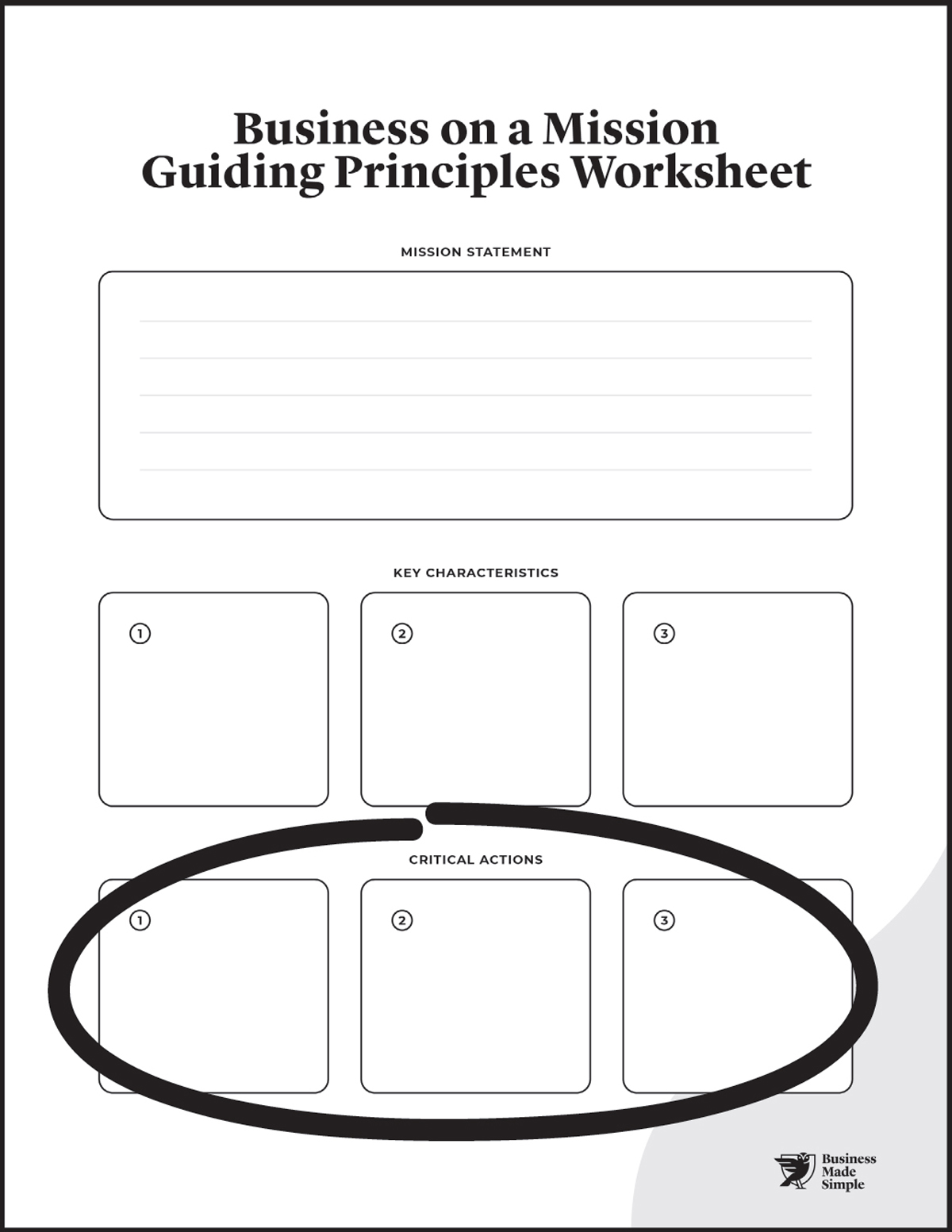
Access a digital, fillable version at SmallBusinessFlightPlan.com
If you’re a solo-preneur, this exercise is simple. All you need to do is define three things that, if done every day, will automatically propel you toward your mission. If you’ve got a few team members, you’re looking for three things every one of you can do and the same goes for those of us with thirty or forty or even four hundred team members.
When defining Critical Actions, you’re looking to create habits that move the mission forward. If nearly everybody on your team develops three habits that directly affect the bottom line, the business will almost certainly thrive.
What Sort of Actions Should Be Defined as Critical?
Your three Critical Actions should have two things in common:
- Nearly everybody on the team can do them, and
- They should directly affect the forward movement that will assist the accomplishment of your mission.
Let’s go back to our restaurant example. If everybody on the team made a habit of asking people if they’ve tried “our amazing desserts,” there’s no question the restaurant would sell more desserts. Also, if they took turns cleaning the bathroom every hour, the entire restaurant would feel more clean. Those two Critical Actions would affect the restaurant’s revenue and the overall customer experience. Not only that, but if one of the Critical Actions was that the team took turns bringing sweet tea to people waiting in line to get in, even more customers would rave about the restaurant.
The word “nearly” is important when I say “nearly” every employee could take “nearly” every Critical Action every day. The truth is if a chef is back in the kitchen, they likely won’t be handing out sweet tea. But even the chef, when walking through the dining room and talking to families sitting at tables, could ask them if they’d tried the amazing desserts and then answer a few questions about the German chocolate cake.
Use Your Critical Actions to Create a Terrific Culture
When you say thank you to any team member at Chick-fil-A, they respond by saying “my pleasure.” The idea that it’s a pleasure to serve customers is demonstrated through the Critical Action of saying “my pleasure” and, as such, creates a culture of positive service to guests.
Your Critical Actions can go a long way in creating a culture, especially if most of your team members are performing the Critical Actions every day.
When people take the same actions together, it creates a kind of bond that results in a tribe. Watch any college football game and you’ll see the Critical Actions fans take in the stands. Whether it’s a certain cheer, a certain dance to a certain song at a certain time in the game, or just a loud booing of the ref when they don’t like the call, these actions create a tribal bond and make a group of people feel like one.
Besides creating a bond, the Critical Actions that are taken by you and nearly every member of your team amplify whatever message your actions are broadcasting to the world. If a real estate office decides one of their Critical Actions is to “sign a thank-you card” for every client that buys a home, they are amplifying the message that they care about their clients and are happy for their big new move. This simple Critical Action will do many things. It lets everybody in the office know that another home has been sold and reminds them that lives are changed every time a customer moves into their new home. It is also another pleasing and thoughtful interaction with customers that will lead to word-of-mouth recommendations for that particular real estate office.
Test Out Your Critical Actions Until You Find Three That Fit
Don’t overthink your Critical Actions. If you’re looking for the “right actions” to take, you’re likely going to get frustrated. The truth is there are a thousand great Critical Actions that will work to grow your small business. You’re simply looking for three Critical Actions that have a terrific impact so you can turn them into habits and use them to propel the company forward.
A Critical Action could be as simple as “we have a Stand-up meeting every morning in which we talk about the day’s goals” or “we review our client list every day and identify any special needs they may have before they come in.” If you think about it, those two Critical Actions would lead to incredible success. If you identify your goals every single day, you’re more likely to hit those goals, and if you identify your clients’ special needs, you’re more likely to create a memorable connection when they come in, which will lead to return visits and positive word of mouth.
Feel free to test out your Critical Actions and replace any that aren’t getting traction with you and your team. The process may take a little time, but soon you’ll find you and your team are performing three Critical Actions that are moving the company forward and those actions are quickly being turned into habits that define your culture.
EXAMPLES:
Bakery:
- We offer a sample to everybody who comes in the front door.
- We check the expiration dates on all ingredients in the pantry.
- We clean our personal workspaces every hour on the hour.
Manufacturing Company:
- We wear our hard hats and gloves at all times.
- We keep a clean workspace.
- We review yesterday’s progress and write down our goals at the beginning of every shift.
Solo-preneur’s Online Learning Platform:
- I call every new customer and thank them for their order.
- I create one new Instagram post per day offering terrific free value.
- I fill out my daily planner every morning and decide on what content I need to create that day.
Take some time and identify three Critical Actions you and your team can take that will directly contribute to the achievement of your Mission Statement.
Brainstorm your Critical Actions and when you’ve decided on three, add them to your Guiding Principles Worksheet in your Small Business Flight Plan.
YOUR THREE CRITICAL ACTIONS:
[Your Notes]
On the following pages you will see examples of how three businesses completed their Business on a Mission Guiding Principles Worksheet.
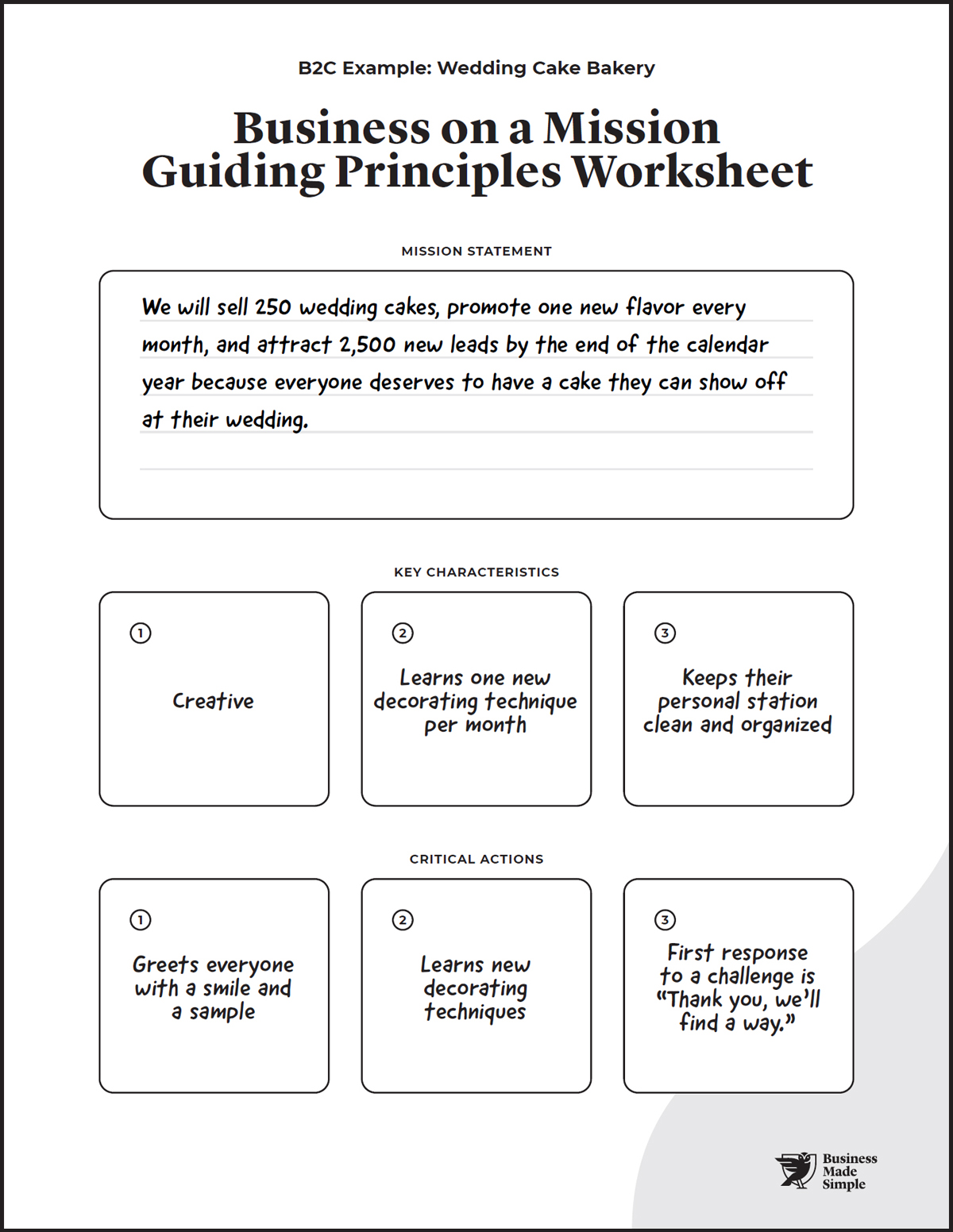
Access a digital, fillable version at SmallBusinessFlightPlan.com
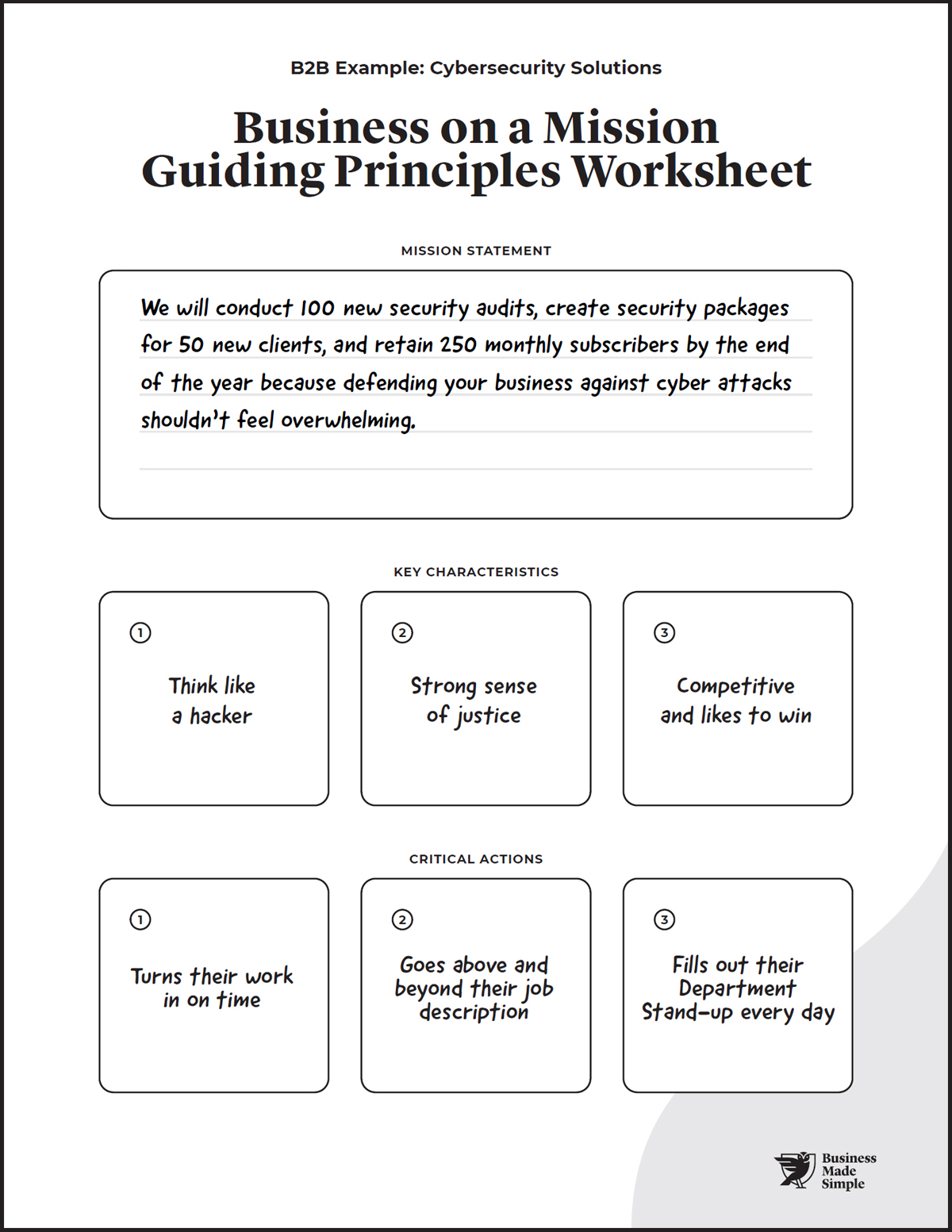
Access a digital, fillable version at SmallBusinessFlightPlan.com
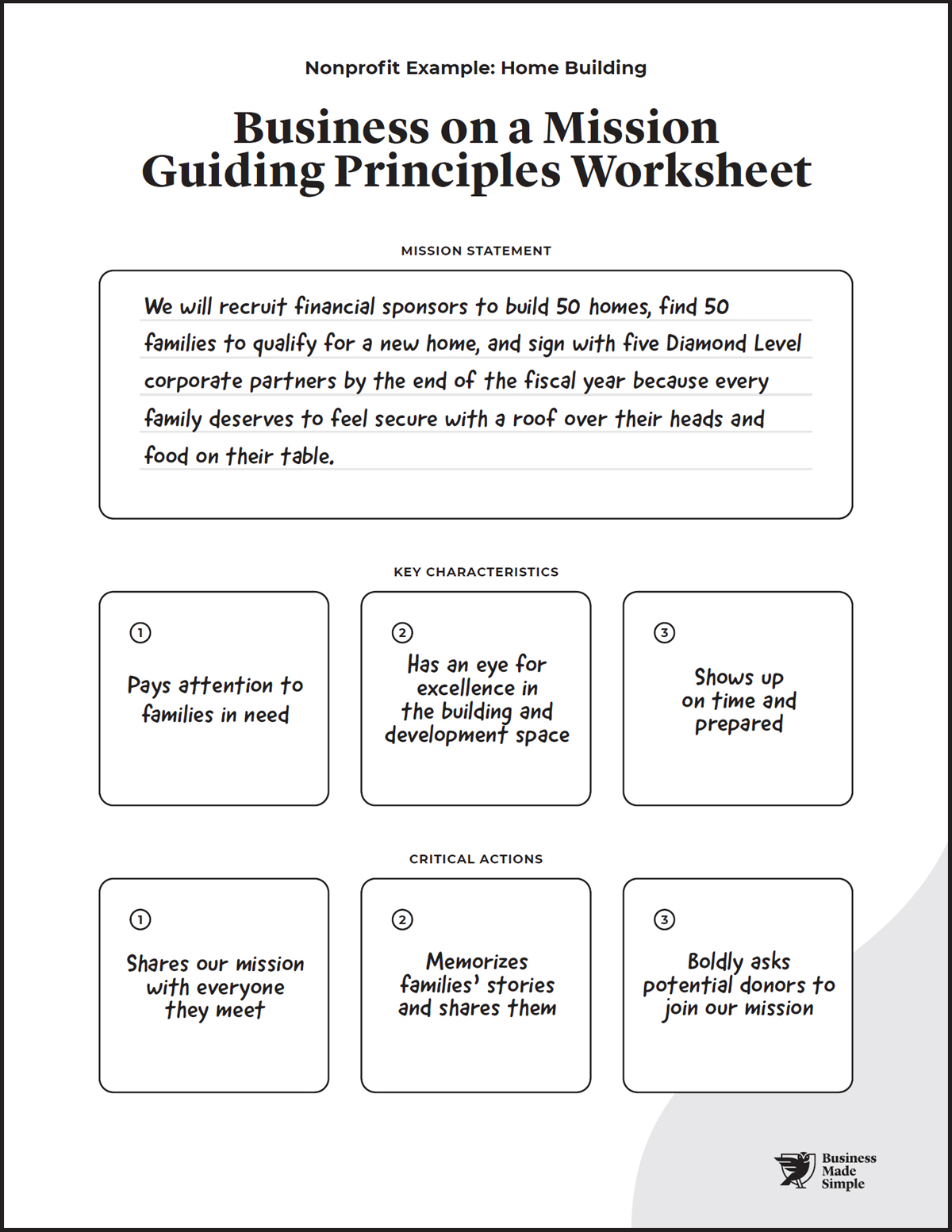
Access a digital, fillable version at SmallBusinessFlightPlan.com
What to Do with Your Guiding Principles after You Create Them
Now that you’ve got your Mission Statement, your Key Characteristics, and your Critical Actions defined, you can put them all on your Guiding Principles Worksheet.
Here are some things you can do with your Guiding Principles so you and your team are more likely to live them and accomplish your mission:
- Review them weekly at your All-Staff Meeting.
- Ask for “shout-outs” in your All-Staff Meeting to praise team members who’ve lived out your Key Characteristics.
- Have your Guiding Principles artistically painted on a wall in your place of business.
- Review and edit them in a special, biannual meeting with your leadership team.
- Announce any new edits or changes to your Guiding Principles with great fanfare.
- Create videos that explain (and demonstrate) your Guiding Principles so new hires can review them.
- Include your Guiding Principles in any recruiting collateral.
Congratulations, now that you’ve created your Guiding Principles using the Business on a Mission Framework, you’ve got a foundation on which to build your small business. Providing a compelling vision, Key Characteristics, and Critical Actions will transform you and your leadership team into trusted guides who are positioned to help everybody on the team accomplish the mission and experience a victory.
After you employ the Business on a Mission Framework and feel comfortable moving forward, start working on Step Two: Clarify Your Marketing Message.