Clarify Your Marketing Message Using the StoryBrand Framework
Step Two Will Help You Solve These Problems:
- You aren’t sure how to talk about your products so they sell.
- Your website and marketing collateral isn’t converting to sales.
- Customers aren’t spreading the word about your brand.
- Your social media doesn’t have a controlling idea.
- You have not created a loyal brand following.
- When you talk about your products, people just get confused.
If you’ve read my book Building a StoryBrand, this is the only chapter in the book that will be review material. The rest of the book will be new to you. That said, don’t skip Step Two. Reviewing and refining your marketing engine is key to increasing thrust and getting the plane off the ground.
• • •
The first thing nearly everybody does when they start a small business is to hire somebody to design a logo and brand colors. They love their logo and so they put it on a baseball cap and coffee cup and book bag and give the swag out to friends and family. The problem is, having your logo printed on some swag does not increase sales. Getting your brand right without doing actual marketing is like painting the side of an airplane that is not yet engineered to fly.
How many sales does a good logo and friendly swag lead to? Usually none. In fact, the only people who make money off your logo and coffee cup investment are the people who design the logo and the company that sold you the coffee cup.
Creating a logo and choosing brand colors are very important, of course, but there are other things that are more important. Communicating to potential customers that your product will solve a problem they are struggling with and then asking those potential customers to place an order is infinitely more important than putting your logo on swag.
If you’ve already created your logo and identified your brand style guide, don’t worry. That’s just one more step you won’t have to take later. For now, though, let’s get your plane moving forward. Let’s get some cash flowing through your cash register.
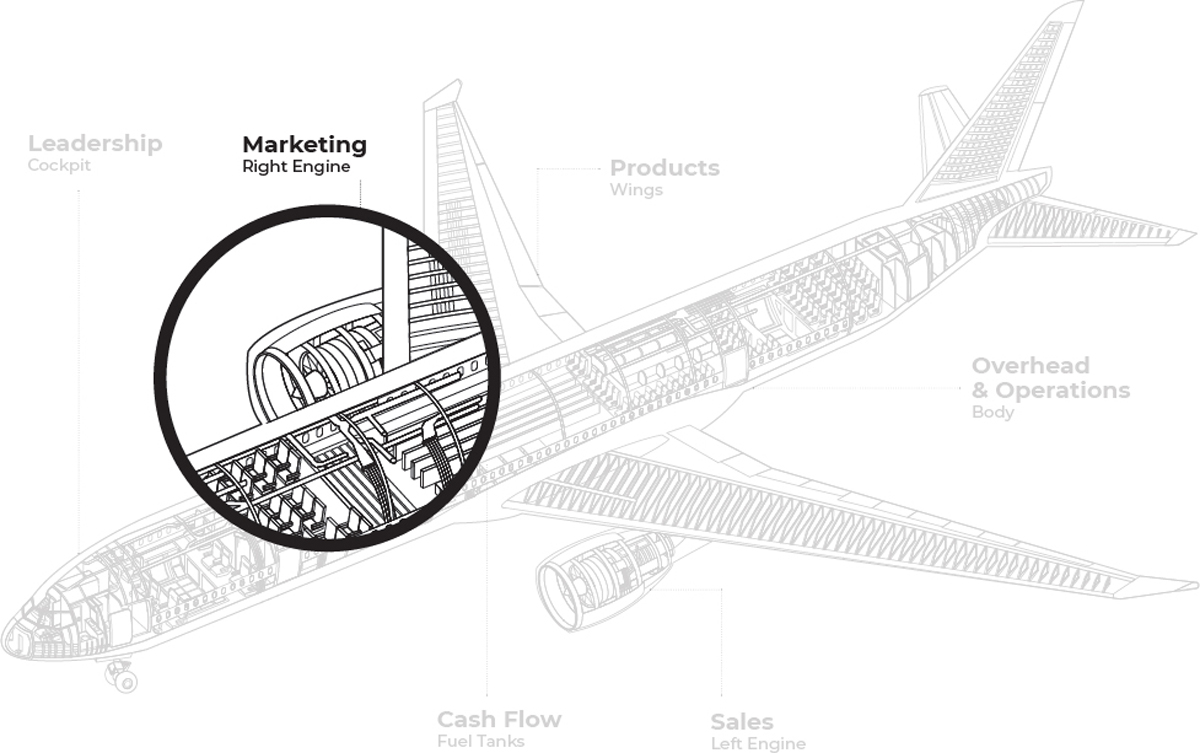
The next two steps represent the right and left engines of your airplane. The right engine represents marketing; the left engine represents sales. Because an engine’s job is to create thrust and move the airplane forward, we are going to talk about how both engines can move the wings (products) of your airplane fast enough to create lift.
Clarify Your Message and Customers Will Listen
Our marketing effort will focus on one clear objective: to explain what our products have to offer in such clear, simple language that everybody understands why they should buy our products and is motivated to do so.
This may sound like some form of manipulation but marketing should not be about manipulation. It should be about clarity. If you manipulate people, you might sell them something once. But if you clearly explain what you offer, you create trust and repeat business.
When we talk about marketing, we’re often talking about our website, lead generators, advertising, and perhaps some signage, brochures, and/or flyers. Those are important pieces of marketing collateral, but the truth is the heart of your marketing is embodied in the words you use on those websites, advertisements, and signage.
Sadly, most small businesses think more about how their marketing will look rather than what their marketing will say. This will never work. Why? Because the reason customers place orders is not because a brand design is attractive, it’s because they read or hear words that make them want to place orders.
In the marketing step that helps you build the right engine of your airplane, we are going to get your marketing engine moving by creating some simple Soundbites you can repeat in your marketing collateral. The sharper your words and the more often you use them, the faster your airplane will go and the more lift you will achieve.
This is where a BrandScript comes into play. A BrandScript is made up of seven “talking points” you can use to invite customers into a story in which they buy your product to solve one of their problems and, hopefully, live happily ever after.
In this chapter I am going to guide you through the process of creating those talking points.
When you’re done creating a BrandScript, you’ll have powerful words you can use on your website, in your lead generators and emails, and even in your presentations. If you use the framework I am about to introduce you to, you will have the words you need to get more customers interested in your products.
Your Small Business Will Be Built with Words
When we think about building our small business, we likely think about the time we will have to put in, the money we will have to invest, the team members we will need to hire, and the physical products we will have to create.
One area we often overlook is the words we will use to describe our products. The truth is our business will grow because we’ve used words that make people want to buy our products. If we don’t know how to talk about our products, our business will not grow.
The words you use to talk about your products matter. When people visit your website, they read words about your products. Those words can entice them or confuse them. Sales will only happen when those words entice them to place orders. When people pick up your product, they will read the words on the packaging. When customers read your emails or scroll through your social media, they will read words that either pique their interest or confuse them and turn them off. Due to your words, they will either be drawn into a story in which they play the hero and use your product to solve a problem, or they will find your product uninteresting and move on.
The point is this: Your brand is built with words.
So what kind of words do we need to use to attract people to our products and encourage them to place orders?
If you want to use words to help people understand why your products matter, remember two primary ideas:
- People are only attracted to information that helps them survive and thrive, and
- People, for the most part, only listen to ideas that are communicated simply.
Tell People How You Can Help Them Survive and Thrive
The first mistake brands make when it comes to talking about their products is they fail to focus on the aspects of their offer that will help people survive and thrive.
Human beings are designed to survive. In fact, that’s the dominant job of the human brain: It scans the environment for information, tools, and connections that will keep itself alive. This means the entire time you’re walking around on the Earth, you are looking for things and people who can help you stay alive (and thrive) and mostly ignoring the rest. Survival is the dominant objective of every person you have ever met, including you.
If you want to sell more products, talk about the aspects of your products that will help people survive and thrive. Nobody cares whether your grandfather started the company, but they definitely care whether or not your product can solve a problem that is keeping them up at night. When we talk about the aspects of our products that will help people survive and thrive, they will pay attention. And if we don’t, they won’t.
Don’t Make the Customer Think Too Much
The next thing we have to do if we want people to buy our products is use simple, plain language. If we don’t communicate clearly, we will be ignored. Customers are constantly scanning their environment for things and people who can help them survive. But because they are so bombarded with information, they don’t have a great deal of time to study anything that doesn’t immediately pique their survival instinct.
Your brain filters out nearly everything, processing only the information that will help you survive and thrive. This means most marketing messages are entirely ignored. If your brain didn’t filter out information it doesn’t need, your life would be entirely unmanageable. You’d walk into a coffee shop, stop to study the hinge on the door, and a few hours later still be standing there asking what kind of grease, if any, is used to keep the hinge from squeaking. Why? Because the filter in your brain that says you don’t need that information to survive is missing.
Most of the “interesting” things around us in life go completely ignored. We tend to ignore almost anything we do not need to survive. The problem is, if you don’t position your products as tools people can use to thrive, your products will then be ignored.
What do I mean by survive? I mean save money, make money, find rest, feel better, connect with more people, create a memory with loved ones, take care of ourselves, find love, be entertained, rest and recharge, eat, defend ourselves, and so on.
So, if the two things we need to do to sell more products are 1) associate our products with the survival of our customer, and 2) use short, simple Soundbites, what sort of messages should we use in our marketing? The answer is simple: Associate our products with our customers’ survival in such short, simple Soundbites that people don’t have to think too much to understand why they should buy them.
In other words, don’t tell people about how your great grandmother started the company or how you’ve got a terrific, “great places to work” metric or that you are building a new building or any of the stuff that is all about your survival but has nothing to do with your customer’s survival.
Your customers have an innate filter; if you are not talking about how you can help them survive and thrive, they will tune you out.
Use Story to Create Short, Simple Soundbites
To create short, simple Soundbites that break through the nearly impenetrable filter of the human brain, we’re going to use the incredible power of story. There is nothing that will get your sales and marketing engines turning faster than story. Nothing.
One of the biggest challenges in marketing is to get people to stop tuning us out and actually pay attention long enough for us to communicate why they should buy our product. And the challenge is real.
Did you know the average human brain spends 30 percent of its time daydreaming? When we’re sitting in traffic, we begin to daydream. When we’re reading a book, it’s all we can do to force ourselves to not daydream.
Daydreaming, it turns out, is a survival mechanism. When you daydream, your brain is saying, “There’s nothing here that can help me survive or thrive so I’m going to conserve calories in case I need the mental energy later.”
One of the few things that can make you stop daydreaming for an extended period of time is story. When we sit down to watch a movie or read a novel, our brains lock into the story, and we will pay attention for hours. We’ve all had the experience of starting a Netflix series only to realize, hours later, we’ve been sitting on the couch all day. Story is so compelling we cannot turn away.
So, if story causes us to pay attention, how can we harness the power of story to generate interest in our brand and our products?
Luckily, story is built on age-old formulas. Storytellers of all sorts have been using these formulas for centuries to capture their audiences’ attention. The same storytelling used in ancient Greece is now used in virtual reality videogaming.
When you create your StoryBrand BrandScript, you create seven categories of Soundbites that, if repeated in your marketing collateral, will help you invite customers into a story and generate more revenue for your brand. The StoryBrand Framework is a scaled-down version of the formulas storytellers have been using for ages. It’s worked for them, and it will work for you.
In the first step, you used the Business on a Mission Framework to invite yourself and your team into a story; now you’ll use the StoryBrand Framework to invite customers into a story that solves their problems and changes their lives.
The StoryBrand Seven-Part Framework
The StoryBrand Framework has been used by more than 700,000 business leaders to clarify their message and generate more thrust in their marketing engine. While it’s been used for many Fortune 500 companies, it’s mostly been used by small-business owners like yourself because it has an incredible power to clearly communicate your value offer to the public.
The framework will explain the seven plot points of a good story and deliver seven Soundbites you can use in your marketing. To clarify your message, use the seven Soundbites that invite customers into a story on your website or landing page, in your lead generators, nurture and sales emails, and presentations.
If you’re not sure how to talk about your products and services in a way that makes customers want to place orders, that is about to change.
The StoryBrand Seven-Part Framework looks like this:
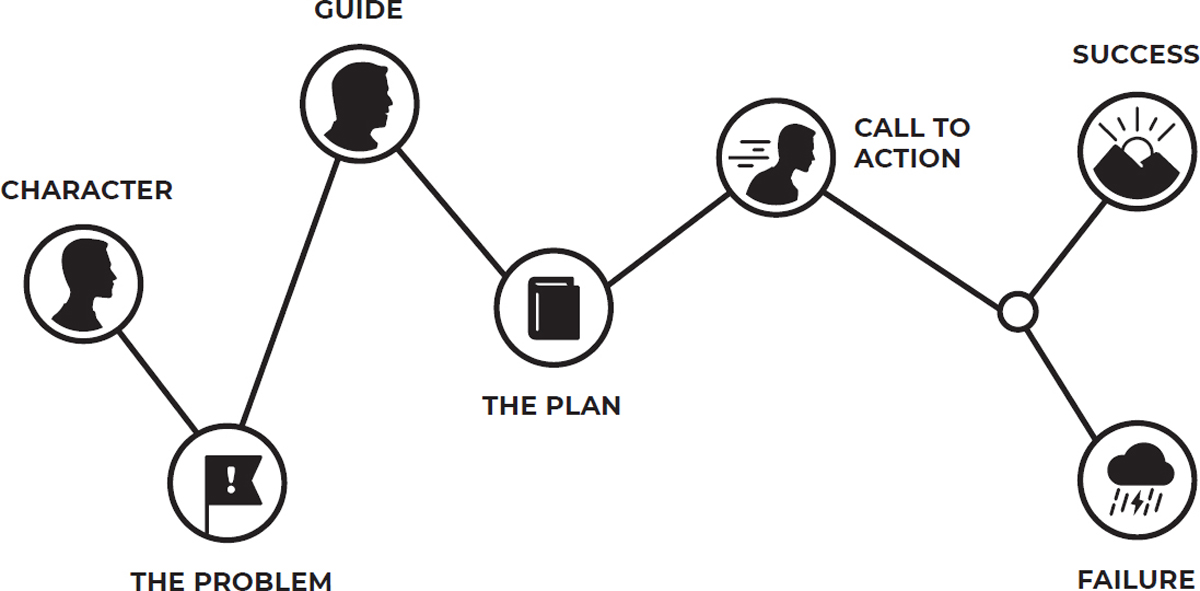
When you are finished with Step Two, you’ll have words you can use to tell people about what you sell and why what you sell will help them survive and thrive.
StoryBrand Element One: A Character Who Wants Something
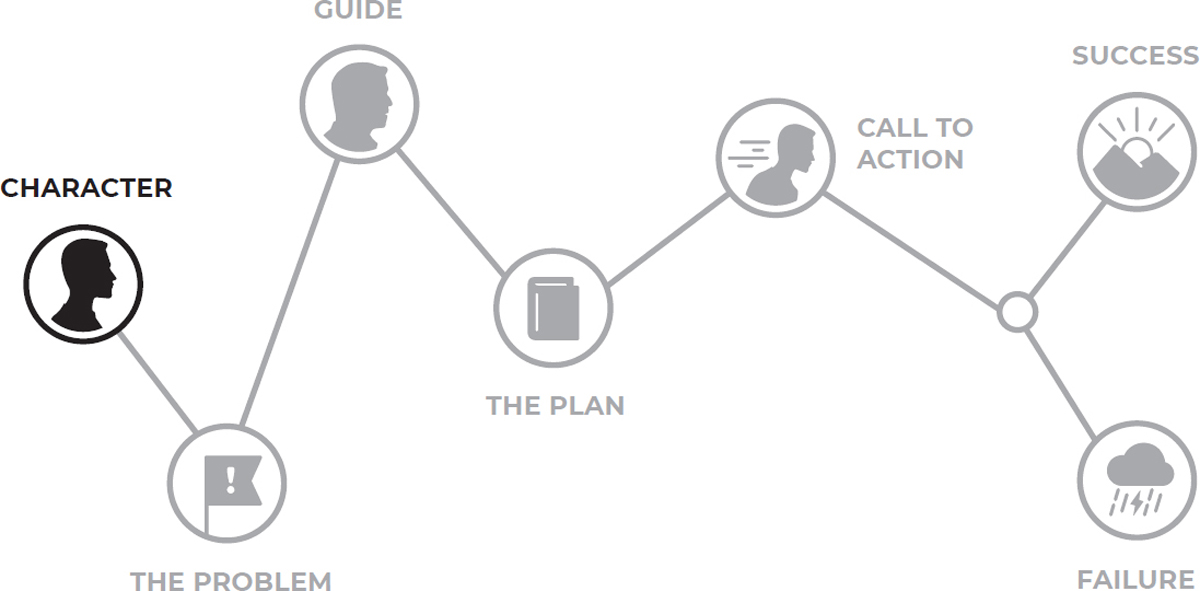
A story starts when we meet a character who wants something. The hero wants to disarm the bomb. The athlete wants to win the championship. The couple wants to get married.
When the central character wants something, the audience starts to pay attention because a story question is posited: Will the hero get what they want?
This is the first thing to remember in your marketing: To get attention, you need to identify something your potential customer wants and then talk about it in your marketing collateral. Do they want their pet to live a long and happy life? Do they want an electric car that will go farther on a single charge? Do they want to send their kids to a school where they get more attention from teachers?
When we start talking about the things our customers feel they need in order to survive and thrive, they start paying attention.
The key here is to be specific. If you’re a marriage counselor, you might be tempted to say something like, “Our clients want to be happy at home,” but this is too vague. Without context, this statement could be coming from a furniture company, a home security company, or even a swimming pool company. Instead, you might say something like, “Our clients want to rekindle the love they once shared with their spouse.”
The more specific you are, the more likely you are to open a story loop in your customer’s mind.
ANSWER THIS QUESTION: What does your customer need from your small business?
[Your Notes]
Once you identify something specific your customers want, you’ve got the first Soundbite you can use in your marketing collateral.
Why does this Soundbite lead to sales? Because once we identify something our potential customers want, we’ve opened a story loop in their mind. The only way they can close that story loop is to buy our product or service.
But there’s a problem: Just because we’ve identified something our potential customers want doesn’t mean they will place an order. Plenty of people want things and don’t buy them. They either talk themselves out of the purchase or get busy doing other things. In order to convince people they need your product or service, you must open that story loop a little wider.
StoryBrand Element Two: Must Overcome a Conflict
In stories, heroes do not get what they want right away. If they did, the story would be over in the first few pages. If a man wants to marry his high school sweetheart, and then he asks her to marry him, and then she says yes, and then they live happily ever after, we’ve got the most boring love story of all time.
Instead of getting what they want right away, heroes have to overcome enormous challenges. The man wants to marry his high school sweetheart but, sadly, she’s in love with his brother who is a serious jerk—only she doesn’t know it. He can’t tell her that his brother is a jerk because, in doing so, he will cause tension in his family. So what does he do? How does he get through all this and hopefully end up with the woman of his dreams? Now that’s a story question.
Conflict is what makes a story interesting. While none of us wants conflict in real life, we love it in stories. If you pause a movie at any point, you’ll likely be looking at a hero who is up against serious problems. The hero is either emotionally wrought or in physical peril for the entire story. Storytellers add conflict because human beings identify with conflict. If you think about it, every human being is constantly trying to overcome a problem in their lives. Conflict makes us pay attention to the story. We wonder if the hero is going to get what they want. And when we see a character on the screen overcome conflict, we feel a sense of hope that we can overcome conflict too.
To create Soundbites that make people want to buy our products, we’ve got to talk about the problems our customers are dealing with and how our products solve said problems. When we talk about our customer’s problems, our marketing works better and our airplane surges forward.
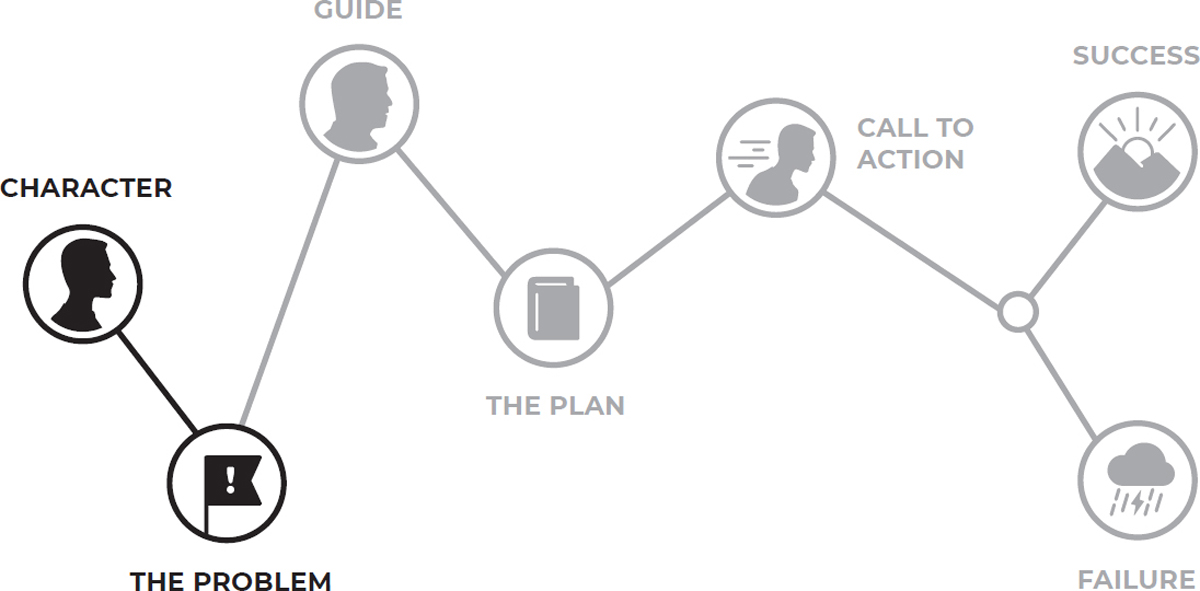
Here’s the point: People only buy products and services to solve problems. If you talk about the problems your customers experience (that your product solves) you are further opening the story loop that they must buy your product to solve.
ANSWER THIS QUESTION: What are some of the problems your products help your customers overcome?
[Your Notes]
Now you have the second Soundbite you can use in your marketing collateral.
Of course, not all customers are going to be so quick to part with their money. We can still do more. Once we’ve identified what our customer wants and can speak clearly about the pain they experience because they’ve not yet bought our product, it’s time to enter into their story and help them understand the solutions we offer.
StoryBrand Element Three: Meets a Guide
In stories, heroes need help to overcome their challenges. In fact, while we think of heroes as strong and capable, they are anything but. They are usually weak, ill-equipped, afraid, filled with self-doubt, and in desperate need of help. It’s not until the final pages of the story that the hero is revealed as a transformed character capable of accomplishing their task.
So who helps the hero win the day? The guide.
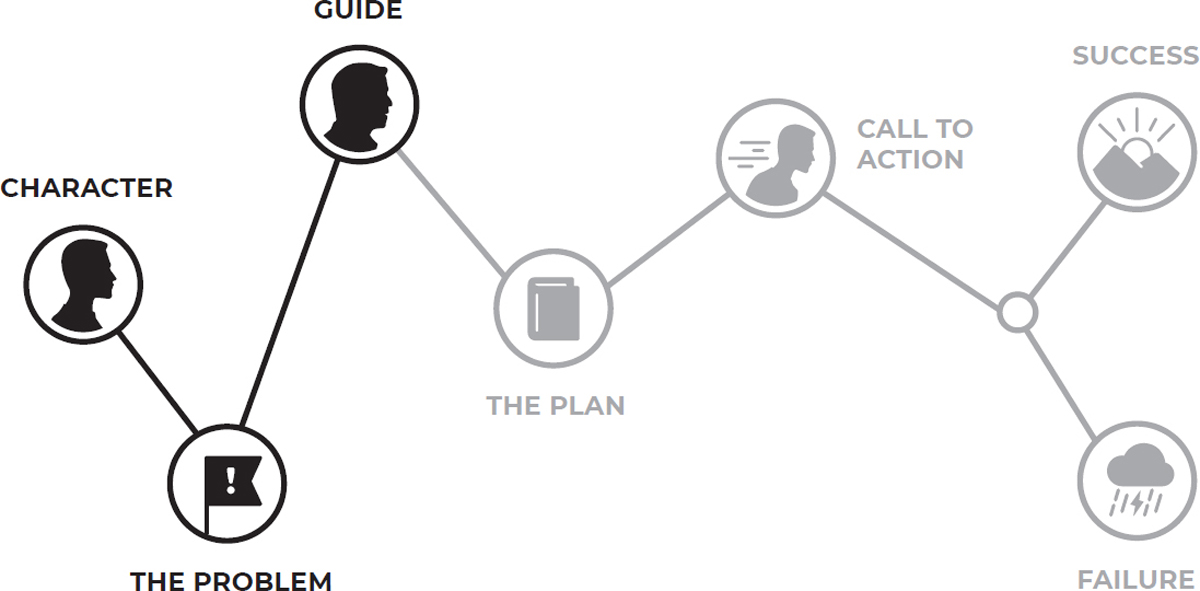
In stories, an often mysterious, strong, and capable character shows up to help the hero along their journey. This character is called the guide.
Mr. Miyagi is the guide for Daniel in The Karate Kid. Gandalf guides Frodo Baggins to help him destroy the ring in The Lord of the Rings series. Mary Poppins guides the children and their parents in the movie Mary Poppins.
Without guides, heroes would be lost. Without guides, heroes would never be able to overcome their problems.
Arguably the most important point in the entire StoryBrand Framework is this: Never play the hero; always play the guide.
Many small-business leaders make the mistake of positioning themselves as the hero in the story. They talk about how they created their product or how good their sales are or how long they’ve been in business, but customers aren’t interested in your businesses. What they’re interested in is whether or not you can help them solve a problem.
It’s a mistake, then, as a leader or a small-business owner to position yourself as the hero. Heroes aren’t looking for other heroes. Heroes are looking for guides who can help them.
When you position yourself as a guide, potential customers recognize you as somebody who can help them. When you position yourself as a hero, customers ignore you. You literally become invisible.
There are two things you need to do to position yourself as a guide.
The first thing you need to do is express empathy. Guides care more about the success of the hero than they do about their own success. The key words here are that “they care.”
In your marketing collateral, you want to express empathy with the pain your potential customers are experiencing. Saying things like “We know how it feels to struggle with . . .” goes a long way in positioning you as a guide.
Remember, hero customers are afraid, ill equipped, frustrated, and in need of help, which is why they are looking for somebody who understands their dilemma.
In your marketing collateral, include statements of empathy so your customers recognize you as the guide who cares about their frustrations and pain.
The second thing you need to do to position yourself as a guide is demonstrate authority. By authority, I mean you’ve got to demonstrate that you actually know how to help your hero customers overcome their challenge and win the day.
It’s not enough that you care about your customers; you also have to be able to lead them with competence. Have you helped hundreds of people overcome the problem your customer is dealing with? Have you created a technology that makes overcoming the challenge easier? Have you won awards for the work you’ve done? What can you say to your customer that will give them confidence you can help them solve their problems?
Statements like “We have helped thousands of people just like you overcome X . . .” or “Our award-winning technology has been featured in dozens of magazines . . .” let customers know you are proficient at solving their problem.
Many people think “not playing the hero” means that you cannot talk about yourself in your marketing collateral but this isn’t true. You actually can talk about yourself. You can talk about how much you care about the customer’s problem and you can talk about how competent you are at solving that problem.
When you express empathy and demonstrate authority, you position yourself as the guide in your customer’s life. When customers know that you care about their problem and can help them get out of their jam, they seek you out for help.
There are two Soundbites you want to include in your marketing collateral that will help position you as a guide for potential customers. Those two Soundbites are:
EXPRESS EMPATHY:
[Your Notes]
DEMONSTRATE AUTHORITY:
[Your Notes]
Use these Soundbites in your marketing collateral and more customers will pay attention.
Once you position yourself as the guide your customers have been looking for, they will likely want to place an order. In fact, with just these three narrative elements in your marketing message, your right engine will work more efficiently and your revenue will increase. That said, many customers still won’t place orders. It’s true they recognize your product as a tool they can use to solve their problem and they respect you as the guide, but some of your customers are going to be risk averse. They’re going to want to think about it for a while.
So how can we help them take that risky move, feel more comfortable, and hit the “buy now” button? We will give them a plan.
StoryBrand Element Four: Who Gives Them a Plan
Customers do not want to walk into the unknown. And even though you’ve identified something they want, have empathized with their problems, and have even demonstrated you can help them solve their problems, some still aren’t going to make a purchase.
Why? They’re at that point when they have to put skin in the game, and that’s risky.
To you, making a purchase seems like the obvious next move. You’ve got a solution to their problem. You’re experienced in helping people solve that problem. It’s worked for plenty of other people. So why isn’t the customer placing an order?
To your customer, though, the view is very different. They feel as though your solution is on the other side of a rushing river. They hear the water flowing thirty or forty feet downstream into a waterfall. If they try to cross that river, they could slip and fall, hit their head on a rock, and go floating right over the top of that waterfall.
That’s absurd, of course. There’s no danger in buying your product. You and I know it works. But the customer doesn’t. To us, it’s a sure thing. To them, it’s a risk.
What do you do to help the customer gain more confidence that they won’t be wasting their money? You place large stones in that river that act as stepping-stones. When the customer sees there is a clear path to cross the river, they become much more likely to place an order.
We all know how it feels to want to buy something but have a sense of unease about pulling the trigger. What we need to provide for the customer is baby steps. The stones you will place in the river represent a three- or four-step plan. When you give your customer a three- or four-step plan, they are much more likely to place an order.
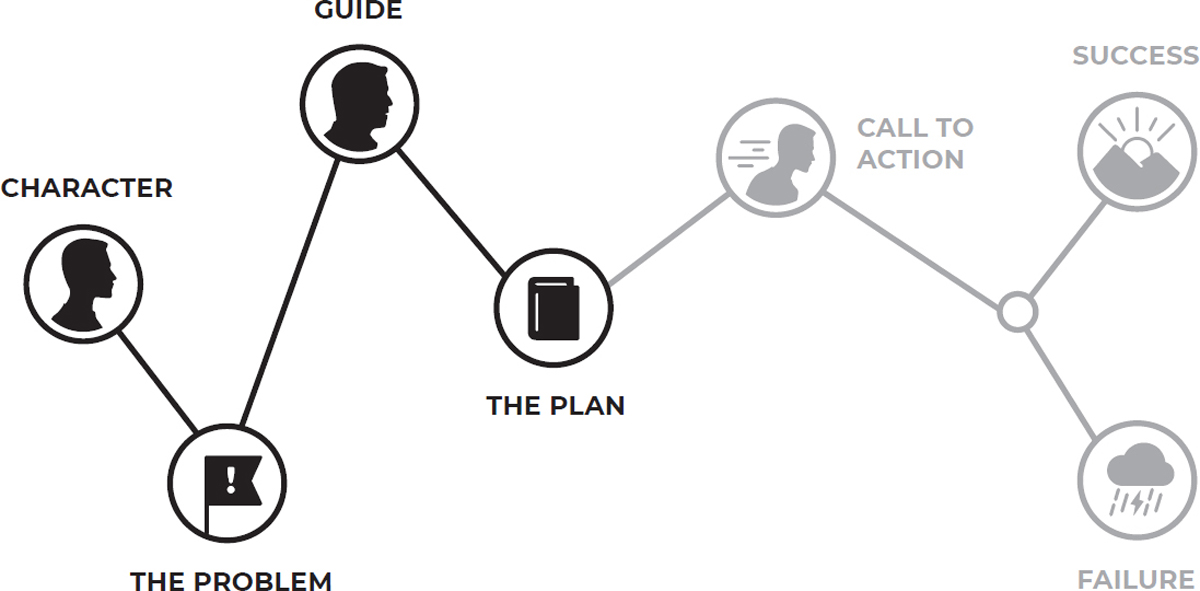
For the record, three-step plans work well; four-step plans work almost as well; five-step plans hardly work at all. A plan exists to let the customer know the journey from their problem to your solution will be easy. When you include five or more steps, you’re actually saying the journey is difficult. Keep the plan easy, and your customer will feel safety and comfort and will start taking steps toward a purchase.
Instead of asking a customer to go ahead and make an offer on a house, for example, what if you said, “Let’s do this safely. Let’s contact the bank to make sure you qualify for the amount you’ll need, then let’s place an offer. If the house appraises at the right price, you can buy the house and move in.”
Did you catch those three steps?
Making a big purchase like buying a house is risky business. When we offer three or four baby steps to our customers, they’ll feel more comfortable moving ahead.
The product you sell doesn’t have to be big and expensive to benefit from a plan, either. You can use a three-step plan to sell a pair of shoes: 1) Order the shoes, 2) Try them on at home, 3) Ship them back if they don’t fit. You can do the same when selling a service: 1) Sign up for our HVAC maintenance program, 2) Get regular checkups and filter replacements, and 3) Never worry about your HVAC system again.
Another way to look at the plan in the story you are inviting customers into is that it “lifts the fog.”
When customers are facing the prospect of loss, they get worried. They may not know they are worried, but when money is on the line, they are certainly worried. The idea of placing an order, for your customer, means they could lose their money, their self-respect, their sense that the world is trustworthy and so on. Imagine being a lonely hero having to walk into a dark forest in order to accomplish your task. As you look into the forest, you can only see a few feet into the forest because there is a dense fog drifting slowly and eerily thorough the trees.
When you present a plan to the customer, you essentially “lift the fog” so they can see much more of the terrain they will be venturing into.
When you break down the process into three or four steps, customers can see farther into the forest. For instance, instead of a financial advisor saying, “Let’s get together and make a plan for your future,” they could say, “I work with clients in three phases. First we assess where you want to go in life. Then, I put together a plan for you. Then, if you decide to move forward, we work together to execute that plan.”
A three-step plan like this essentially tells the customer what the future looks like if they work with you, lifting the fog.
When a customer browses your website and becomes interested in placing an order, it’s the plan that lets them know making a purchase is simple, safe, and easy. Including a plan on your landing page, in your emails, and in your sales presentations will cause a greater percentage of people to place an order.
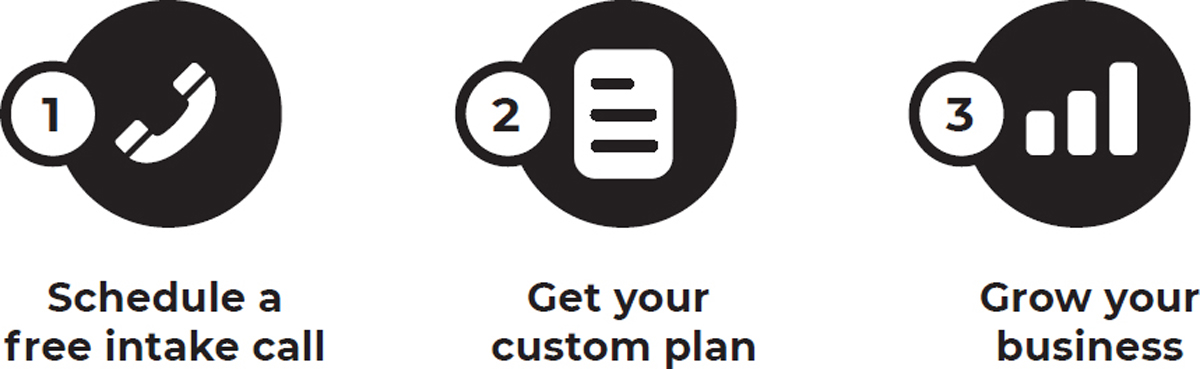
Ever walked into a CarMax car lot? The behemoth car dealership includes three-step plans for everything from buying a car to selling your car to buying a warranty for a car. These plans provide a mental map customers need to take in order to solve their problem.
ANSWER THIS QUESTION: What three or four steps do your customers need to take in order to buy your product and solve their problem?
[Your Notes]
When you use this three-step plan in your marketing collateral, your sales will increase.
Now that our customer is ready to place an order and we’ve given them a clear, simple path to take, let’s encourage them to take a step. Let’s call them to action!
StoryBrand Element Five: And Calls Them to Action
At this point in the story we are inviting customers into, they’re ready to place an order. Some customers may even be so excited they call you to ask how they can purchase your product or service. Many customers, though, will not. They will wait for you to ask them to place the order. And if you don’t ask them, they will walk away wishing you would have because they really, really wanted to give you their money in exchange for the solution you had to their problem.
It’s a strange phenomenon, I agree, but it’s a phenomenon all the same: People don’t tend to do things unless you ask them to do things. And making a purchase is one of those things.
So what do you do about it? Call your customers to action with confidence.
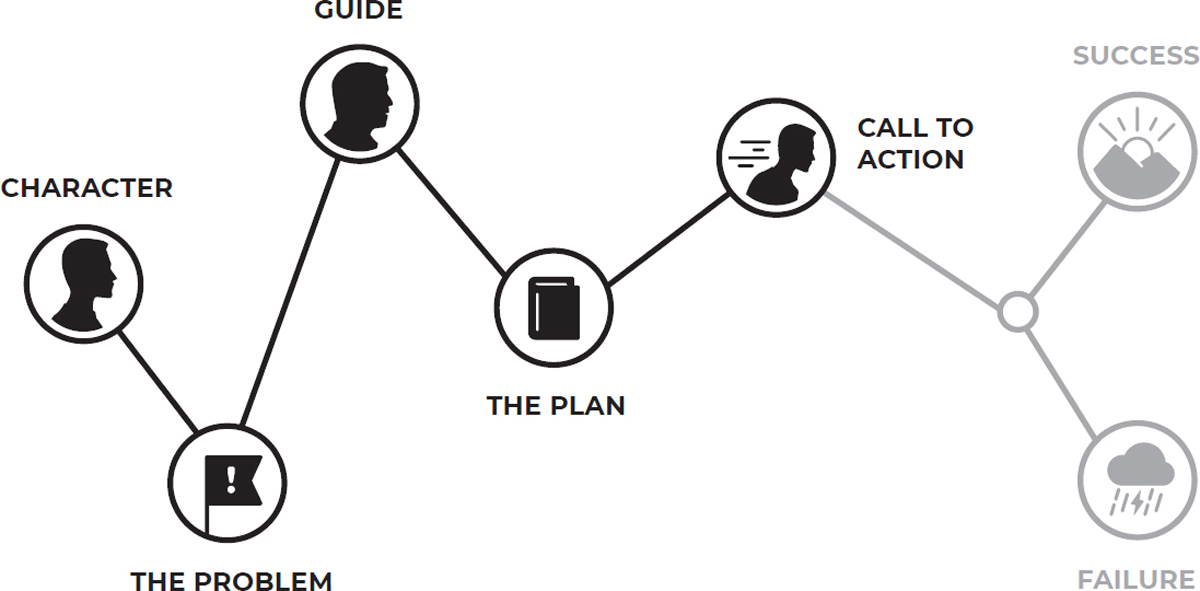
In stories, heroes are often lethargic. They did not ask to be thrown into this story, after all. Remember, they are ill equipped, filled with self-doubt, and in need of help. They just want all this mayhem to end so they can get back to the shire where life is comfortable!
Guides often have to challenge heroes to take action in order to help them resolve their problem. Leave the shire. Climb the mountain. Throw the punch. Go and win the heart of the person you love. Get moving!
What does this mean for our small business? It means we need to call our customers to action. We need to tell them it’s time to place an order.
In our marketing collateral, this means there should be a “buy now” button on our website. In fact, there should be many “buy now” buttons and they should flow down the page in every section of our website. They should be bright, bold buttons. In fact, the “buy now” buttons should be the obvious buttons to press on your website.
Think of the “buy now” button on your website as a cash register. In a physical retail store, you’d never hide the cash register. You’d want customers to know where to bring their selection so they can make a purchase. The same is true on your website. Make your cash registers easy to find, click, and use.
If the buttons don’t say “buy now,” they should say something direct like “schedule an appointment” or “call today.”
Many small-business leaders don’t like to be pushy when it comes to marketing their products and services, but I assure you, very few small-business owners come off as pushy. In fact, most small-business owners make the opposite mistake: They are too passive in their calls to action. When we use language like “get started” or “learn more” we sound as though we don’t believe in our products enough to encourage customers to place an order.
A customer wants to know you believe in your product and you are certain it can solve their problem.
Let’s give customers something they can accept or reject in our marketing collateral. Let’s call them to action. Let’s ask them to make a purchase.
ANSWER THIS QUESTION: What will the main call to action be on your website and in your marketing collateral?
[Your Notes]
When you have clear calls to action in your marketing collateral, your sales will increase all the more.
Now that we’ve included strong calls to action in our marketing collateral, let’s wrap up the story by including stakes.
To make the story you are inviting customers into interesting, customers need to know what can be won or lost based on whether or not they place an order. When we tell customers what they will get or what it will cost them if they do not buy from us, they are much, much more likely to place an order.
A good story needs stakes!
StoryBrand Element Six: So the Hero Can Avoid Failure
A good story needs stakes. Something must be won or lost based on whether or not the hero accomplishes the task at hand. Will the hero marry his sweetheart, or will she marry the evil brother and cause him to live heartbroken forever? Will the lawyer win the case and get justice for the entire town, or will all those people continue to suffer?
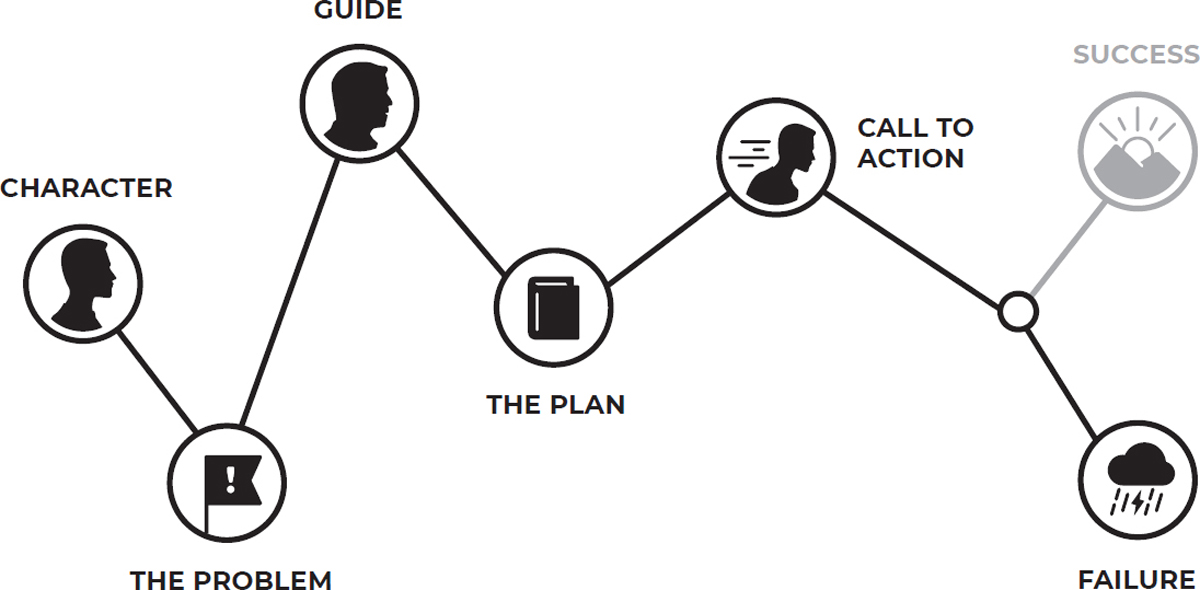
In a story, the audience is often reminded of what can be won or lost if the hero does or does not take action. We want to do the same in our marketing.
The two categories we will create Soundbites for in order to add stakes to the story are failure and success. If the customer does not buy our product or service, their story will end in failure, but if they do, their story will end in success.
In this section of our BrandScript, we want to create a talking point about what we are helping our customer avoid. People are motivated to avoid discomfort just as much (if not more) than they are motivated to seek comfort. Remember, human beings are problem solvers and are always trying to figure out how to avoid frustration and pain. When we remind them that our product keeps them away from frustration and pain, they become more motivated to buy.
Does the mattress you sell help customers overcome their backaches? Make sure to tell them that or, better, include that language in the signage next to the mattress itself or in the descriptive copy on your website. Does the car you are selling have much open access to the back seat so that children can be strapped into their car seats with greater ease? Great. Make sure to tell them that most other cars will have them hunching down to put a child into a car seat, but with this car they can stand straight up and reach into the car with ease.
Stakes. Remember, stories are all about stakes. What pain or frustration is your product saving your customer from having to experience?
THE QUESTIONS YOU WILL WANT TO ANSWER TO STIMULATE THE RIGHT TALKING POINTS IN THIS SECTION ARE:
What negative consequence does my product help my customers avoid?
[Your Notes]
What will people continue to experience if they do not buy my product or service?
[Your Notes]
When you include the negative stakes in your marketing collateral, orders will increase.
People are driven to avoid negative consequences, so including these Soundbites in our brand narrative is going to create a sense of urgency. But we definitely don’t want to leave them hanging. People are also attracted to the incredible, positive, wonderful things that will happen to them if they do buy our product or service.
The last element in the StoryBrand Framework will be to invite your heroic customers into a better life in which their problems are resolved.
StoryBrand Element Seven: And Experience Success
In a story, you’ll want to cast a vision for your potential customer that answers the question: What’s in it for me?
Every hero is looking for a “happily ever after” ending to their story, and even though the incredible benefits of buying your product may seem obvious to you, they won’t be obvious to your customer.
If we want to complete the story we are inviting customers into, we need to tell them about the wonderful, powerful, positive thing that will happen to them if they buy our product or service.
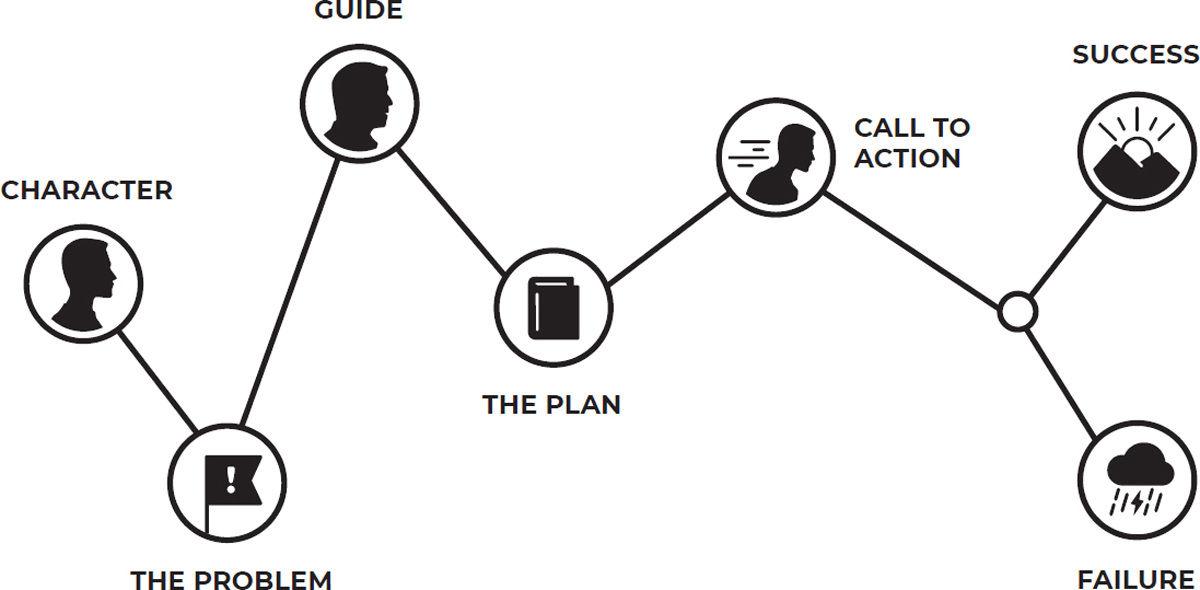
When you talk about the positive ramifications customers will experience when they use your product, you add enormous perceived economic value to your products just by using words.
For instance, in the header section of one website we show in our workshops, the small-business owner sells an electric bicycle. The bicycle costs $3,000. That’s quite a hefty price for a bike. So how does she make the bike look like a great deal? She starts listing all the terrific things that happen when you buy the bike, things like:
- You will save money on gas.
- You will never have to sit in traffic.
- You get to enjoy the great outdoors.
- You get to participate in saving the environment.
- You get to be the leader of the pack.
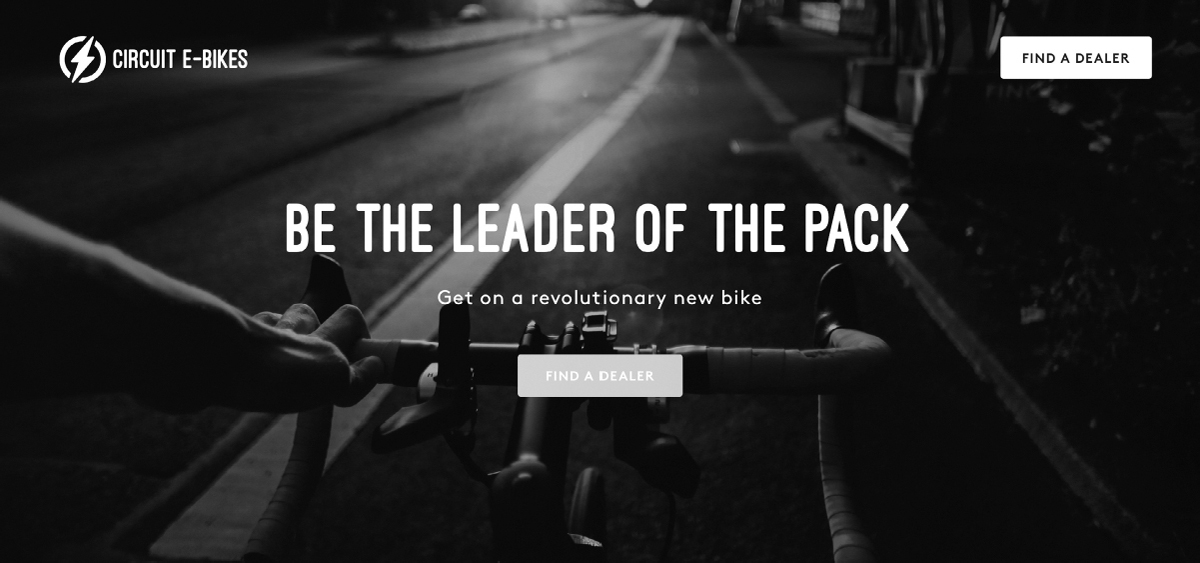
As customers read the words on your website that tell them all the value they are getting, they do some subconscious calculations. Essentially, they compare the price of the product to all the value they will be getting and the more value they get, the more appealing the price of the product.
Yes, it’s true, you can change the perceived value of the products you sell using only words.
Think about it. The bike costs $3K, but you will save some of that in the cost of gas. Also, I’d pay at least $1K to never have to sit in traffic, which means the bike is actually worth $4K, but I’m only paying $3K. I’ll also get to enjoy the outdoors which means I’m getting a $5K value for only $3K. But wait. I also get to save the environment. Bam! That’s even more perceived value. Plus, I get to be the leader of the pack and perceived as a forward-thinking early adopter. That’s huge value. At the end of the day, it feels as though this bike is worth a lot more than $3K. It might even be worth $6K or $7K because of the way it could change my life. $3,000 suddenly sounds like a great deal. And we added all that perceived value just by painting the positive stakes in our BrandScript.
Again, when you include all the wonderful things that will happen to people if they buy your product or service, you’re adding perceived value to the product itself, and when you add value, people are much more likely to place an order for your product.
Painting the stakes matters. All stories are headed toward a happy or sad ending. The entire time we are watching a movie, we are hoping the hero can win the race, disarm the bomb, or get the promotion. We are hoping for these things because the storyteller has foreshadowed what the happy ending will be if the hero overcomes their challenge.
Just like in a movie, you want to continue to foreshadow what your customer’s life could look like the whole time they are considering your products.
Make sure to include a list of the positive, amazing things your customer will experience if they buy your product or service. If you do, customers will start moving toward that happy ending, and they will have to buy your product or service to make that ending happen.
THE QUESTIONS YOU WANT TO ASK TO HELP CUSTOMERS IMAGINE HOW YOU CAN IMPROVE THEIR LIVES ARE:
What will my customer’s life look like if they buy my product or service?
[Your Notes]
What benefits will my product or service provide that would add value to my customer’s life?
[Your Notes]
When you paint a picture of the good things your customer will experience if they buy your products, you increase the perceived value of those products and your orders go up.
Now that you’ve given your heroic customers a vision of what their lives could look like, you’ve completed the process of inviting them into a story. This is a good thing. Human beings are preprogrammed to engage in stories. Their minds are always trying to organize the random data they experience every day into a narrative that makes sense. When you organize your brand message using the elements of story, your customers don’t have to think as hard to understand how you can change their lives.
Now that we’ve got the seven categories of Soundbites down, let’s talk about what to do with them so that your marketing creates as much forward thrust as possible!
Clarify Your Message by Creating a StoryBrand BrandScript
To create your seven categories of talking points, use a StoryBrand BrandScript. A BrandScript allows you to organize your thinking, clarify your message, and invite customers into an amazing story in which they use your products or services to solve their problems.
You can fill out a StoryBrand BrandScript in your Small Business Flight Plan in the back of this book.
A BrandScript looks like this:
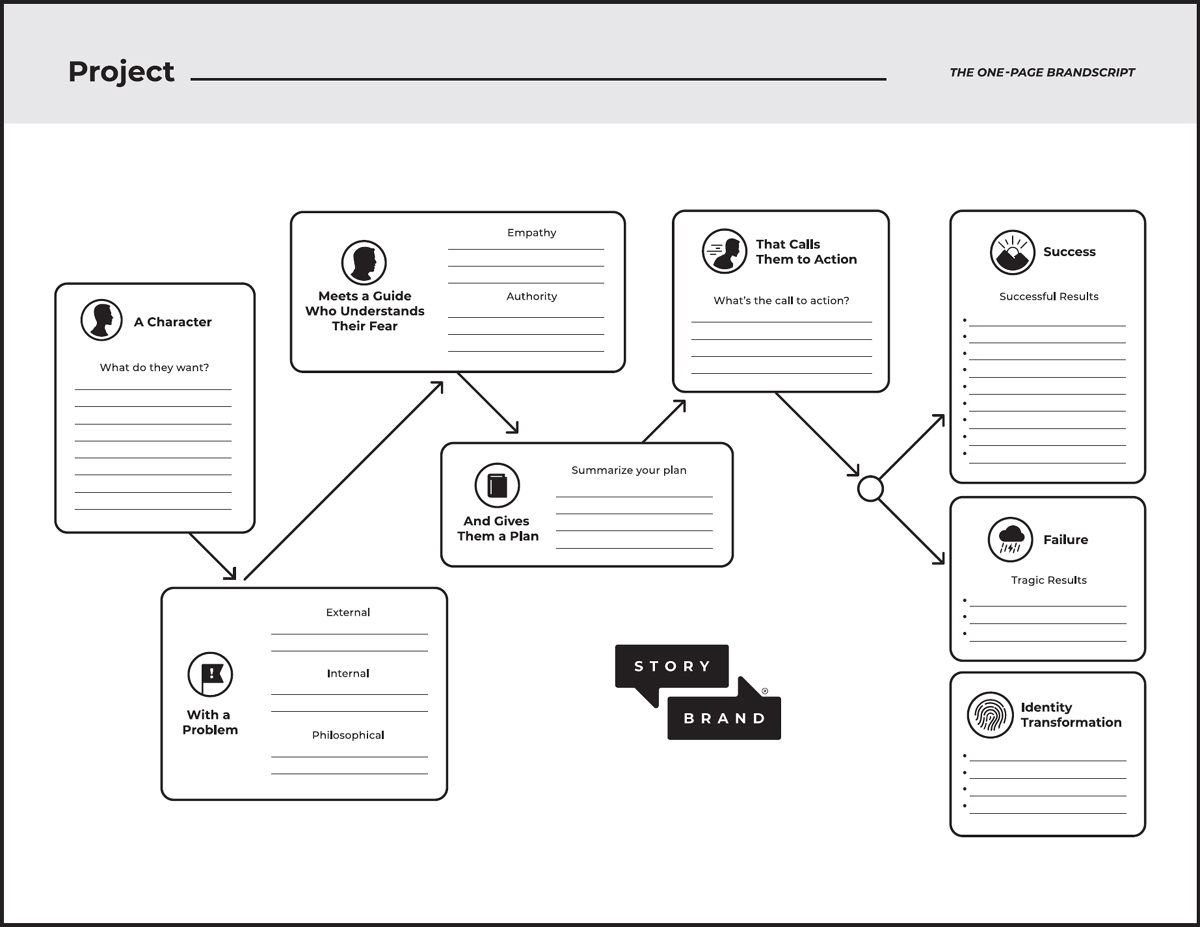
Access a digital, fillable version at SmallBusinessFlightPlan.com
Use Your New Messaging in Your Marketing Collateral
Your new marketing message can be used in all your marketing collateral, including landing pages, lead generators, emails, and even in casual conversation.
The basic principles of the StoryBrand Framework are simple:
- Reduce your marketing to a series of repeatable Soundbites, and
- Use those Soundbites on your landing page and your entire sales funnel.
Once you revamp your marketing collateral using your new, clear message, your customers will respond and your revenue should increase.
Now that we’ve fired up your right engine, let’s fire up your left engine: Sales. Even if you are a solo-preneur, your plane will move through the air much faster if you learn to sell. Let’s take Step Three.