
Countries of Europe
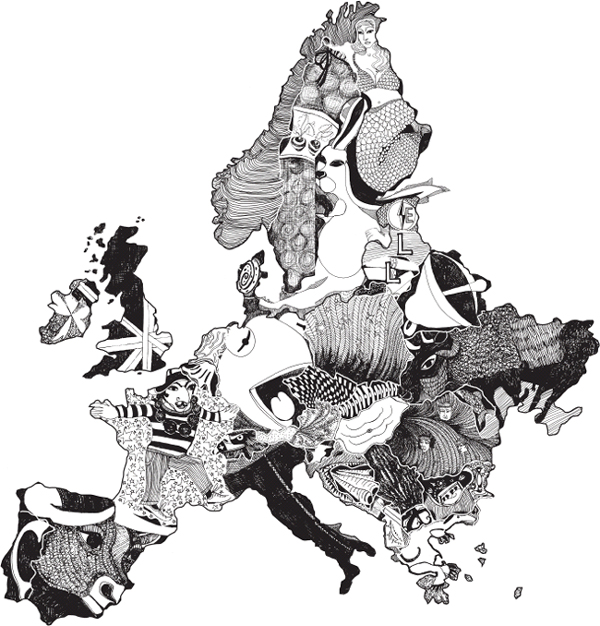
People are often bewildered by the map of Europe. They ask themselves ‘Why so many countries?’ and ‘Why such silly shapes?’
They may go on to wonder who drew the map, questioning whether he was blind, drunk or just really annoying. Some of them even try to guess whether he had any friends, before shaking their heads with a sigh.
But if you, too, think the map of Europe is a bit of a mess, you need to have another look.
For hidden in among all those lines is a picture – a picture of what happened when an eagle pecked a pentagon.
You may never have considered it before, but the map of Europe tells the story of how, once upon a time, an eagle was quietly sitting with his beer when a pentagon jumped uninvited upon his glass and began to dance around cheekily.
Very naturally, the eagle pecked the pentagon.
That turned out to be the mother of all mistakes. Well, as you can imagine, a huge fight began, with the pentagon calling on its many violent friends for support: a bison, Kermit the frog, a rabbit… and the extraordinary pile-up that ensued contains an unforgettable map of Europe.
But I should start at the beginning and tell you the whole story. And, since the eagle is the hero of the tale, we’ll begin with him.
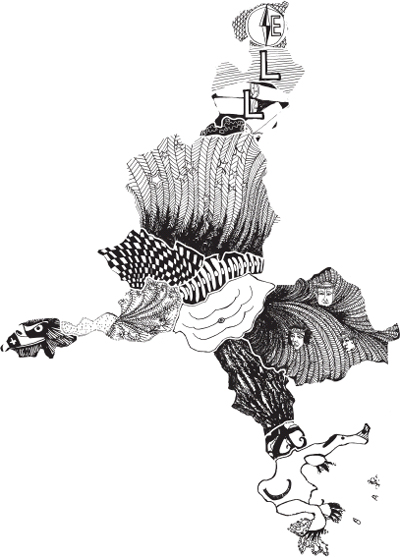
Here he is, standing on his perch, spreading his magnificent wings. Let’s see what countries he’s made of…
Look at his head first, which is actually Switzerland. The thing about eagles is that, with their amazingly versatile and well-built beaks, they tend to think of their heads as Swiss-army knifes. That’s part of the reason why the eagle will be so quick to peck later on in the story.
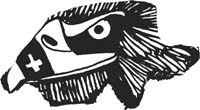
At the moment, though, the head looks very neutral, doesn’t it? It even has a Swiss flag painted on the beak. This eagle’s head is definitely Switzerland.
If you look now to the neck and upper breast of this bird, you’ll see that they are covered in the most unusual plumage – these feathers don’t belong to an eagle; they’re much too long and fluffy. They’re the feathers of an ostrich. The neck and breast of the eagle, covered as they are in ostrich feathers, make up Austria.
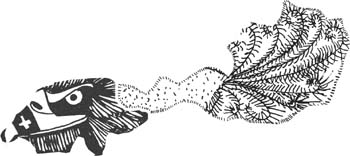
So the neck and breast region is Austria and the head, Switzerland.
And see how, below the breast, the rest of the bird’s trunk divides into two, into back and stomach.
It’s a lovely back, that. I call it ‘Slovak’ for short. Slovakians are actually famous for having the most beautiful backs of any European people – soft, smooth and unblemished. This here Slovakian back doesn’t let the side down; note the supremely elegant spinal curve, all the way to the bottom of the bird, marking out Slovakia.
Exactly beneath Slovakia is the lower part of the eagle’s trunk, its stomach. Cor! Listen to it rumble! There’s no other bird whose stomach can thunder like this!
It’s rumbling so thunderously because the eagle is hungry. And we can mark out the eagle’s hungry stomach as Hungary on our map. This hungry Hungarian belly runs eastwards parallel to the back.
Now take note of what remains of the bird as we carry on east: its magnificent Romanian tail feathers. Can you see the many Roman emperors’ faces that have been printed into these tail feathers? This bird’s had Rome-mania ever since he saw the film Gladiator.
These Roman remains on the bird are Romania, attaching to the hungry part of the bird’s trunk, its tummy.
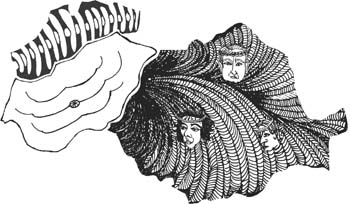
Let’s examine the rest of the eagle, beginning with the legs and what it’s standing on.
And what legs it has! They’re as compact and powerful as you’d ever wish a bird’s legs to be: they are utterly superbian. They are Serbian, you see, these legs, which, as is normal with birds, run down from the stomach. Serbia thus protrudes from Hungary and runs bravely south.
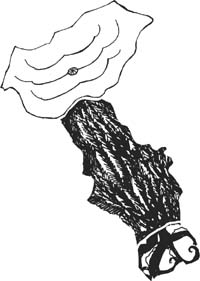
At the bottom of these superb Serbian legs the bird’s feet and claws, meanwhile, are covered in some kind of yellow gloop. These Macedonian claws seem to have a mass of mustard on them.
Having mustard on your person is something of a tradition in Macedonia – the most famous Macedonian, Alexander the Great, sent bags of mustard seed to kings whose armies he’d massacred ‘so that they could taste the bitterness of their defeat’. Charming.
On what are these massively mustardy Macedonian feet perching? That’s our next question. The answer is that they perch on Greece, like the rest of Western civilization.
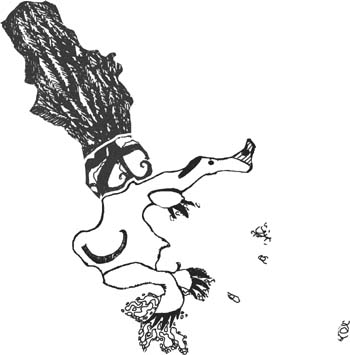
Greece, an anteater sitting on a rock, is doubled up under the weight of the eagle above him. The eagle, for his part, has to cling on hard – this particular anteater exists on a fast-food diet of deep-fried ants, and is terribly slippery, literally seeping grease from his pores.
Just look at his hands – they’re so greasy that all these islands he’s been hoarding in his hands over the years are slipping out, tumbling downwards!
Don’t forget: this anteater and the islands slipping from its hands make up Greece.
So, our Swiss-headed, Austrian-necked, Slovakian-backed and Hungary-stomached bird is standing with its superb Serbian legs and mustard-covered Macedonian feet upon Greece. Its remains (its Roman-decorated tail-feathering, that is) spread out east and are called Romania.
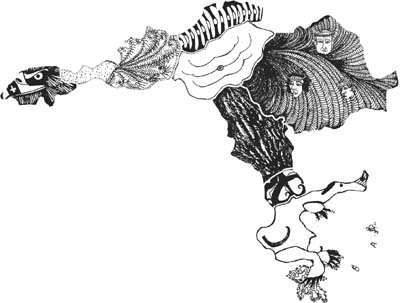
OK, so we’ve seen the body of our bird and its perch, but we’re yet to take a look at its wings. We’d better head over to them – they’re absolutely key to the way the eagle will attack the pentagon later on in our story.
To understand how the eagle’s wings work, we need, of course, to consider its shoulders.
They’re fantastically strong, as you can see, but the amazing thing about them is the way they thrust at once up and forward from its back, like those of a butterfly swimmer mid-stroke.
This thrusting forward of the shoulder gives the rest of its wing room to move. It’s the part of the bird you’d check first if you were testing it for sky-worthiness – that’s how vital it is. And, as if we didn’t know already that this shoulder is the Czech Republic, see how its feathers make a lovely chequered pattern.
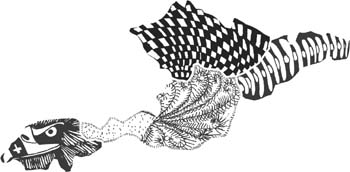
The wing itself attaches to this shoulder and runs backwards along the lovely Slovakian back.
It has two main sections: the central area, where the power comes from, and the extended tip, which stores the energy and maintains control.
The central, principal area, coming up off the chequered Czech Republic and that lovely Slovakian back, has a beautiful shimmer, doesn’t it! It’s a pleasure to see such well-polished feathers. This, the power-centre of the wing with its polished feathering, is Poland.
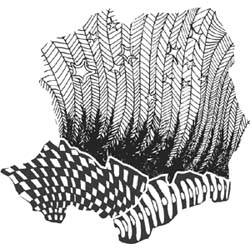
Emerging from the polished Polish portion the magnificent tip heads up and east. Let’s look at how this tip energizes and controls the whole wing.
The energy’s stored in a set of lithium batteries, which feed straight into powerful, polished Poland. These lithium batteries make up Lithuania. It’s worth noting how the tip of the left-most battery, the one on the leading edge of the wing, has become a little rusty: this is a little bit of Russia in the middle of Europe, rusting away at the end of the foremost lithium Lithuanian battery.
Above Lithuania, there’s the Latvian portion of the wing. The feathers on Latvia run laterally – which is very important for the aerodynamics. This lateral feathering allows the bird to veer from side to side if need be. This eagle is capable of a lot of veer thanks to its Latvia.
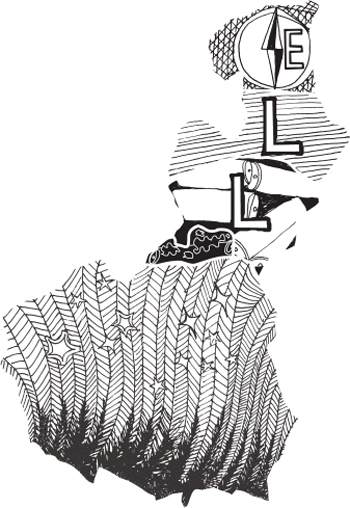
Finally, astonishingly, the wing’s E-stonian tip is made from stone. The weight of this stone Estonian tip is what gives the bird balance.
One last thing about this wing: if you read down the names of these countries, you’ll see they spell ‘ELL’, and that the L countries get longer. A mere detail.
So that’s the eagle’s wing. Let’s have one last look at it, beginning from its eastern extreme in stony Estonia. After Estonia, we come down through lateral Latvia (which gives it lots of veer), past the Lithuanian lithium batteries that power the vast, polished Polish part of the wing. And it’s important not to forget that the whole wing wouldn’t be able to work if it wasn’t for the chequered Czech shoulder, throwing itself forward to give the wing room to move.
And, let’s just carry on this recap, what do we know about the rest of the eagle?
Well, it’s standing on the back of a greasy anteater, which is to say Greece. Its feet, which have masses of mustard on, are Macedonia and its legs (quite superb!) are Serbian. The legs attach to the hungry Hungarian stomach that runs beneath the Slovakian back. Austria is the ostrich-feathered neck and breast into which Slovakia and Hungary feed. And the bird has Switzerland for a head.
What remains? Our eagle’s tail feathers of course: Romania.
Now there is, in point of fact, one last thing you should note about this eagle: he’s wearing a bib.
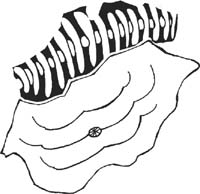
That may seem odd, but you have to realize that this eagle has very slovenly eating habits. He tends to slop his food and drink all down his front.
That’s why, attached to his Austrian neck and the upper part of his Hungary tummy, he’s wearing a bib – to collect the slovenly slop. This bib is Slovenia; it slowly collects spilt food and drink over the course of each day.
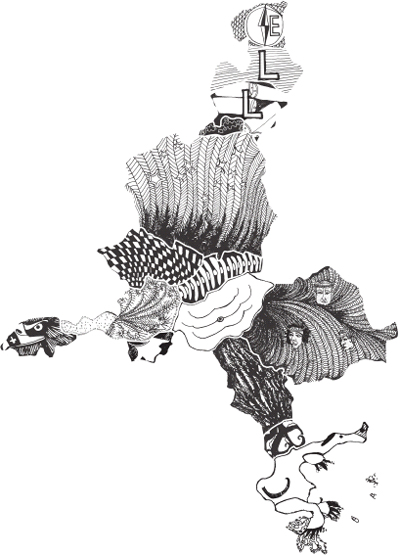
So that’s the eagle and his bib. Now let’s see how this innocent-looking bird found itself in the midst of a punch-up.
Here he is, standing peacefully on his Greek perch, bib at the ready, having a beer. It’s all very chilled. He’s got a special Iberian mug for his Iberian beer: it’s in the amusing shape of a Spanish bull’s head, and it has a Portuguese handle to make it portable.
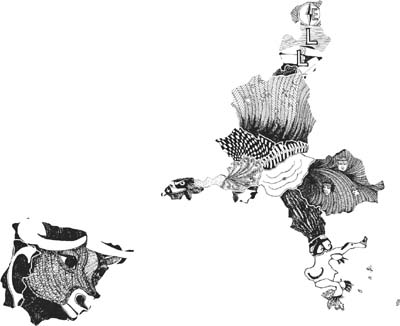
So the handle of the eagle’s novelty beer mug, the bit that ensures it’s portable, is Portugal. And we know that this is a Spanish bull’s head because Spain is the land of bull-fighting, and only in Spain would anyone think of manufacturing such a mug.
These two countries, Portugal and Spain, constitute the eagle’s beery Iberian Peninsula.
BUT LOOK! This is the bit we’ve all been waiting for! A pentagon, a miniature pentagonal Frenchman, has just leapt up on to the eagle’s beer. He’s on the rim of the mug now, France doing a quite ridiculous dance. What a piece of provocation!
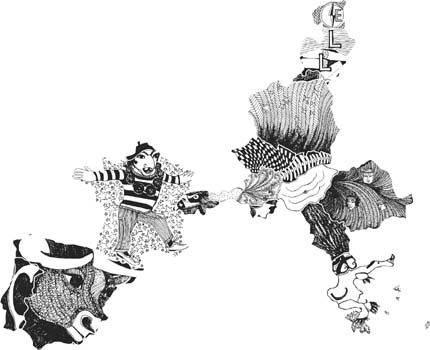
It takes a Frenchman to wiggle his hips so brazenly at an eagle, stopping him from drinking. And it’s getting worse. Now he’s doing star jumps!
Here we go – this’ll serve him right! With a powerful flap of his wings, the eagle has just launched his sharp Swiss beak towards the pentagonal Frenchman and pecked him mightily in the ribs! Blood spurts out – some of it even slopping into that Slovenian bib.
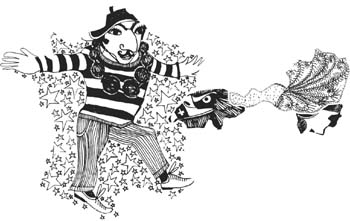
With a blood-curdling scream, the Frenchman calls for help – and with this cry the fight really begins.
Listen to this! Are your ears beginning to ring with the stampeding sound coming from the east? That’s the sound of a charging bison! Most likely, it’s one of France’s friends… the eagle had better brace himself!
Now you may be under the impression that there aren’t any bison in Europe. Nonsense. The people of the Ukraine have been reintroducing them like billy-o since the sixties. They now have eleven herds.
So you can bet your bottom dollar that this rumbling monster, only yards away now, is one of those Ukrainian bison.
Watch now as the Ukrainian bison, horns lowered, charges at the eagle’s vulnerable rear. It’s as clear as daylight what he wants to do – he wants to bite this eagle on the bottom, despite the impressive flaring of the bird’s Romanian tail feathers protecting its rear.
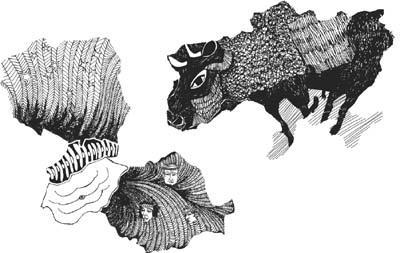
But what quick thinking from the bison! As quick as a flash he immediately changes course, leaping up and planting his front legs on the tail feathers, using his weight to push them right down into the Serbian legs. He’s in!
Almost perfect. The only thing is that with this sudden jump he’s accidentally kicked up a mouldy black fish from behind the bird and now has to mould himself over this thing, which is trapped between his front legs and Romania. This mouldy black fish he’s trying to mould himself over is Moldova, sandwiched now between Romania and the Ukraine.
And this means his head is still well short of the target. He’ll have to crane his neck forward (what flexibility he has!) if he wants any chance of biting the eagle’s bottom…
‘AWWWW!’ cries the bird, the noise muffled because his beak is still deep in the Frenchman.
That looks unbelievably painful! Our bison has hit his target so exactly that his teeth have sunk into both the top and bottom halves of the bird. Blood is spewing from the ends of both the Slovakian back and the hungry Hungarian stomach!
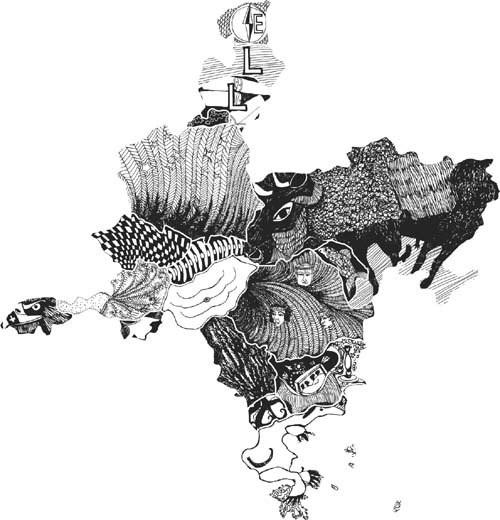
What a remarkable attack! And, as if this weren’t enough, his horns are driving into the lower half of the bird’s polished Polish wing.
So with this onslaught the Ukraine has managed to border Romania, Hungary, Slovakia and Poland – as well as moulding the mouldy fish of Moldova into Romania.
You’d think that this would cause the eagle to give up pecking the French pentagon, eh?
Surprisingly, though, he doesn’t seem especially fazed by what’s happened. He’s still sturdily standing there gnawing at the Frenchman. There’s only one outward sign of stress: a very subtle drooping in his outstretched wing.
Now, since the eagle is being rather ganged up upon here, I hope you don’t mind if I help steady him a little.
Look – there’s a bell here, and it can be put to good use. If we place it up on the bison’s back, and force it tight against the wing, it’ll keep the polished, the lithium and the lateral portions in place.
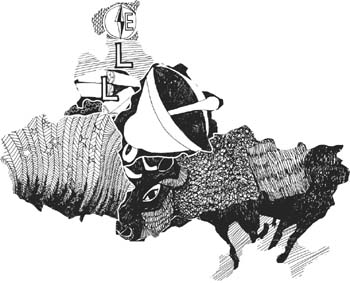
There we go! We couldn’t hope for a better fit…
This ruse with the bell we’ll call Belarus. I think we can agree that the eagle won’t have any more problems with drooping wings!
And just in time too. Some more of whimpering France’s friends are ganging up to attack our eagle…
There are two of them and they’re acting as a pair – which is no surprise: they were allies in the last war, they both excel at football and they adore terrible pop music. It’s Italy and Germany that we can see plotting their attack. Let’s have a good look at them.
Germany has disguised himself as the head of Kermit the frog – he’s calling himself Kermany. Huh!
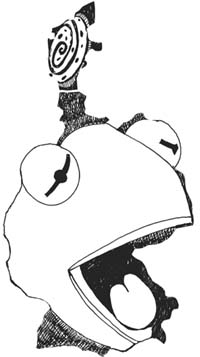
He’s amusing himself (and us, to be fair) with a remarkable trick: he’s bouncing a Danish pastry up and down on his head like it’s a football. He’s showing great concentration and control – and no wonder: he’s German. His partner is Italy, which (you may know) resembles a boot.
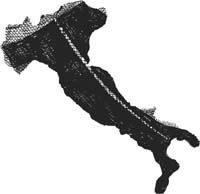
And what a beautiful boot this is – it’s Versace, made from the finest Italian leather.
The Italian boot and Kermit’s German head have prepared a pincer movement; they last did this in WWII. Unlike then, though, their aim here is to asphyxiate an eagle.
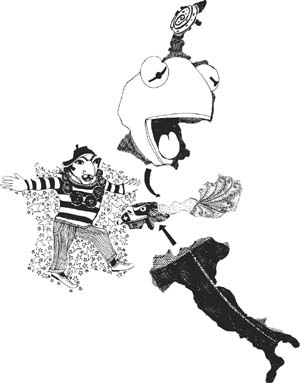
In they come now! Fingers crossed for the bird!
The Italian boot leads the attack, coming in first, from below. Here it is, powering in against the head and neck with a mighty push. BOOM! It forces the bib and France’s foot right out of the way to throttle the bird’s throat, which emits an awful sound, like it’s been hit by a boot in the head and neck. A sort of mournful ‘caaaaaaaw’.
If Austria and Switzerland think this is bad they’d better steel themselves for worse, for here comes Kermany, powering in between France and Poland!
Oops! He’s just smacked painfully into the top of France, bouncing off with a clunk! A tighter space than he’d expected, obviously. He’s judged that one terribly.
But he’s coming in for another go now and this time he gets it perfectly. He’s come down like a ton of bricks exactly where he needed to: on the head and neck of the bird. Pincer movements don’t come any better than this double whammy from Germany and Italy – the poor eagle will do well to survive.
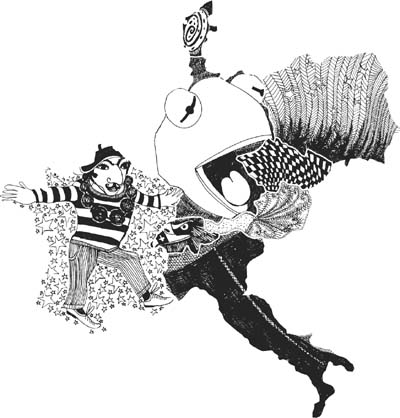
I mean, you just have to look at what Kermany, especially, has just achieved and take your hat off to his bravery!
To get himself into the space, he’s had to suffer all sorts. With France against the back of his head, a load of Polish polish in his eye and Switzerland and Italy tight beneath his neck, he’s also had to endure the bird’s chequered shoulder, the Czech Republic, in his mouth.
And you know the most impressive thing of all? Kermany’s managed to do all this while bouncing a Danish pastry on his head. Denmark, the country this pastry represents, is now balanced perfectly atop Kermany’s Germany.
As a result of this heroism, though, the poor eagle’s begun to let out a desperate, choking whine. Things are really beginning to go against him.
At least he’ll find a whiff of consolation in knowing he’s not the only one in pain. During the pincer movement, you see, France received that awful bang on the head from Kermany.
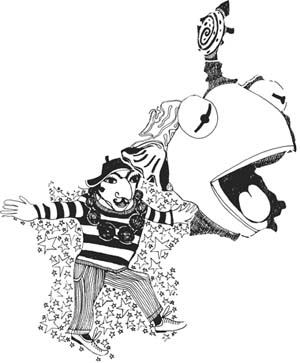
As a result, France’s head is beginning to bulge. The bulge is Belgium, and it’s expanding before our eyes… By golly, look at this! It has puffed up like a miniature airbag so fast that it’s actually trapping a luckless bird, Luxembourg, in the nook between the pentagon and Kermit. Luckless bird Luxembourg will remain trapped here for ever.
The only way to soothe a bang to the head this violent is of course to slather the injury with hollandaise sauce. So that’s what we’ll do to soothe bulging Belgium.
An all round master cure, hollandaise sauce is without compare. There’s not an ailment to any part of the body it can’t soothe. It never lands in the wrong place so far as the patient is concerned. Perhaps this is why Holland is part of the Netherlands.
If we just pour the gloopy hollandaise into the V this bulge now makes with the back of German Kermit’s head, then that’ll keep the pain and swelling down nicely with the perfect poultice that we’ll call the Netherlands. There we go! No need to carry on complaining now, France.
So this has turned into something of a fight, eh? What have we got so far?
Well, we’ve got pentagonal France (with a now bulging head) on the rim of an Iberian beer (the Spanish mug with the Portuguese handle). We’ve got a flapping, bibbed eagle, standing on Greece, pecking this pentagon. There’s a bison standing on the eagle’s Romanian tail feathers, successfully biting the bird’s bottom and ruffling its polished wing with his horns. There’s a bell from Belarus too – we placed it in there to support the wing tip. And we’ve just had a pincer movement from Kermit’s German head (plus Danish pastry) and an Italian boot – a move that is cutting the air off from our poor eagle’s throat.
Run over these elements in your mind for a second to make sure they’re all in place.
Returning to the scene, it looks like the eagle is just about hanging on in there. He’s shaking at the knees a little, to be sure, but he’ll not admit defeat just yet.
With so little oxygen now reaching those superb Serbian legs, it’s hard to imagine how he’ll be able to cope with another attack.
And that’s bad news for him, because, look at this, yet another of France’s friends has piled in to join the fray.
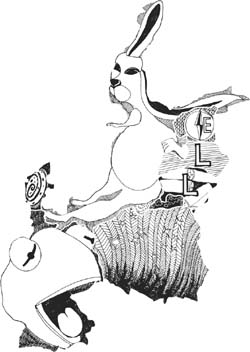
Oh! It’s a bunny rabbit – not so scary! He’ll get himself hurt, won’t he?
Maybe, in fact, he won’t… Look, the wily fur ball is staying out of harm’s way, doing what he does best in the evening: snoozing.
He’s sprung up now on top of this European pile-up and is reclining for a comfortable nap!
You’ve got to give him this: he’s ballsy. He is, in fact, the Baltic Sea.
Look how carefully he’s arranging himself! He has planted his bottom on the top of the polished Polish wing, stretched his toes to the Danish pastry and, with his ears pointing high into the air, he’s using the wing tip as a back-rest.
Best of all – this really is worth savouring – look how he’s suavely slotted his elbow right over Estonia.
What a performance from our ballsy Baltic rabbit!
Yes, it looks casual, but this rabbit may well be the straw that breaks the camel’s back: the eagle’s legs are beginning to give way; he’s buckling at the knee!
Dear me. We can’t just sit here and watch this! Quick – we have to help. It’s about ten against one in there!
It’s obvious what we’ve got to do. We’ll have to bulk up those legs of his and strengthen the Balkans, which is the whole area around his Serbian legs.
The fact is, if the eagle can stay on his feet, he’ll probably survive.
Well, what do we have to hand? What can we use to support him? Come on – anything will help! Grab whatever’s there…
A box of Albanian Alpen. Great.
An abandoned Bulgarian burglar’s sack with loads of stolen loot tumbling out? All right. Anything else?
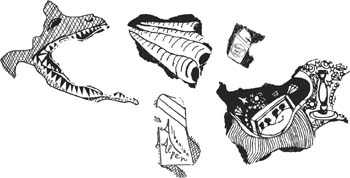
A bottle of knee-growing cream belonging to a man named Monty? Unlikely to help, but maybe we’ll put it to some good use.
A crocodile’s head with mobile jaws? Every little helps.
Even these here Bosnian parsnips you’ve now given me, I suppose.
Is that all the objects we have? OK, then. We’ll have to make the most of this motley collection, eh?
Now how, exactly, are we going to do this?
Well, our bedrock is inevitably Greece, so we can begin there.
First things first: let’s shore up the back of the legs where there is a big gap between Greece and the beleaguered Romanian tail feathers. What would fit in there?
I know, that bulging sack of burglar’s loot should do the job. Come on! Wedge it in… there she goes! Between Greece and Romania, this area that’s now bulging with a burglar’s sack, lies Bulgaria.
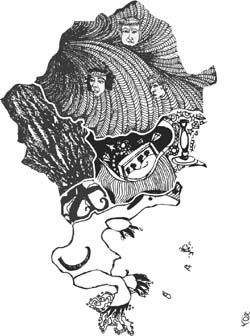
Now for the front of the bird, to the west of the superbian legs.
Again, we’ll build up from the bedrock of Greece.
First, we can lay the Albanian Alpen tight against the eagle’s massively mustardy Macedonian claws and its superb Serbian shins. This sturdy Albanian cereal will stand on Greece and border Macedonia, the feet and shin sections of the Serbia legs.
On top of the Alpen, we’ll place our man Monty’s bottle of knee-growing cream (Montenegro for short). We’ll position it with the nozzle open against the Serbian knee in the hope that the balm will seep out and strengthen the bone there. Superb though his knee-bones already are, they need all the help they can get.
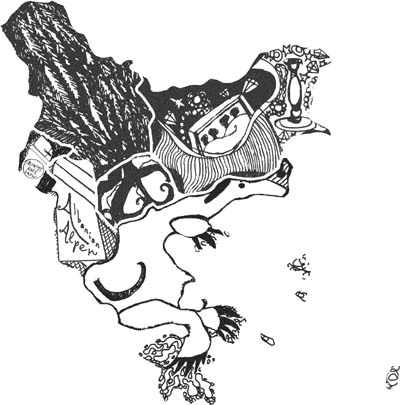
So Montenegro sits atop Albania, and against the very middle of the Serbian leg.
What we have to do now is our biggest engineering challenge: we have to bridge the gap from here all the way up to the bib, and thereby support the chest. If we can do that, then our eagle will be as sturdy as you like and stand every chance of surviving this fight.
Out of this croc’s crunching jaws and these parsnips, we need to fashion a solid block that will fit the gap.
Our problem is, the croc’s jaws (which stand for Croatia, by the way) have a tendency to keep swinging open and shut, we really need them to be a bit more solid, wouldn’t you say?
Aha! I’ve got it! We’ll stuff the Bosnian parsnips into its jaws, wedging them open…
Well done, that’s come off beautifully; no amount of force will be able to get this croc to close its mouth!
Incidentally, the parsnips doing the filling are Bosnian, as you may have guessed, because if you have a parsnip in your mouth and attempt to name it, the sound that comes out is ‘Bosnia’. You can try this at home.
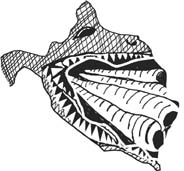
Amusing fact: Arnold Schwarzenegger, Governor of California, used to own these Bosnian parsnips, but he cut his lip on one, and threw them all away. ‘You Bosnians,’ he said, ‘hurt zee governor – that is vy I srow you avay’. These Bosnian Parsnips that once hurt the governor are the country known in full as Bosnia and Herzegovina.
OK, all that now remains is to wedge the Croatian croc’s jaws and Bosnian bundle into the gap between Montenegro and Serbia.
To do so, we’ll hook the sharp fangs of the upper jaw into the eagle’s upper thigh, and its lower jaw’s fangs into the bottle of knee-grow, and with one last parsnip to really tighten the whole thing up, we have a result… a seamless structural support. Take a look at our handiwork now!
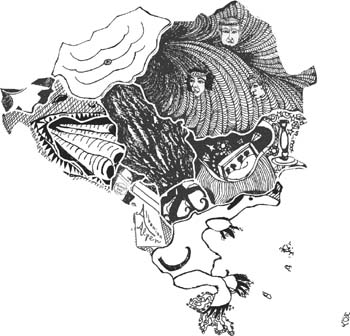
So, this is good. We’ve ended up supporting our eagle with a burglar’s bulging sack (Bulgaria, at the back); and with a box of Albanian Alpen, a bottle of Monty’s knee-grow cream (Montenegro), some Bosnian parsnips and a Croatian crocodile’s jaw.
We can all relax. The pile-up, once dangerously unstable, has become so safely balanced that no one’s capable of budging an inch. From terrible violence, all of a sudden, we have a pretty harmonious scene. Or, at least, stalemate. How gratifying!
It is this scene of apparent harmony and peace that greets the eyes of a gorgeous mermaid who now walks in. Don’t worry, she’s no friend of the Frenchman; she’s not come to assist him. She has been out all day picking swedes in the nearby fields and knows nothing of the fight.
Indeed, the sight of this sturdy pile of objects and animals looks warm and snug to her tired eyes and exhausted fins – it makes her think of bed. So much so, indeed, that she decides to climb on top and sleep there for the night.
So this beautiful mermaid (who’s covered in shimmering fins – she’s a Finnish mermaid) begins to arrange herself for sleep.
Kneeling on the rabbit’s casually extended arm (the one weighing suavely upon the wing tip of Estonia), she leans herself sleepily forward against the warm fur of his long ears, curling her elegant tail beneath her. Then, once she has perched her ample bosom on top of these ears, she slings her sack of swedes over the rabbit’s front.
Although very endearing, you have to say that this is pretty scandalous behaviour!
We must be in Scandinavia near Finland and Sweden. Considering the mermaid is Finnish and has a Swedish sack of swedes, there can really be no doubt of that.
The final thing that our Finnish mermaid does before falling asleep is to drape a cosy Norwegian blanket right over herself, making sure that it covers the swedes too. Northern Norway covers Scandinavia completely, and how snug everyone looks, sealed away from the cold!
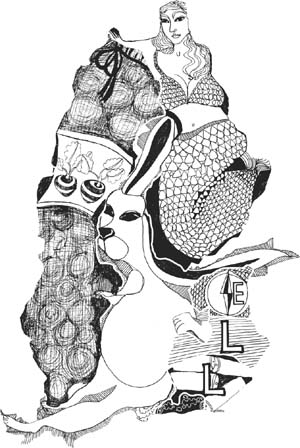
And that’s just about it – this Norwegian blanket is the icing on the proverbial cake! The map is complete.
And to think all this happened just because a Frenchman danced on an eagle’s beer!
My only sadness in all of this is that Euro-sceptic Britain and Ireland, refused to get involved – it would have been interesting to see how they would have influenced the fight. You can actually see them, hovering away above France, remaining stoically uninterested in the whole thing.
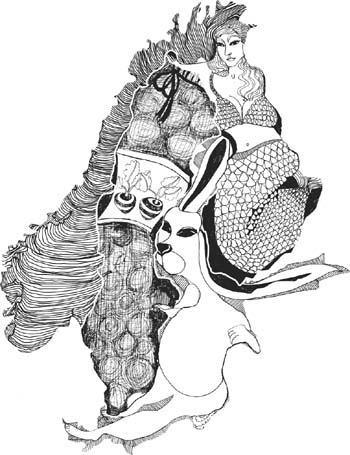
Anyhow, well done for getting this far. Just to make sure you’ve absorbed this touching tale, let’s just run through, one last time, the story of how an eagle pecked at a pentagon and triggered an almighty free-for-all.
Well. The eagle was quietly standing on a greasy anteater, Greece, wasn’t he, when it all kicked off. His feet had masses of mustard on, they were Macedonia, and were attached, as you would expect, to his superb Serbian legs. They ran up into his hungry Hungarian tummy, which had the Slovakian back on top, of course. The breast, uniting back and stomach, was covered in the ostrich feathers of Austria, while the pecking head was obviously Swiss.
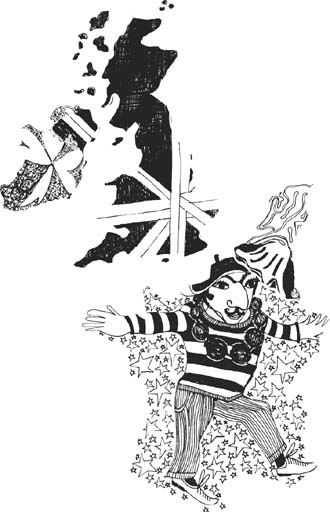
The eagle’s enormous chequered shoulder, thrown forward from the Slovakian back, was rippling with muscle beneath the chequered feathers of the Czech Republic. The wing (rising up off the shoulder and back) was gleaming, wasn’t it, with Polish polish. Above Poland were the Lithuanian lithium batteries (the leading one’s tip rusty and Russian); above them, the lateral feathers of Latvia leading up to the astonishing and stony eastern wing tip of Estonia.
Reading downwards, these countries names went ‘ELL’ and the Ls got longer: Estonia, Latvia, Lithuania. All these sit high above the Romanian tail feathers.
So that was the bird, and he was wearing his slovenly Slovenian bib as he quietly drank from his Iberian beer, a Spanish bull’s head made portable by its Portuguese handle. But at that point the pentagonal Frenchman of France hopped on to the rim and began to lark about. He got pecked, of course, by the eagle’s Swiss beak.
Then all hell broke loose: a thundering Ukrainian bison came first, forcing a mouldy black fish up against the Romanian tail feathers as he trod on them to bite the bird’s butt (while horning its polished wing). That mouldy fish he had to mould himself over was Moldova.
This was the point of our first intervention, the moment where we waded in on the side of the bird, putting a bell on the bison’s back to support the eagle’s wing tip. Remember? That was Belarus.
But the eagle’s predicament soon worsened again when German Kermit (or Kermany, as he calls himself) and Italian boot came in together and clamped his head and neck in a fearsomely well co-ordinated pincer manoeuvre, all the more impressive for Kermit’s balancing a Danish pastry on his head throughout the whole operation. And it didn’t fall off, even when, on the first attack, Kermit knocked into France by accident, causing it a bulging bump called Belgium.
That Belgian bulge, of course, trapped the luckless bird of Luxembourg between France and Germany, but we tried to treat the swelling with the hollandaise sauce of the Netherlands.
At this point, with the eagle already straining under the pressure, the arrival of our ballsy Baltic rabbit tipped the balance. He swanned in to put his knees up over the Danish pastry, sitting on top of the polished wing and leaning back on the three-part E-L-L wing tip. Things were now so unfair that we just had to intervene again – especially with the eagle beginning to totter.
So we bulked up the bird’s legs in the Balkans with a selection of ready-to-hand objects. Behind the knees, as a first move, we shored things up by forcing that bulging burglar’s sack tight into the gap between the greasy anteater’s back and the bird’s tail feathers. That was Bulgaria.
At the front of the legs, building upwards from Greece, we used Albanian Alpen and Monty’s knee-growing lotion from Montenegro to support the lower leg. We then made a sturdy block from the unlikely combo of a Croatian crocodile’s gaping jaws and some Bosnian parsnips – posnias, that is – that has once ‘hurt zee governor’ (Bosnia and Herzegovina). The croc’s upper teeth dug into the eagle’s leg while the lower ones punctured the bottle of knee-grow. Between these two jaws, the Bosnian (and Herzegovinan) parsnips ensured everything was nice and solid.
The whole thing worked beautifully. The fight stopped completely – no one could move at all (with the possible exception of the rabbit, who was too lazy to do so).
The scene was so peaceful, indeed, that a passing Finnish mermaid – Finland – covered in shimmering fins and carrying a bag of swedes, thought she’d kip on top for the night. So she laid her front against the rabbit, slung her bag of swedes (Sweden) over the top and covered the pile with a snug Norwegian blanket.
So that’s that, then. Heartiest congratulations on reaching the end. By asking yourself a few questions and finding the answers in your imagination, you’ll soon perfect your knowledge of the whereabouts, shapes and borders of all the European nations.
As ever, my advice is to turn your new knowledge, after a little more practice, to financial gain.
Macedonia
Serbia
Hungary
Slovakia
Austria
Switzerland
Czech Republic
Poland
Estonia
Latvia
Lithuania
Slovenia
Spain
Portugal
France
Ukraine
Romania
Moldova
Belarus
Germany
Italy
Denmark
Belgium
Netherlands
Bulgaria
Albania
Montenegro
Croatia
Bosnia and Herzegovina
Finland
Sweden
Norway
Great Britain and Ireland