Chapter 8. Professional responsibility: Making good choices

image

It’s not enough to just know your stuff. You need to make good choices to be good at your job. Everyone who has the PMI-ACP credential agrees to follow the Project Management Institute Code of Ethics and Professional Conduct, too. The Code helps you with ethical decisions that aren’t really covered in the body of knowledge—you may get a few questions about it on the PMI-ACP exam. Most of what you need to know is really straightforward, and with a little review, you’ll do well.

Doing the right thing

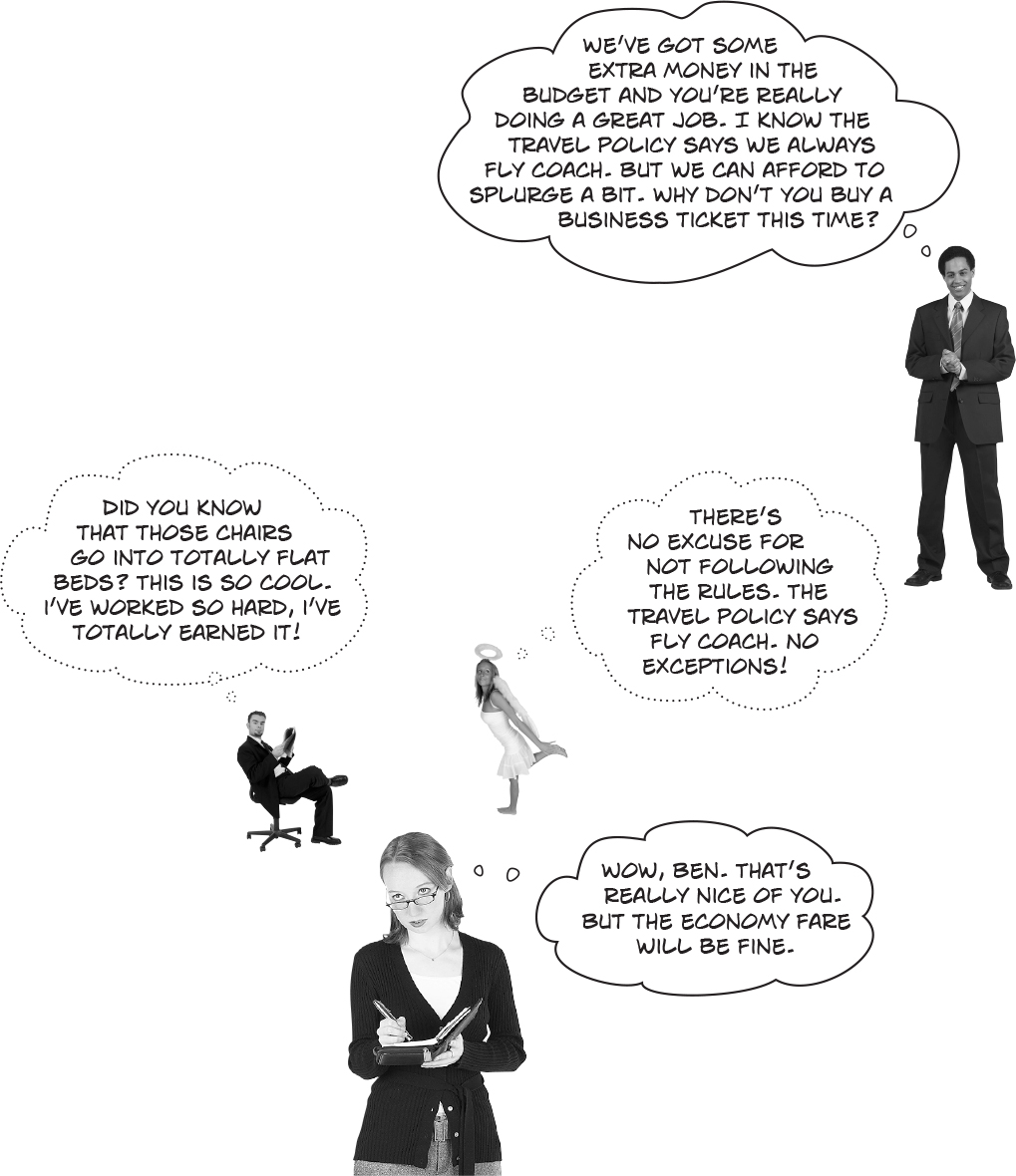
You’ll get some questions on the exam that present situations that you might run into while managing your projects and then ask you what to do. Usually, there’s a clear answer to these questions: it’s the one where you stick to your principles. Questions will make the decisions tougher by offering rewards for doing the wrong thing (like money for taking a project shortcut), or they will make the infraction seem really small (like photocopying a copyrighted article out of a magazine). If you stick to the principles in the PMI Code of Professional Conduct regardless of the consequences, you’ll always get the answers right.

The main ideas

In general, there are a few kinds of problems that the code of ethics prepares you to deal with.

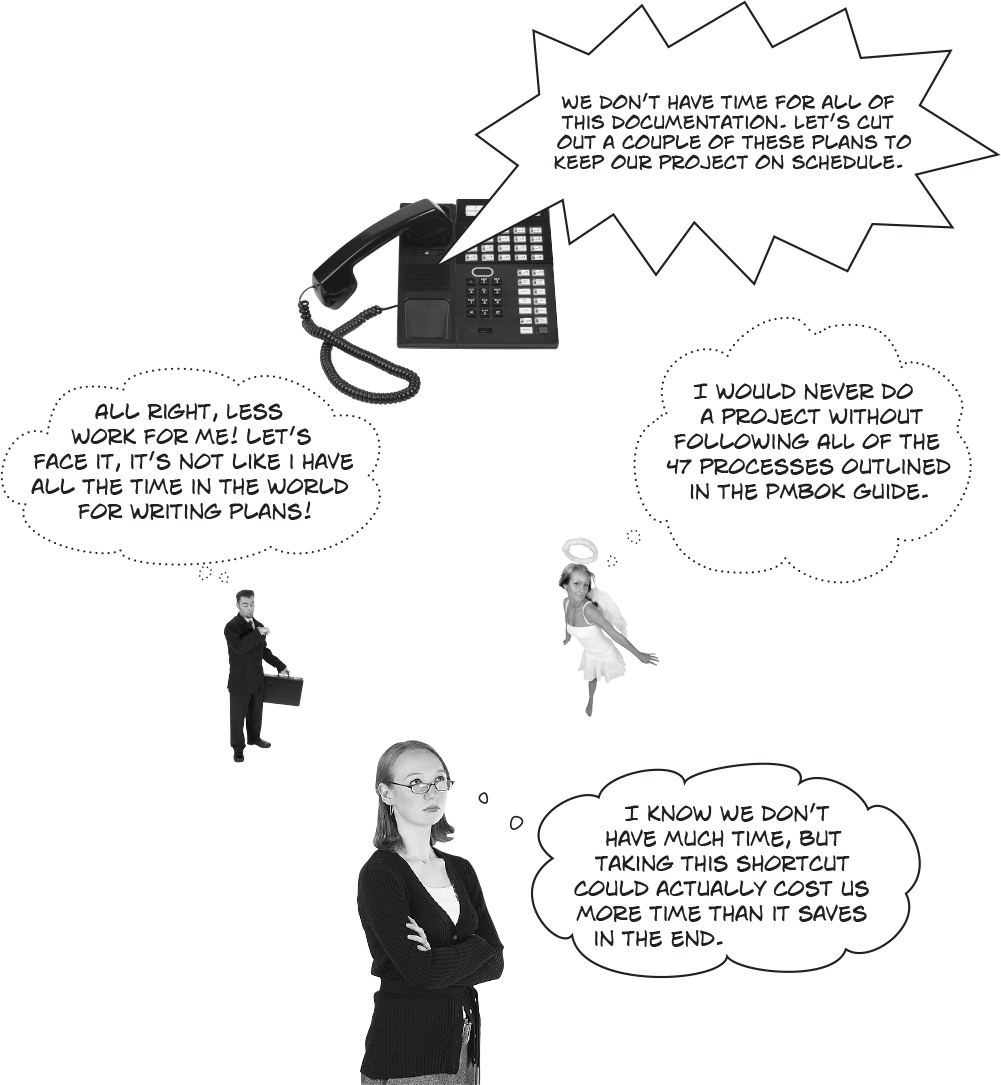
  1. Follow all laws and company policies.

  2. Treat everybody fairly and respectfully.

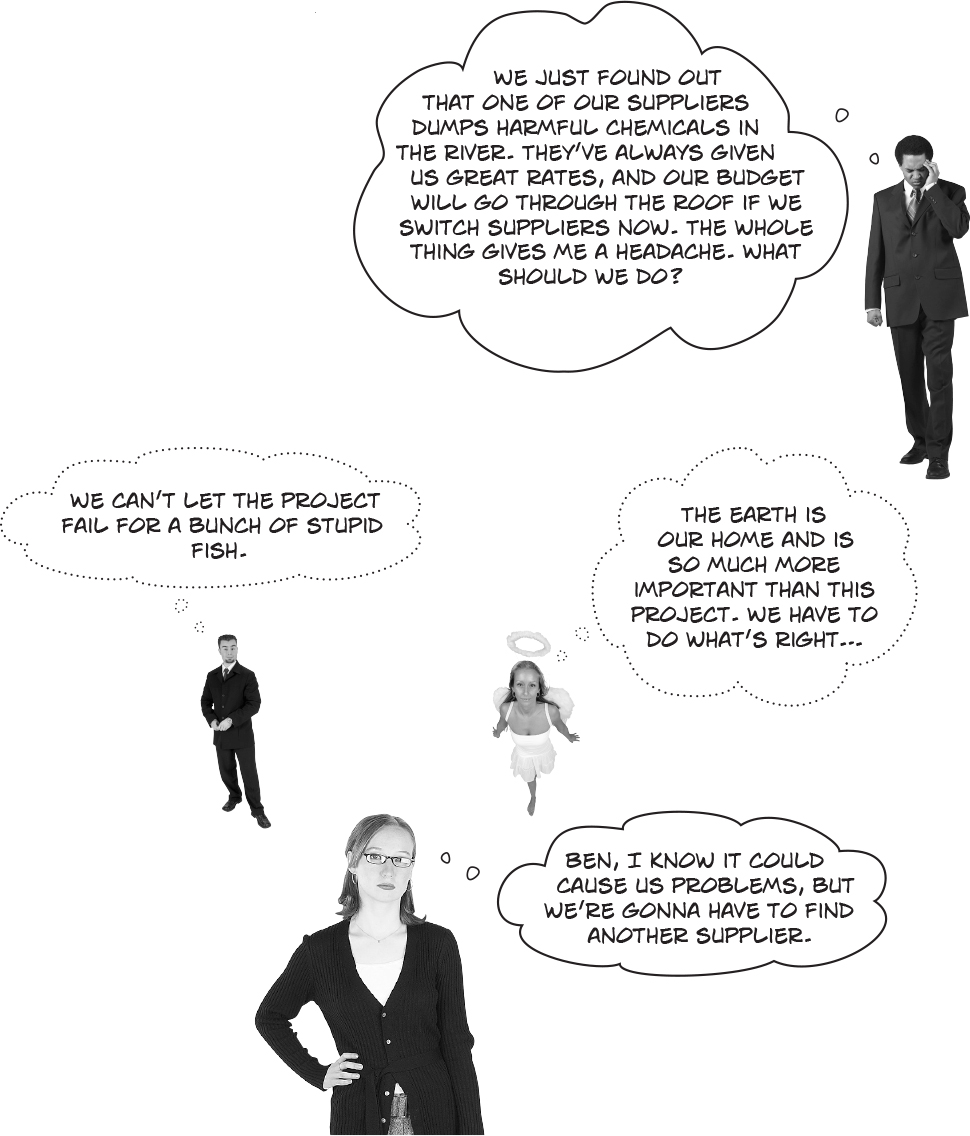
  3. Have respect for the environment and the community you’re working in.

  4. Give back to the community by writing, speaking, and sharing your experience with other agile professionals.

  5. Keep learning and getting better and better at your job.

  6. Respect other people’s cultures.

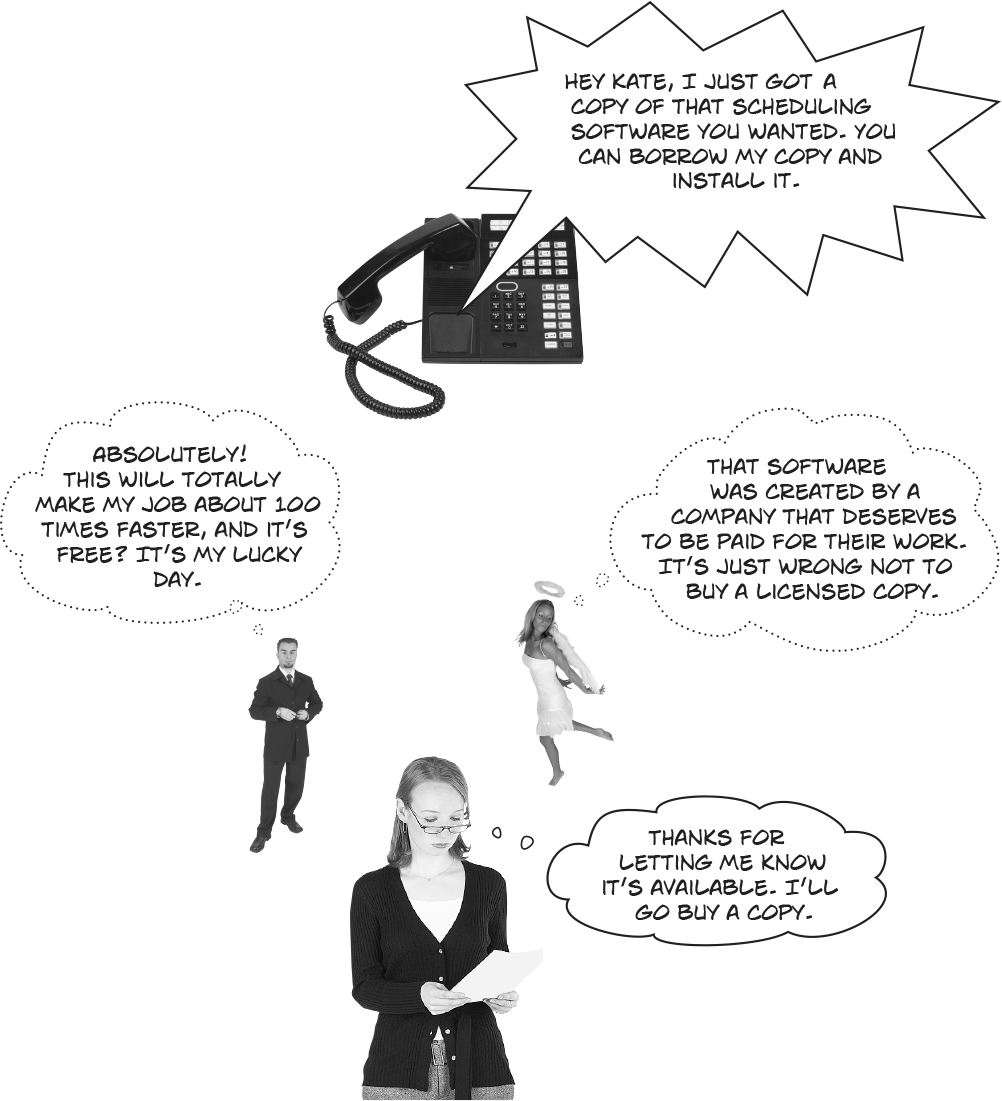
  7. Respect copyright laws.

  8. Always be honest with everyone on the project.

  9. If you find that another person has done something to damage the PMI-ACP or any other PMI credential in any way, you must report it to PMI.

Note

So if you find out that someone has stolen questions from the PMI-ACP exam, cheated on the PMI-ACP exam, falsely claimed to have a PMI-ACP certification, or lied about anything related to the PMI-ACP certification process, then you MUST report that to PMI.

Note

The PMI-ACP exam content outline includes knowledge of ethics and professional conduct, because ethical behavior should be part of any agile practitioner’s knowledge and skills. That means there may be a small number of questions about ethics and professional conduct scattered throughout the exam.
image

Being PMI-ACP® certified means that you know how to do your job and that you will do it with integrity.

It might seem like it doesn’t really matter how you will handle these situations, but think about it from an employer’s perspective for a minute. Because of the PMI Code of Ethics and Professional Conduct, employers know that when they hire a PMI-ACP® certified agile practitioner, they are hiring someone who will follow company policies and do everything aboveboard and by the book. That means that you’ll help to protect their company from litigation and deliver on what you promise, which is actually pretty important.

So you should definitely not be surprised to see at least a few questions about ethics and professional responsibility on the exam.

Keep your eye out for “red herring” questions that turn out to be about ethics and social responsibility. They might lay out a situation that sounds like a normal project management problem, but requires you to use one of the principles in the PMI Code of Ethics and Professional Conduct.
Exam Questions

  1. You read a great article over the weekend, and you think your team could really benefit from it. What should you do?

    1. Photocopy the article and give it to the team members.

    2. Type up parts of the article and email it to the team.

    3. Tell everyone that you thought of the ideas in the article yourself.

    4. Buy a copy of the magazine for everyone.

  2. You find out that a contractor that you’re working with discriminates against women. The contractor is in another country, and it’s normal in that country. What should you do?

    1. Respect the contractor’s culture and allow the discrimination to continue.

    2. Refuse to work with the contractor, and find a new seller.

    3. Submit a written request that the contractor no longer discriminate.

    4. Meet with your boss and explain the situation.

  3. You’re working on a project when the client demands that you take him out to lunch every week if you want to keep his business. What’s the BEST thing to do?

    1. Take the client out to lunch and charge it to your company.

    2. Refuse to take the client out to lunch because it’s a bribe.

    3. Take the client out to lunch, but report him to his manager.

    4. Report the incident to PMI.

  4. You are working on one of the first financial projects your company has attempted, and you have learned a lot about how to manage the project along the way. Your company is targeting financial companies for new projects next year. What’s the BEST thing for you to do?

    1. Talk to your company about setting up some training sessions so that you can teach others what you have learned on your project.

    2. Keep the information you’ve learned to yourself so that you’ll be more valuable to the company in the next year.

    3. Decide to specialize in financial contracts.

    4. Focus on your work with the project and don’t worry about helping other people to learn from the experience.

  5. You find out that you could save money by contracting with a seller in a country that has lax environmental protection rules. What should you do?

    1. Continue to pay higher rates for an environmentally safe solution.

    2. Take advantage of the cost savings.

    3. Ask your boss to make the decision for you.

    4. Demand that your current contractor match the price.

  6. You overhear someone on your team using a racial slur. This person is a critical team member and you are worried that if he leaves your company it will cause project problems. What should you do?

    1. Pretend you didn’t hear it so that you don’t cause problems.

    2. Report the team member to his boss.

    3. Bring it up at the next team meeting.

    4. Meet in private with the team member and explain that racial slurs are unacceptable.

  7. You’ve given a presentation for your local PMI chapter meeting. This is an example of what?

    1. A PDU

    2. Contributing to the Project Management Body of Knowledge

    3. Donating to charity

    4. Volunteering

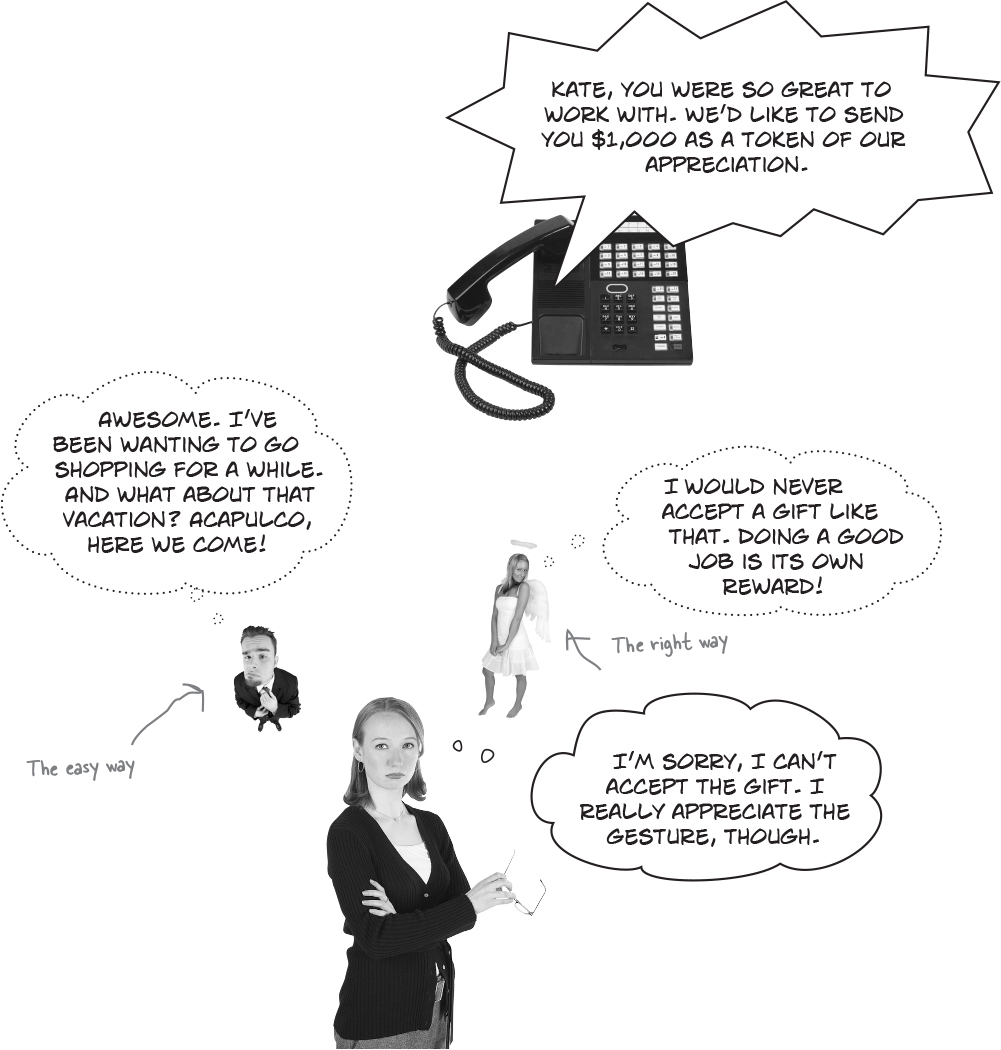
  8. You are about to hold a bidder conference, and a potential seller offers you great tickets to a baseball game for your favorite team. What should you do?

    1. Go to the game with the seller but avoid talking about the contract.

    2. Go to the game with seller and discuss the contract.

    3. Go to the game, but make sure not to let him buy you anything because that would be a bribe.

    4. Politely refuse the tickets.

  9. Your company has sent out a request for proposals for consulting work, and your brother wants to bid on it. What’s the BEST thing for you to do?

    1. Give your brother inside information to make sure that he has the best chance at getting the project.

    2. Publicly disclose your relationship with him and excuse yourself from the selection process.

    3. Recommend your brother but don’t inform anyone of your relationship.

    4. Don’t tell anyone about your relationship, but be careful not to give your brother any advantage when evaluating all of the potential sellers.

Exam Answers

  1. Answer: D

    You should never copy anything that’s copyrighted. Make sure you always respect other people’s intellectual property!

  2. Answer: B

    It’s never OK to discriminate against women, minorities, or others. You should avoid doing business with anyone who does.

  3. Answer: B

    The client is demanding a bribe, and paying bribes is unethical. You should not do it. If your project requires you to bribe someone, then you shouldn’t do business with that person.

  4. Answer: A

    You should always try to help other people learn, especially about improving the way they run their projects.

  5. Answer: A

    You should never contract work to a seller who pollutes the environment. Even though it costs more to use machinery that doesn’t damage the environment, it’s the right thing to do.

  6. Answer: D

    You should make sure that your team always respects other people.

  7. Answer: B

    Any time you help share your knowledge with others, you are contributing to the Project Management Body of Knowledge, and that’s something you should do any time you have any kind of PMI certification!

  8. Answer: D

    You have to refuse the tickets even if the game sounds like a lot of fun. The tickets amount to a bribe, and you shouldn’t do anything that might influence your decision in awarding your contract.

  9. Answer: B

    You have to disclose the relationship. It’s important to be up front and honest about any conflict of interest that could occur on your projects.

image