Chapter 12. Decentralized Applications (DApps)
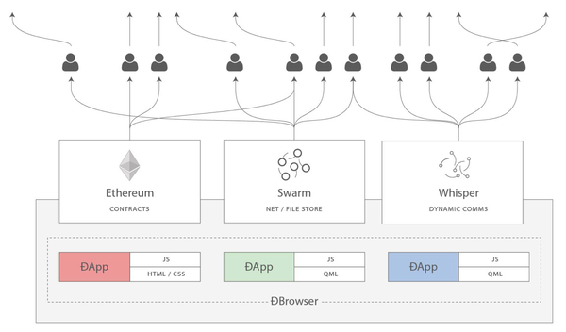
Figure 12-1. Web3: A decentralized web using smart contracts and P2P technologies
Warning
What Is a DApp?
-
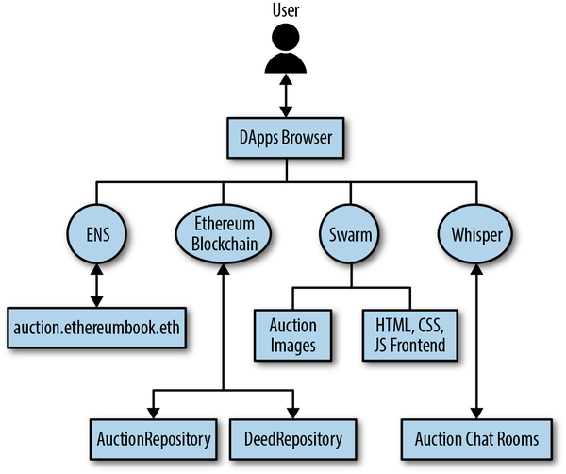
Backend software (application logic)
-
Frontend software
-
Data storage
-
Message communications
-
Name resolution
- Resiliency
-
Because the business logic is controlled by a smart contract, a DApp backend will be fully distributed and managed on a blockchain platform. Unlike an application deployed on a centralized server, a DApp will have no downtime and will continue to be available as long as the platform is still operating.
- Transparency
-
The on-chain nature of a DApp allows everyone to inspect the code and be more sure about its function. Any interaction with the DApp will be stored forever in the blockchain.
- Censorship resistance
-
As long as a user has access to an Ethereum node (running one if necessary), the user will always be able to interact with a DApp without interference from any centralized control. No service provider, or even the owner of the smart contract, can alter the code once it is deployed on the network.
Backend (Smart Contract)
Frontend (Web User Interface)
Data Storage
IPFS
Swarm
Decentralized Message Communications Protocols
A Basic DApp Example: Auction DApp
-
A smart contract implementing ERC721 non-fungible “deed” tokens (
DeedRepository) -
A smart contract implementing an auction (
AuctionRepository) to sell the deeds -
A web frontend using the Vue/Vuetify JavaScript framework
-
The web3.js library to connect to Ethereum chains (via MetaMask or other clients)
-
A Swarm client, to store resources such as images
-
A Whisper client, to create per-auction chat rooms for all participants
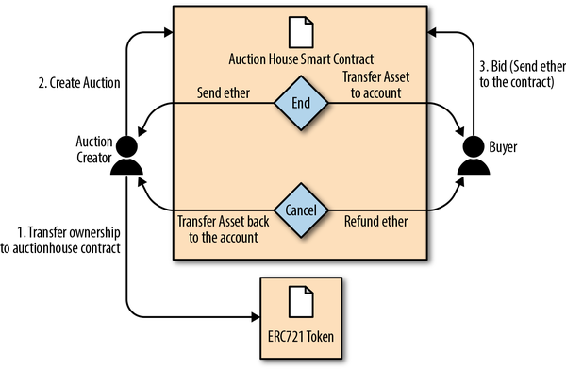
Figure 12-2. Auction DApp: A simple example auction DApp
Auction DApp: Backend Smart Contracts
Example 12-1. DeedRepository.sol: An ERC721 deed token for use in an auction
pragma solidity^0.4.17;import"./ERC721/ERC721Token.sol";/*** @title Repository of ERC721 Deeds* This contract contains the list of deeds registered by users.* This is a demo to show how tokens (deeds) can be minted and added* to the repository.*/contractDeedRepositoryisERC721Token{/*** @dev Created a DeedRepository with a name and symbol* @param _name string represents the name of the repository* @param _symbol string represents the symbol of the repository*/functionDeedRepository(string_name,string_symbol)publicERC721Token(_name,_symbol){}/*** @dev Public function to register a new deed* @dev Call the ERC721Token minter* @param _tokenId uint256 represents a specific deed* @param _uri string containing metadata/uri*/functionregisterDeed(uint256_tokenId,string_uri)public{_mint(msg.sender,_tokenId);addDeedMetadata(_tokenId,_uri);emitDeedRegistered(msg.sender,_tokenId);}/*** @dev Public function to add metadata to a deed* @param _tokenId represents a specific deed* @param _uri text which describes the characteristics of a given deed* @return whether the deed metadata was added to the repository*/functionaddDeedMetadata(uint256_tokenId,string_uri)publicreturns(bool){_setTokenURI(_tokenId,_uri);returntrue;}/*** @dev Event is triggered if deed/token is registered* @param _by address of the registrar* @param _tokenId uint256 represents a specific deed*/eventDeedRegistered(address_by,uint256_tokenId);}
Example 12-2. AuctionRepository.sol: The main Auction DApp smart contract
contractAuctionRepository{// Array with all auctionsAuction[]publicauctions;// Mapping from auction index to user bidsmapping(uint256=>Bid[])publicauctionBids;// Mapping from owner to a list of owned auctionsmapping(address=>uint[])publicauctionOwner;// Bid struct to hold bidder and amountstructBid{addressfrom;uint256amount;}// Auction struct which holds all the required infostructAuction{stringname;uint256blockDeadline;uint256startPrice;stringmetadata;uint256deedId;addressdeedRepositoryAddress;addressowner;boolactive;boolfinalized;}
getCount()getBidsCount(uint_auctionId)getAuctionsOf(address_owner)getCurrentBid(uint_auctionId)getAuctionsCountOfOwner(address_owner)getAuctionById(uint_auctionId)createAuction(address_deedRepositoryAddress,uint256_deedId,string_auctionTitle,string_metadata,uint256_startPrice,uint_blockDeadline)approveAndTransfer(address_from,address_to,address_deedRepositoryAddress,uint256_deedId)cancelAuction(uint_auctionId)finalizeAuction(uint_auctionId)bidOnAuction(uint_auctionId)
$ cd code/auction_dapp/backend
$ truffle init
$ truffle compile
$ truffle migrate --network ropsten
DApp governance
Auction DApp: Frontend User Interface
frontend/
|-- build
|   |-- build.js
|   |-- check-versions.js
|   |-- logo.png
|   |-- utils.js
|   |-- vue-loader.conf.js
|   |-- webpack.base.conf.js
|   |-- webpack.dev.conf.js
|   `-- webpack.prod.conf.js
|-- config
|   |-- dev.env.js
|   |-- index.js
|   `-- prod.env.js
|-- index.html
|-- package.json
|-- package-lock.json
|-- README.md
|-- src
|   |-- App.vue
|   |-- components
|   |   |-- Auction.vue
|   |   `-- Home.vue
|   |-- config.js
|   |-- contracts
|   |   |-- AuctionRepository.json
|   |   `-- DeedRepository.json
|   |-- main.js
|   |-- models
|   |   |-- AuctionRepository.js
|   |   |-- ChatRoom.js
|   |   `-- DeedRepository.js
|   `-- router
|       `-- index.js
$ npm install
$ npm run dev
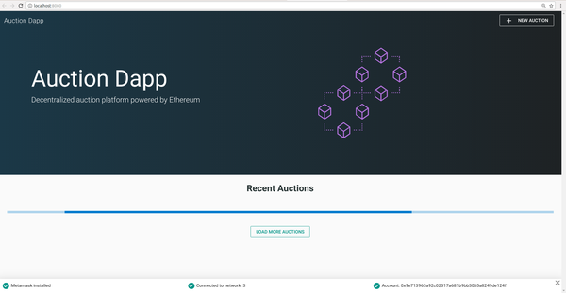
Figure 12-3. Auction DApp user interface
Further Decentralizing the Auction DApp
-
Store all the application code on Swarm or IPFS.
-
Access the DApp by reference to a name, using the Ethereum Name Service.
Storing the Auction DApp on Swarm
Preparing Swarm
$ swarm version
Version: 0.3
Git Commit: 37685930d953bcbe023f9bc65b135a8d8b8f1488
Go Version: go1.10.1
OS: linux
Maximum peer count                       ETH=25 LES=0 total=25
Starting peer-to-peer node               instance=swarm/v0.3.1-225171a4/linux...
connecting to ENS API                    url=http://127.0.0.1:8545
swarm[5955]: [189B blob data]
Starting P2P networking
UDP listener up                          self=enode://f50c8e19ff841bcd5ce7d2d...
Updated bzz local addr                   oaddr=9c40be8b83e648d50f40ad3... uaddr=e
Starting Swarm service
9c40be8b hive starting
detected an existing store. trying to load peers
hive 9c40be8b: peers loaded
Swarm network started on bzz address: 9c40be8b83e648d50f40ad3d35f...
Pss started
Streamer started
IPC endpoint opened                      url=/home/ubuntu/.ethereum/bzzd.ipc
RLPx listener up                         self=enode://f50c8e19ff841bcd5ce7d2d...
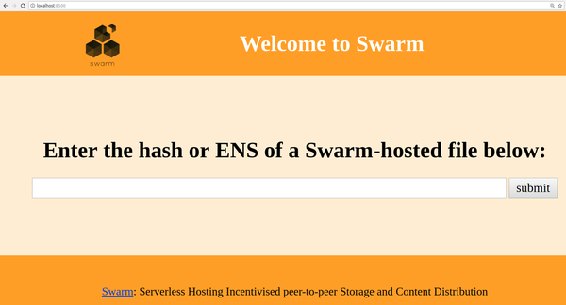
Figure 12-4. Swarm gateway on localhost
Uploading Files to Swarm
$ swarm up code/auction_dapp/README.md
ec13042c83ffc2fb5cb0aa8c53f770d36c9b3b35d0468a0c0a77c97016bb8d7c
$ cd code/auction_dapp/frontend
$ npm run build

> frontend@1.0.0 build /home/aantonop/Dev/ethereumbook/code/auction_dapp/frontend
> node build/build.js

Hash: 9ee134d8db3c44dd574d
Version: webpack 3.10.0
Time: 25665ms
Asset     Size
static/js/vendor.77913f316aaf102cec11.js  1.25 MB
static/js/app.5396ead17892922422d4.js   502 kB
static/js/manifest.87447dd4f5e60a5f9652.js  1.54 kB
static/css/app.0e50d6a1d2b1ed4daa03d306ced779cc.css  1.13 kB
static/css/app.0e50d6a1d2b1ed4daa03d306ced779cc.css.map  2.54 kB
static/js/vendor.77913f316aaf102cec11.js.map  4.74 MB
static/js/app.5396ead17892922422d4.js.map   893 kB
static/js/manifest.87447dd4f5e60a5f9652.js.map  7.86 kB
index.html  1.15 kB

Build complete.
dist/
|-- index.html
`-- static
    |-- css
    |   |-- app.0e50d6a1d2b1ed4daa03d306ced779cc.css
    |   `-- app.0e50d6a1d2b1ed4daa03d306ced779cc.css.map
    `-- js
        |-- app.5396ead17892922422d4.js
        |-- app.5396ead17892922422d4.js.map
        |-- manifest.87447dd4f5e60a5f9652.js
        |-- manifest.87447dd4f5e60a5f9652.js.map
        |-- vendor.77913f316aaf102cec11.js
        `-- vendor.77913f316aaf102cec11.js.map
$ swarm --bzzapi http://localhost:8500 --recursive \
  --defaultpath dist/index.html up dist/

ab164cf37dc10647e43a233486cdeffa8334b026e32a480dd9cbd020c12d4581
- bzz://ab164cf37dc10647e43a233486cdeffa8334b026e32a480dd9cbd020c12d4581
The Ethereum Name Service (ENS)
History of Ethereum Name Services
The ENS Specification
Bottom Layer: Name Owners and Resolvers
The Namehash algorithm
namehash([]) = 0x0000000000000000000000000000000000000000000000000000000000000000
namehash([label, ...]) = keccak256(namehash(...) + keccak256(label))
def namehash(name):
  if name == '':
    return '\0' * 32
  else:
    label, _, remainder = name.partition('.')
    return sha3(namehash(remainder) + sha3(label))
namehash('mastering-ethereum.eth')
⇒ sha3(namehash('eth') + sha3('mastering-ethereum'))
⇒ sha3(sha3(namehash('') + sha3('eth')) + sha3('mastering-ethereum'))
⇒ sha3(sha3(('\0' * 32) + sha3('eth')) + sha3('mastering-ethereum'))
How to choose a valid name
-
Labels should be no more than 64 characters each.
-
Complete ENS names should be no more than 255 characters.
-
Labels should not start or end with hyphens, or start with digits.
Root node ownership
-
Migrate and upgrade the temporary ownership of the
.ethTLD to a more permanent contract once the system is evaluated. -
Allow adding new TLDs, if the community agrees they are needed.
-
Migrate the ownership of the root multisig to a more decentralized contract, when such a system is agreed upon, tested, and implemented.
-
Serve as a last-resort way to deal with any bugs or vulnerabilities in the top-level registries.
Resolvers
Middle Layer: The .eth Nodes
Note
Vickrey auctions
-
To ensure bidders don’t submit bids they have no intention of paying, they must lock up a value equal to or higher than their bid beforehand, to guarantee the bid is valid.
-
Because you can’t hide secrets on a blockchain, bidders must execute at least two transactions (a commit–reveal process), in order to hide the original value and name they bid on.
-
Since you can’t reveal all bids simultaneously in a decentralized system, bidders must reveal their own bids themselves; if they don’t, they forfeit their locked-up funds. Without this forfeit, one could make many bids and choose to reveal only one or two, turning a sealed-bid auction into a traditional increasing price auction.
-
Start the auction. This is required to broadcast the intent to register a name. This creates all auction deadlines. The names are hashed, so that only those who have the name in their dictionary will know which auction was opened. This allows some privacy, which is useful if you are creating a new project and don’t want to share details about it. You can open multiple dummy auctions at the same time, so if someone is following you they cannot simply bid on all auctions you open.
-
Make a sealed bid. You must do this before the bidding deadline, by tying a given amount of ether to the hash of a secret message (containing, among other things, the hash of the name, the actual amount of the bid, and a salt). You can lock up more ether than you are actually bidding in order to mask your true valuation.
-
Reveal the bid. During the reveal period, you must make a transaction that reveals the bid, which will then calculate the highest bid and the second-highest bid and send ether back to unsuccessful bidders. Every time the bid is revealed the current winner is recalculated; therefore, the last one to be set before the revealing deadline expires becomes the overall winner.
-
Clean up after. If you are the winner, you can finalize the auction in order to get back the difference between your bid and the second-highest bid. If you forgot to reveal you can make a late reveal and recover a little of your bid.
Top Layer: The Deeds
Registering a Name
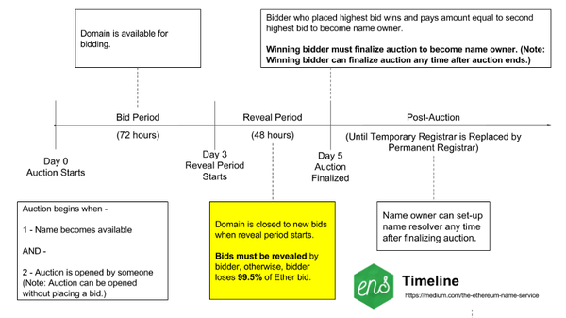
Figure 12-5. ENS timeline for registration
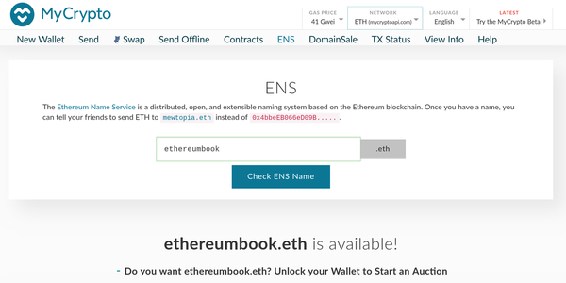
Figure 12-6. Searching for ENS names on MyCrypto.com
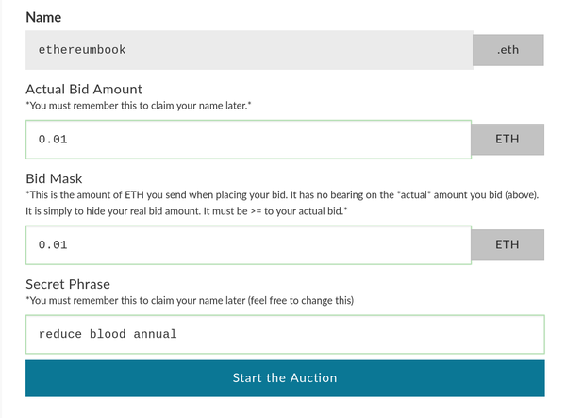
Figure 12-7. Starting an auction for an ENS name
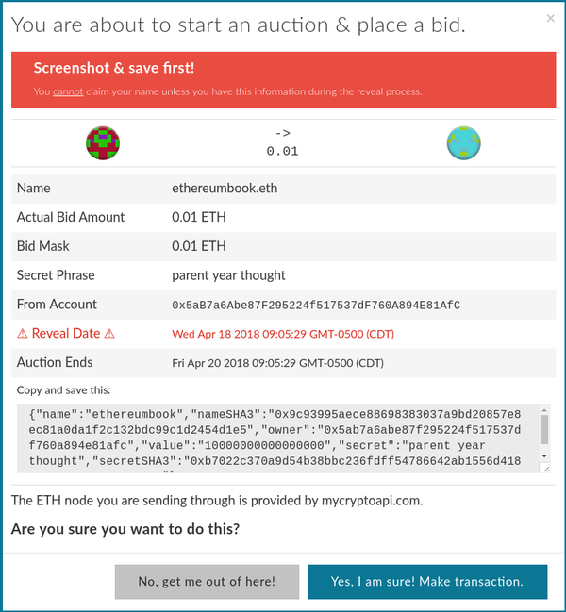
Figure 12-8. Placing a bid for an ENS name
Warning
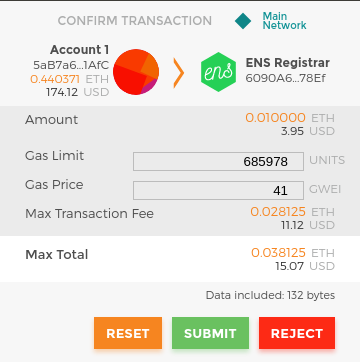
Figure 12-9. MetaMask transaction containing your bid
Managing Your ENS Name

Figure 12-10. The ENS Manager web interface
Creating an ENS subdomain
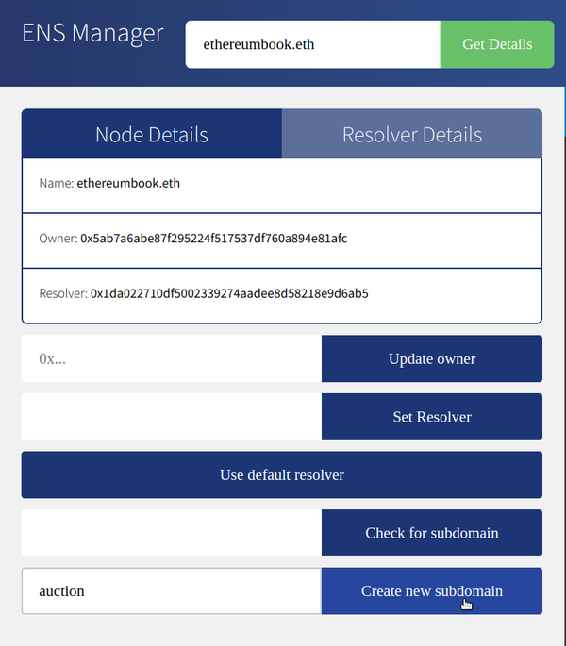
Figure 12-11. Adding the subdomain auction.ethereumbook.eth
ENS Resolvers
-
The ENS registry is called with the name to resolve after hashing it. If the record exists, the registry returns the address of its resolver.
-
The resolver is called, using the method appropriate to the resource being requested. The resolver returns the desired result.
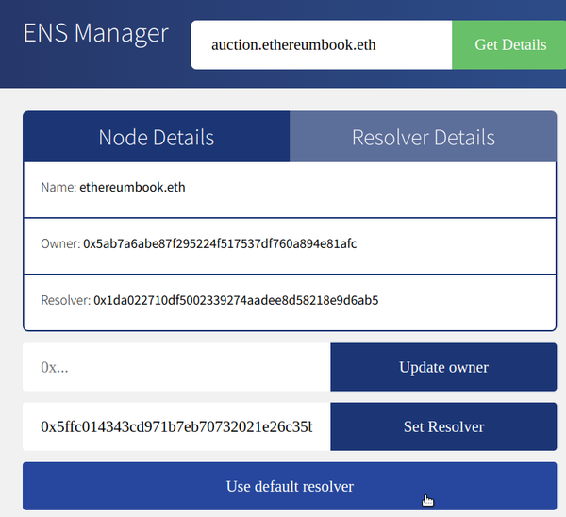
Figure 12-12. Setting the default public resolver for auction.ethereumbook.eth
Resolving a Name to a Swarm Hash (Content)
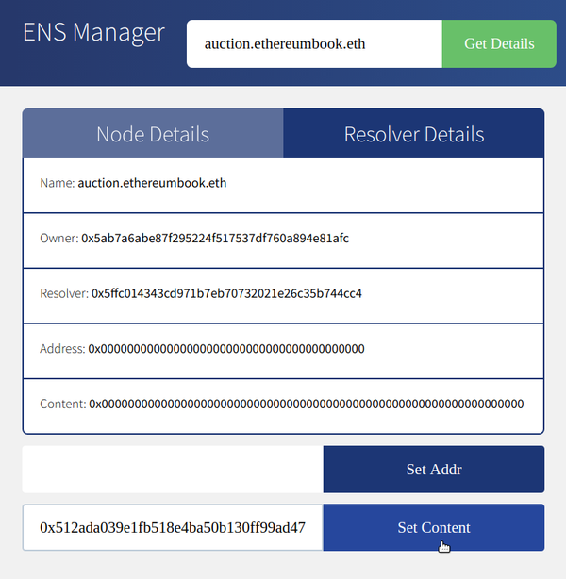
Figure 12-13. Setting the content to return for auction.ethereumbook.eth
- https://swarm-gateways.net/bzz:/ab164cf37dc10647e43a233486cdeffa8334b026e32a480dd9cbd020c12d4581
- bzz://ab164cf37dc10647e43a233486cdeffa8334b026e32a480dd9cbd020c12d4581
- http://swarm-gateways.net/bzz:/auction.ethereumbook.eth/
From App to DApp