14
Interpersonal Resonance
Chapter summary: discusses the scientific basis of interpersonal resonance, through which our bodies can exchange information with each other and regulate each other, over short and long distances; and how to use it to attune to emotional states in others and regulate them, in the process of helping them embody their emotions.
Helping others embody their emotions involves getting them to consciously experience their emotions in more places in their brain and body physiology than they have previously. But more often than not, people have difficulty accessing and expressing their emotional experiences for a variety of reasons. For example, strong psychological and physiological defenses might be in the way. But the most likely reason is that they grew up with little or no support for generating, experiencing, identifying, symbolizing, and expressing their emotions.1 This means that, in working with emotions in others, our ability to support their emotional experiences is the most important ability we bring to the therapeutic setting.
In chapter 11, we discussed a number of concrete ways to support emotions in others. In this chapter, we will see yet another way of supporting and regulating others’ emotional experiences: through the innate ability we all have to resonate physiologically with each other. This ability is poorly understood and underutilized in therapy. We will call it “interpersonal resonance,” or simply resonance. This chapter will discuss what resonance is, what its mechanisms are, and how to use it consciously to access and regulate emotional experiences in others as well as in ourselves.
According to findings in attachment theory,2 a mother’s capacity to feel her child’s emotional states in her own body, which we shall call the capacity for “embodied emotional attunement,” is the best predictor of her ability to regulate her child emotionally.3 In order to support emotions in others, we need to know what their emotional experience is by “tuning in” or “attuning” to their emotional experiences. The term “emotional attunement” can be thought of broadly as the understanding of what another person is experiencing emotionally. We can arrive at this understanding in a number of ways. We can simply ask the other person what they are experiencing; we can put ourselves in others’ shoes and imagine what we might have felt in their place in the situation they are describing; we can use what we have observed others go through in similar situations in life, literature, and movies. We might also use psychological theories to deduce others’ emotional states. We can use all of these usual methods for understanding where others are emotionally and then attempt to feel it in our own bodies as much as possible to arrive at an embodied emotional attunement to another’s emotional state.
In addition, we can mirror the vocal, facial, and body expressions of others to experience and support what they might be experiencing emotionally in their bodies, as is often the practice in body psychotherapy approaches. We can use what neuroscientists call “mirror neurons” in our brains, which can mimic the movements of others to simulate their emotional experiences in our brain, if not in our body physiology.4 Together, all of these methods might be sufficient for experiencing another’s emotional responses in our bodies. In cases when all such methods prove to be inadequate, or in addition to these methods, we can use our innate ability for interpersonal resonance to sense the emotional experience of others in our bodies.
Let us now look at what interpersonal resonance is, the scientific evidence for it, and the differences between interpersonal resonance and countertransference. Then we will explore how we might use interpersonal resonance to help others and ourselves to embody emotions.
Interpersonal Resonance: An Alternative Method of Information Exchange
In psychology, all information exchanges between two bodies are generally assumed to happen through our five senses of sight, smell, hearing, taste, and touch. Simulating the experiences of other bodies in ours through mirror neurons or mirroring others’ facial, vocal, and body expressions can be understood within this framework of information exchange through the five senses. Interpersonal resonance has to do with the possibility that our brain and body physiologies can directly exchange emotional and other information with each other without involving the five senses. Our ability to “feel” on the back of the neck that someone behind us might be staring at us indicates that the physiology of our five senses might also be involved in such information exchanges in ways we do not fully understand. Our experience that resonance can happen not only over short distances involved in a typical consulting room but also over greater distances involved in online video sessions or audio phone sessions implies that we have other physiological mechanisms for resonance, over and above the five senses.
What are the implications of such resonant possibilities for exchanging information with each other? Our attunement and empathy can become embodied. We can use our bodies to find out what others are experiencing in theirs. Then we can help others in understanding, conceptualizing, naming, and expressing their emotional experiences. We can also communicate directly with the bodies of others to regulate them. When we can sense what others are experiencing in their bodies and can regulate their experiences in our bodies, we can then share that regulatory information with others through resonance, or we can simply communicate regulatory information upon just sensing what others might need. For example, if we sense another person’s anxiety in our body, we can send regulatory information to calm them immediately upon sensing their anxiety or after calming their anxiety within our bodies.
Kleinian psychoanalyst Wilfred Bion imagined such a process happening between mothers and their babies all the time.5 An anxious baby is ill equipped physiologically to handle such distress, so it sends or “projects” its unbearable experience into the receptive mother. The mother, with a more developed and capable physiology, receives or “projectively identifies” with the child’s anxiety. Externally, she engages in soothing behaviors to help regulate the child’s anxiety. Internally, she assimilates and transforms the anxiety into calm and projects the calm state back to the desperate baby. The baby projectively identifies with the mother’s calm and is soothed by it. Bion likens this process to that of a mother bird feeding a baby bird predigested food that the baby bird’s physiology cannot yet handle due to its immaturity. Bion, however, did not specify the mechanisms through which projection and projective identification took place. As we shall see, the dynamics of interpersonal resonance could offer a physiological basis for Bion’s theory.
The Scientific Basis of Interpersonal Resonance
Cellular biologist James Oschman became interested in bioenergy fields, such as bioelectric and biomagnetic fields generated by different systems in our brain and body physiology, how they are generated, how far they travel, what functions they serve, and so on. Oschman’s findings from his survey of research across multiple disciplines are published in two volumes, Energy Medicine: The Scientific Basis6 and Energy Medicine in Therapeutics and Human Performance.7 Bioelectric and biomagnetic energy fields are generated by different systems in our body. All of our organs, including the brain and the heart, generate such bioenergy fields. These bioenergy fields can be measured in the form of frequencies along the electromagnetic spectrum. The specific bioenergy fields generated by individual organs such as the brain and the heart become integrated bioenergy fields through the connective tissue fabric that is woven into every part of our brain and body physiology.
Bioenergy fields capture and transmit information on the state of the local physiology. Electrocardiograms and electroencephalograms capture important information on the state of the heart and the brain physiology, respectively. Internally, different parts of the brain and body physiology communicate status and regulatory information to each other through nerves as well as blood. They also send and receive status and regulatory information through local as well as global, or more integrated, bioenergy fields. The connective tissue matrix that is woven into every structure in the physiology is ideal for rapidly transmitting physiological information from one part of the body to another, earning the privilege of being studied as an extra nervous system outside the central and peripheral autonomic and somatic nervous systems.
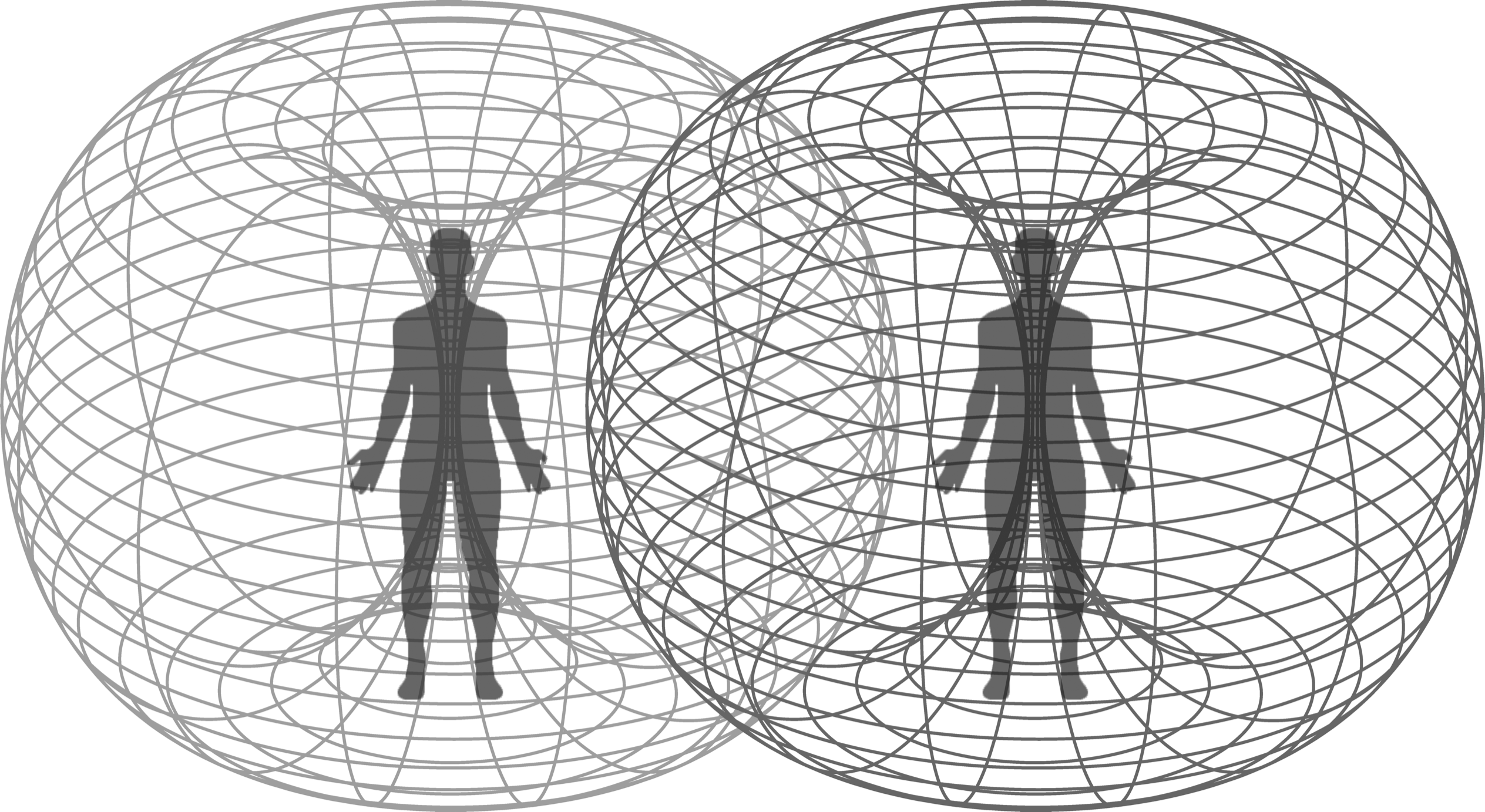
Figure 14-1: Interacting Human Bioenergy Fields
The bioenergy fields generated by the brain and body physiology are capable of expanding beyond the skin into the environment. The bioenergy field of the heart is one hundred times more powerful than that of the brain, and it can be detected several feet from the body.8 When our bioenergy fields extend beyond the body, as in figure 14.1, they can interact with other people’s bioenergy fields as well as with structures in others’ brain and body physiologies. In this way, bodies can inform, influence, and regulate each other, like birds in synchronized flight patterns; or dysregulate each other, as in a mob frenzy. Bioenergy fields from the hands of healers can reach deep into the brain and body physiology of others to initiate transformation, even when the hands are at a distance from their bodies.
The fasciae in different parts of the body interweave with each other to create a continuous fabric. This connective tissue matrix, with its crystalline structure, functions as radar for information reaching the body in the form of bioenergy fields from the outside. Deep within our cells, tiny antennae-like filaments on our genes, known to have the capacity to alter gene expression, vibrate with information from bioenergy fields inside and outside our brain and body physiology.9
So there appears to be adequate scientific evidence that we have structures in place to inform, influence, regulate, and dysregulate each other through interpersonal resonance. I am no longer astonished by instances that demonstrate the phenomenon of resonance, as when a horse grazing in a field comes straight up to me and puts its nose against my heart on a day when my heart is extraordinarily wide open with love. As when my wife comes down from the third floor to the kitchen on the ground floor and kisses me and says she loves me, immediately after my heart is moved to tears from reading a moving newspaper story about reconnection. As when my wife, who is sleeping next to me but not touching me, drops deeper and deeper into her sleep and breath as I hold my head in my hands to regulate myself down from a nightmare.
So far, we have only seen physiological evidence for interpersonal resonance across short distances, as between client and therapist in the same room, involving measurable frequencies of the electromagnetic spectrum. This book is being written during the coronavirus pandemic, when therapy has moved increasingly online. Concerns abound regarding whether therapists can provide as much support and connection online as they can in person; as does pleasant surprise about how much connection and support both clients and therapists experience in online sessions. Given this unique situation, it makes sense to explore the evidence for interpersonal resonance over longer distances. We will see that some of the possible dynamics involved in long-range interpersonal resonance, such as quantum entanglement, could also contribute to the strength of interpersonal resonance over short distances.
Interpersonal Resonance over Longer Distances
Around four a.m. one morning in Los Angeles, I woke up from an awful dream. A man had died in India, and his coffin was being lowered into the ground; and it was expected that his wife would be buried alive with him. I wrote the dream down on a notepad on the night table to get it out of my system, and I went back to sleep. Around six a.m., the phone rang. One of my maternal uncles was calling to tell me that my forty-nine-year-old brother-in-law had died of a heart attack, and that they had been trying to contact me for a while. The dream had brought me information about what had just happened. Years later, I would realize that the dream had also brought me information from or about the future. It foretold the very difficult times my sister would undergo for many years after her husband’s death. When I share the dream with students around the world as an example of interpersonal resonance, I often hear similar personal stories, reinforcing my impression that such experiences are not extraordinary and that there must be a scientific explanation for them.
A less dramatic and more frequent experience that occurs is just thinking of calling or writing someone, only for that person to contact us first, a phenomenon that Rupert Sheldrake calls “telepathic telephone calls.” In a study to investigate the extent of this phenomenon, Sheldrake and David Jay Brown found that 78 percent of two hundred respondents reported that they have had the experience of telephoning someone who said that they were just thinking about calling them.10 It turns out that there are scientific explanations for such long-range information exchanges or resonance, in the discipline of quantum physics.
Quantum physics is concerned with the world of subatomic particles, the tiny particles that everything in the universe would break down into if we were to keep breaking things down to get at the stuff that the universe is made of. In the strange behavior of these very tiny things, we might find an explanation for long-range resonance. Two subatomic particles are said to be “entangled” when a change in one cannot happen without effecting simultaneous changes in the other, with no time lag whatsoever, even when they are great distances from each other. This behavior among entangled particles, which Albert Einstein called “spooky action at a distance,” has been experimentally validated many times.11
Does this mean that the information on the change in one particle travels to the other particle faster than the speed of light (186,000 miles per second)? Some scientists have theorized that speeds faster than the speed of light are indeed possible in the world of subatomic particles. According to one theory, there are hidden variables of subatomic particles that are capable of traveling faster than light—variables we cannot measure because, as you may have guessed already, they are hidden.12 According to another controversial theory, subatomic particles are able to achieve speeds faster than light through a behavior called “quantum tunneling.”13
The standard explanation for quantum entanglement is nonlocality. We live in a world characterized by space and distance, but there is no space or distance in the world of subatomic particles.14 So when something changes in one particle, it leads to changes in the other particles that are entangled with it. In the world we know, defined by space and time, the speed of our communications with each other can be measured in time. It is difficult for us to grasp a world without space and time. But we do also exist at the quantum level, where we can communicate with each other instantaneously, according to quantum physics. So nonlocality is another feasible scientific explanation for interpersonal resonance at a distance, in addition to communication at faster-than-light speeds.
If all of this is making your head spin, please do not worry. The key is that it is possible for information to travel great distances between two entangled particles instantaneously or at speeds greater than the speed of light; and that we exist, as all things in the universe do, at both quantum and nonquantum levels of reality. At the subatomic level, some of us are perhaps more entangled than others because we belong to the same species, ethnicity, family, or close relationship. Quantum entanglement may be the mechanism through which I learned of my brother-in-law’s death in a dream.
Larry Dossey, MD, offers many more examples of information exchange over long distances through interpersonal resonance in his book One Mind: How Our Individual Mind Is Part of a Larger Consciousness and Why It Matters, a required reading in Integral Somatic Psychology professional training.15 This is a very interesting read for anyone who wants to learn what is behind our ordinary knowledge of who we are and what reality is. I have the trainees read it for one reason: to overcome their bias against long-range information exchange through interpersonal resonance so they can at least allow it as a possibility in their minds and explore it in their awareness, which is very important, because quantum phenomena are known to be affected by our awareness and intention.
Countertransference and Resonance
Countertransference is a serious concern among therapists across the board, for good reason. When a therapist has a reaction to a client that has very little to do with the client, but the therapist incorrectly interprets the reaction as having to do with the client, it can compromise the quality of the therapy and even bring harm to the client. For example, if a therapist is triggered unconsciously into his unresolved anger toward his mother because the client subliminally reminds him of his mother, the therapist could insist that the anger he is feeling toward the client is actually the client’s unconscious anger toward the therapist.
Earlier Freudian psychoanalysts wrongly believed that therapists could eliminate countertransference reactions altogether and become “abstinent” by undergoing therapy themselves. Even though our understanding of countertransference has evolved to include the possibility that it could be useful in understanding and helping the client, the concern about harming the client through countertransference persists, as therapists in country after country have told me when I suggest that they start to examine their inner reactions for clues to their clients’ conscious and unconscious experiences.
Initially, transference was understood as a client’s reaction to a therapist that had nothing to do with the therapist, and countertransference was a therapist’s reaction to a client that had nothing to do with the client. Later, the understanding of countertransference evolved to include the possibility that a therapist’s experience in relationship to a client might be useful in understanding and regulating the client. A type of countertransference called “concordant” or “mirror” countertransference allows for the possibility that sometimes the therapist can experience what the client is experiencing. Another type of countertransference called “complementary” countertransference allows for the possibility that the therapist’s experience in relation to a client can be exactly the opposite of the client’s experience in relation to the therapist.
For example, in mirror countertransference a therapist might feel anxiety in the presence of an anxious client whose anxiety might even be unconscious to the client. In complementary countertransference the therapist might start to feel extremely calm in the presence of an anxious client so as to help the client manage their anxiety. When a therapist experiences a sudden urge to hit their client when the client is afraid, that is another example of complementary countertransference where the client is communicating to the therapist the abuse they experienced. Mirror and complementary countertransference experiences are possible through the information from the five senses, in all the ways we have seen. They are also possible through interpersonal resonance, based on the ability our physiologies have to share physiological information directly with each other.
Transference and countertransference are real. They can be harmful or beneficial, depending on how they are handled. A therapist with an ego that believes countertransference is a sign of imperfection on their part and does not admit to it might be a danger to their clients and themselves. As we have seen, the capacity for interpersonal resonance is also real. It offers therapists a profound additional tool for joining, understanding, and regulating the experience of their clients. But experiences of countertransference and resonance can be confounded. As much discrimination as one might bring to a situation, it might still be insufficient to untangle the two, in part because all that we can make conscious in terms of the dynamics in any situation is limited relative to what is there in the unconscious, and in part because it might be impossible to separate one’s experience from that of another in relationship. Intersubjective psychoanalysts such as Robert Stolorow, one of my teachers, dispute the very idea that one’s experience can be clearly separated from that of another in a relationship.16 So the use of resonance requires humility in addition to discrimination—the humility to acknowledge that one can be just as incorrect as correct. Resonance also requires the ability to let it go if its use does not lead to anything.
Resonance in Mutually Regulating Systems
In his book The Developing Mind: How Relationships and the Brain Interact to Shape Who We Are, Daniel Siegel states that when two human beings come into any cooperative relationship, the two systems come together to form a supersystem.17 A supersystem has a greater capacity to regulate both systems than the sum of its constituent individual capacities. In such a supersystem, the individual systems might be involved in different activities at different times. At times, they might be synchronous in their activity; at times, they might be complementary; at times, their activities might appear to have nothing to do with each other. In mutually regulating systems, one system might lead at times and follow at other times. At still other times, the systems may appear to be in no apparent relationship to each other, doing their own things, but still be in a mutually regulating relationship.
What does this mean for our experiences in resonance—for what we sense in our brain and body physiology when we are working with another? Let us look at it through an example. We are sitting with a client and we suddenly feel a surge of energy in our legs. Does this mean it is happening in the client at the same time? That is one possibility. It is equally possible that it is happening in us first so as to regulate the client, whose energy is becoming too top-heavy for their own good. Their system, in resonating with the downward shift of energy in us, might move toward more balance. It is also possible that a third factor, the psyche at large, could be triggering simultaneous movement of energy in the legs of both therapist and client, as in Jungian psychology. It is also possible that one cannot find a reason for it in the client’s process. But that does not mean it is not helpful to us or the client in some way that we cannot understand. In a way, it is not unlike a conversation between friends. One says something, and the other says something else, and so on, until both end up feeling better and clearer about the situation they have been discussing.
The Practice of Interpersonal Resonance in Three Steps
Let us now see how we might go about using resonance to sense, interpret, and regulate emotional experiences in others as well as in ourselves.
1. Allow for the possibility for the direct exchange of information between one brain and body physiology and another through bioenergy fields or quantum fields, and set an intention to allow it to happen.
Intention is important, especially for quantum phenomena, because they are subject to awareness and intention. Observe your brain and body physiology from time to time—your body sensations, changes in energy states, and emotions. Look out for sudden shifts in your experience such as pain in the heart, loss of energy in the legs, or anxiety. Simply accept your experience, and if it is unpleasant, try not to change it in any way to feel better. Please remind yourself that you could be resonating with the client’s process and feeling its impact on you. Being mindful of it, not reacting to it but supporting it with your awareness and intention, can help to regulate the client’s experience in the resonance.
2. Regulate yourself, in whatever way you know how, if your experience becomes too much for you to bear.
This turn of events might mean the client is struggling with how overwhelming the experience is for them. It might also mean that the experience is simply too much for your system. We often work with experiences in others for which we do not have the capacity or personal reference, such as those who have been through war or specific forms of physical or sexual abuse.
In these instances, regulate yourself so as to make the experience more bearable, but please take care not to regulate yourself away from it and compromise the resonant relationship you have with your client through sharing their experience. Sharing another person’s experience, especially with one’s body, is extremely important in helping another person process their emotional experiences. It is akin to one person helping another person lift a heavy load, or lending a hand to support another person as they walk. The emotional load is shared and supported in the resonance. This is why sometimes the best thing we can do for a person who is grieving is to simply sit with the person, sharing their grief in as much of our body as possible. I remember sitting with a distant cousin whom I had just met as she was grieving the loss of her father. Six months earlier, she had also lost her mother. As I sat with her for nearly an hour, I felt her trembling, grieving, and despairing, often in silence. A few months later she wrote to me and said that, even though she had just met me for the first time in her life that day, and we hardly talked to each other in the brief time we spent together, she felt something really had happened between us to establish a strong bond. I felt that way too, and I still feel it.
There are several ways in which we can regulate ourselves when we are struggling with another’s experience in resonance or in reaction to their experience, without losing contact with the person. We can place a hand gently on the part of our brain and body physiology where the discomfort is most difficult, to help ease it. We can take a deep breath to make it more bearable. We can place one hand on that spot and the other hand on another part of the body to help distribute the energy between the two spots to reduce the pain in the initial spot. We can sense our legs to ground ourselves or sense the lower abdomen to center ourselves to withstand the experience. With our awareness and intention, we can expand the difficult emotional experience to more areas of the body so as to create a greater capacity to be with it. We can place a hand on our brain stem (the lowest part of the back of the skull) or on the prefrontal cortex (the forehead) in a casual way to help regulate ourselves while we stay focused on the other’s suffering.
When we regulate ourselves this way in the resonance, we mobilize its powers to help others regulate their experience and work through it, without even drawing their attention to it. This way of working within the resonance is particularly helpful when we are working with children or those who have much difficulty working consciously with their experiences, especially in the body.
3. Make further use of the information we gather in the resonance by sharing it with the client.
We saw in chapter 5 how conscious awareness of an emotional experience can be of extra help in regulating the experience and can inform the person more fully of the impact of the situation. If we were to feel sadness in our chest in the course of working with the client, we could bring it to the person’s attention by asking, for example, “What do you experience in your chest now?” “What emotion do you feel in your chest now?” “Do you feel sadness or happiness in your chest?” “Do you feel sadness anywhere in your body?” We could also say, “I feel sadness in my chest now. I do not know what it is about. Do you feel sadness too? If so, where in your body do you experience sadness?” And so on. In these instances, there would seem to be an assumption that we are picking up the emotion that the client is also consciously experiencing at the moment. However, it could be that the emotion is unconscious and needs the mirroring and support of the therapist to become conscious and bearable. It is also possible that the client is projecting the unpleasant or unacceptable emotion outward and that the therapist is projectively identifying with it in order to understand the client’s condition.
It is also possible that the sadness is the therapist’s own, in reaction to the client’s situation; or the therapist could be having a countertransference reaction that has nothing to do with the client. Therefore, it is important not to press the issue if the intervention does not lead to anything, unless of course the therapist is absolutely sure from knowing the client that the intervention is being defended against, and pursuing it is in the client’s best interest. When nothing comes of an intervention based on information from resonance or other means, it does not mean that the intervention might not somehow be helpful to the client. It is possible that the client is not ready to deal with it. The intervention might, however, seed the client’s psyche and lead to its emergence in the future. The therapist might be modeling the experience and expression of emotion for the client. The client might also receive the information that the therapist is experiencing sadness in response to their situation as empathic support, which could lead to the client sharing not only sadness but also other vulnerable emotions with the therapist.
Issues in Working in Resonance
Too much resonance: Therapists often complain about suffering from resonating too much with their clients. Some report that they have no choice but to resonate a lot and suffer. Embodying the unpleasant emotions of others in oneself does involve suffering. Resonating with emotions of others, however, does not mean therapists need to suffer as much as their clients. The pattern of resonating too much might go back to one’s childhood. One might have learned it from one’s caregivers, or one might have had to do it to maintain connection with caregivers. This might have been reinforced in therapy, as the pattern of resonating too much can be of significant help to clients. Therapists who do this might have even become identified with it as a characteristic of a really good therapist—something I had to unlearn myself.
The first thing to do to correct the pattern of resonating too much is to understand that one has a choice regarding how much to resonate with someone and whether to resonate with someone in the first place. We do not resonate with everyone we run into in our life, just as we do not try to relate to everyone we run into in the same way. So the first thing we can do is to set conscious intentions to not resonate with someone or to limit the extent to which we resonate with someone. These intentions work to some extent. Setting such intentions is likely to bring into consciousness unconscious intentions from childhood or later in life that contribute to the problem of resonating indiscriminately and without limit. We can then work with those intentions to change them.
In addition, we can adjust certain behaviors to manage the extent to which we engage others in resonance. Doing less mirroring of tone of voice, facial expression, and body expressions such as posture, movement, and gesture, along with reducing eye contact, are some of the simple things we can do to reduce the extent and intensity of resonance. If the problem of resonating too much continues across the board or persists in relation to some clients, one can seek personal therapy to uncover and work through unconscious attitudes, experiences, and vulnerabilities that resist change, in order not to suffer more than necessary in working with others in resonance.
Too little resonance: Some therapists have the opposite problem. They have a hard time engaging their clients in resonance in general. If they have difficulties with resonating with specific clients, the problem could be with the client or the therapist. In either case, they could try all the methods that were suggested for reducing the extent of resonance, but in the opposite direction. For example, one could set the intent to resonate more or to do more mirroring of tone of voice, facial expression, and body posture. If these methods do not work, the therapist who has difficulty resonating in general or with specific clients could do personal therapy to uncover and resolve what is in the way. One important reason why people find it difficult to resonate with others is that they do not have the capacity to tolerate the suffering that resonance could bring.
Also, resonating is a two-way street. It is something a person can control consciously or unconsciously. This was the case with a dear friend of mine who was Jewish. Toward the end of World War II, when he was a four-month-old baby in France, his young parents left him in the care of a priest and fled to the hills with the French Resistance. The priest hid him in a dark cellar two levels below the ground and cared for him until his parents returned. When his parents came to get him four or five months later, he was so emaciated that they thought he could have died.
I could never get a sense of my friend through resonance, despite my skill in resonating with people. It is as though he instinctively learned very early in life that it was not safe to be detected in the resonance. However, when he was diagnosed with terminal cancer, I could not stand to be around him. It was simply too much stress for my body to handle. His ex-wife and son reported the same experience. It was as though the wall he had put up during the war and maintained ever since broke down when he was faced with certain death, and all the stress and vulnerabilities he had managed to hold at a distance came flooding back, overwhelming him and those who cared for him very much.
Attitudes that therapists develop during their training also get in the way of their ability to help their clients through resonance. Therapists who believe that they can become free of countertransference, who do not know they have the ability to help their clients through resonance despite possible countertransference reactions, or who hold the view that their inner experiences are of no value in understanding clients’ experiences are likely to have difficulty in resonating with their clients. Similarly, therapists who are afraid they could do harm to their clients by making suggestions based on their experiences; who are trained in therapy modalities that emphasize that awareness of client’s experiences should come from clients, and the role of the therapist is to follow them and validate them; or who do not pay attention to their body experiences are also likely to have difficulty with resonance. Therapists across therapy modalities often bring up the fear of causing harm by imposing one’s countertransference reactions on clients as a major concern about trusting their resonance.
In body-oriented and energy-oriented psychologies, there is at times excess concern about “merging” with clients. It appears that “not merging” is sometimes understood as “not exchanging energies at all.” Merging could also mean identifying oneself with another’s experience so completely as to give up one’s own experience. That is of course not desirable if it is a default mode for interacting with others, or if it is a defense, called the “confluence” defense in gestalt therapy. If not merging is understood as not exchanging energies at all, or if identifying completely with another person’s experience even for a short time is always regarded as pathological, those attitudes can become an impediment for engaging others in resonance. This is because in the exchange of information involved in resonance, there is always an exchanging or mixing of energies to a greater or lesser extent. And putting oneself in another’s shoes completely for a short period of time might be at times necessary to help the other in resonance.
Stuck in resonance: When we resonate with clients during sessions, a number of things could happen that might leave us stuck with the client’s experiences or our reactions to them, compromising our well-being and our availability for resonating with other clients. Let us look at some of these possibilities with one or two examples. When we resonate with a client’s experience, the experience could just be too much for our system. We might not have the capacity to tolerate the experience, either because it is unfamiliar or just too intense, or it could trigger unbearable and unresolved experiences of ours. In such instances, physiological defenses could kick in to maintain our system’s functionality to help the client. This is analogous to a person who grabs another person to prevent them from falling over a cliff, and not noticing that an arm muscle was torn in the process due to the instinctual physiological defense of numbing, until after the rescuer successfully gets the other person to safety. In the same way, therapists might not notice until after the session (sometimes hours after the session) that their system is left holding incomplete and unresolved experiences, sometimes with symptoms.
Once in a training in Europe, I worked with a Jewish woman who felt terror in large groups. The only daughter of two Holocaust survivors who lost all of their family members in the concentration camps during World War II, she still had difficulty revealing her Jewish identity to her neighbors in the small village where she lived. At some point when she was an adult, her father took his own life by hanging himself. In a session in front of a class, we used the presence of the group to trigger the terror she lives with so we could use her body to embody and tolerate the terror of being killed, which she had probably inherited from her parents as well as from the collective Jewish experience. At the end of the session and during the rest of the training, she reported that she felt more present and at ease in making contact with others in the group. I said to her that I felt more present and connected to others as well, adding that it was an illustration of the wisdom of Swiss psychologist Carl Jung, who said every therapy session has the potential to change both the therapist and the client.
However, during the session I felt a slight constriction in the back of my neck on the left side. The next morning, I woke up with pain in the same spot. I did not think much of it because it is a familiar symptom of mine. I knew that the posterior neck muscles have many psychological functions, including the management of high energy, stress, fear, and shock or traumatic stress. I also knew that the familiar constriction pattern with pain in my neck might have to do with what remained unresolved from the trauma of my birth, in which my mother and I both came very close to death. Based on past experiences, I thought I could resolve the pain with yoga and, if necessary, by working with the terror by myself or with my therapist. As time went on, I grew increasingly concerned when neither method worked; nor did the subsequent bodywork sessions I received. In fact, the constriction and the pain spread from one side of the neck to the other and started to recruit the shoulders in what appeared to be a complex regional pain syndrome. I started to look for simple medical reasons for the pain: perhaps I had injured my neck during a yoga posture.
It was in this state of distress that I arrived in India for my annual visit with my mother on her farm, at the beginning of a new year. With the stress of being back in the family of origin, my neck condition worsened, and I felt helplessness and despair. Out of the blue, my wife suggested that I contact a local energy healer who had helped her with a chronic hip pain symptom some years ago. I called him reluctantly. He is a bit of an odd fellow, even to his family. The first time I met him, he said, “I prefer the company of plants and trees in the forests near where I live. They taught me about energy and how to do energy healing.” Also, in contrast to most energy healers, who normally exude calm and solemnity, he was a nervous wreck, talking ceaselessly about random things while he “worked.” He worked on my neck for a short time, his fingers moving at my neck as though they were trying to catch a butterfly very delicately so as not to injure it, while I looked on with my usual skepticism and ego. I wondered what he could accomplish that I could not with all the work I had done to fix the problem.
I did not have to wait long to find out. That night, as my neck relaxed and with it my entire body, high levels of energy started to course all over my body. With the energy came high levels of terror, helplessness, and despair, but mostly terror—the terror of dying—that in repeated cycles exhausted me but also managed to dissolve my regional pain syndrome around my neck for good. The next morning I felt like a new person. I wondered to what extent the emotions I had felt the previous night had to do with my own near-death trauma around my birth; to what extent it had to do with the Jewish woman I had worked with; and to what extent it had to do with the terror of all of her ancestors. I would never know for sure. But what I do know for sure is that the session healed me and made me more capable of being there for others in resonance. The whole several-month episode also taught me that, in order to work efficiently at undoing physiological defenses to help people access and embody their emotions, I need to also learn how to work with physiological defenses at the energetic, subtle, or quantum level as well, the level that seems to be more involved in coping with unbearable experiences and the physiological defenses against them, the more traumatic the situations become.
Resonance and vicarious traumatization: When therapists are stuck with experiences they encounter while working in resonance with their clients, cannot resolve the experiences, and develop symptoms from them, therapists are said to be vicariously traumatized by other people’s traumas. There is much discussion among trauma therapists about how to avoid vicarious traumatization. Suggestions usually involve better self-care: keeping a manageable caseload, not working with too many challenging clients, having enough downtime, exercise, sleep, peer support, supervision, and so on. They also usually involve better management of one’s physical and energetic boundaries. At times, concern with vicarious traumatization and maintaining boundaries to avoid it—such as visualizations that imagine a white light protecting oneself—can undermine the therapy by compromising the deep relationships therapists could have with their clients in the resonance. In my view, the best protection that therapists can have to minimize vicarious traumatization, in addition to making sure one is not resonating too much in all the ways discussed above, is to develop a greater capacity for tolerating a range of difficult experiences, using such instances as opportunities for personal work and as gateways to further personal and professional development.
Learning and resonance: Children can also learn about the world and how to respond to it by resonating with the brain and body physiologies of the adults around them. Children have this capacity from very early on, as far back as their life in the womb. They resonate with adults’ vulnerabilities as well as their defenses against them. This is one way in which children can be vicariously traumatized, and the effects of collective and individual traumas in a family’s history can be passed on from one generation to the next.
As we saw in chapter 5, resonance might also have a role to play in learning about emotions. When adults pick up children’s physiological patterns through resonance and name them as this emotion or that emotion, children learn to identify different physiological patterns that they are experiencing as different emotions through words that adults use to describe them. Because it is possible to resonate with both brain and body physiologies, it is possible for one to resonate not only with patterns of sensations in the body but also with the abstract patterns that the brain might form from them prior to their being attached to linguistic concepts to become communicable emotional experiences.
Touch and resonance: Our hands are powerful tools through which we are able to sense and transmit bioelectric and biomagnetic energies for regulating and healing others as well as ourselves.18 Our hands can serve these functions even at a distance from the body because our bioenergy fields extend beyond the skin boundary. But when our hands are in contact with the skin, their effects are even more pronounced, making touch and self-touch effective healing tools. Because touch combines information from resonance with input from one of the five senses, the experiences a therapist has in resonance with a client when there is touch might differ from when there is no touch.
The Archetypal Basis of Resonance?
We have tried to understand the phenomenon of interpersonal resonance as a manifestation of the intricate mechanisms laid down by evolution to maximize our survival by increasing the possibilities of interactive regulation among members of our species. We have tried to understand its structural specifics in terms of short-range bioelectric and biomagnetic fields and short- and long-range quantum fields. Does interpersonal resonance have deeper sources in our psyche? Mara Sidoli, a Jungian analyst with a developmental focus, characterizes the spontaneous rocking behavior babies in distress use to soothe themselves along the following lines, which I find quite moving: when personal mothers disappear, archetypal mothers rock the baby from the inside.19
In Jungian psychology, the individual psyche is conceptualized as a unique combination of energy patterns, such as the good mother and the bad mother, that are common to all of us.20 These common energy patterns, called archetypes, are seen as guides for our development in different stages of our lives, and as playing a role in our wellness as well as illness. Every archetype, such as the good mother, appears in different cultures as different symbols, such as the Virgin Mary in the West and the goddess Shakti in the East. On closer examination, archetypal symbols from different cultures reveal themselves as having core qualities in common, such as good mothering or bad mothering. The good mother and the bad mother archetypes interact with us through individuals around us to mother us and impart the qualities of mothering to us, which we use to mother others in turn.
I think the following story is a fitting end to this chapter on the fascinating subject of interpersonal resonance. Once I went to see a close friend who had just given birth to her first child, a girl. The baby was about four to six weeks old. The mother looked exhausted. The baby was hard to regulate and kept my friend up all night long. While she ate the Chinese meal I had brought her, I held the baby in my arms and talked with my friend, catching up with a lot of stuff that had happened in both our lives since the last time we had met.
I started to notice that the baby was settling into my body and making strange sounds that my body seemed to be responding to with sounds of its own. She dropped deeper and deeper into sleep while I carried on a conversation with her mother through the haze of a trance that seemed to be enveloping me and the baby. At some point, I bid my friend goodbye, handed her the baby, and drove back to my apartment.
It was around four p.m. when I got back to my apartment. I felt exhausted—more exhausted than I could ever remember being. I wondered if that was what it took to mother a child, day after day. I had a plan to go to a seven p.m. movie, and I thought I would take a long nap to recover and then go to the movie as planned. I lay down for my nap and woke up to the sound of my telephone ringing at seven a.m. the next morning. My friend was calling to say she had not had such a good night of sleep in a very long time. The baby had slept through the night too, she added. She asked me what I had done, and she ended our conversation by saying, “You should visit more often!”
My instinctual body reaction to her suggestion was a strong no, which was understandable given what it had felt the evening before upon returning to the apartment. My ever-insecure ego, always on the lookout for something to take credit for to feel inflated, imagined that it might even be a better emotional coregulator (borrowing a term from attachment theory) of the child than the mother was.21
The psyche at large does not brook such inflation. The compensation came swiftly, the very next morning, just before I woke up. In a dream, I was visited by my paternal grandmother, a matriarch, an archetype of the unconditional mother, by whom I felt more unconditionally loved than by anyone else growing up. In the dream, I was asleep or unconscious. She woke me up and had the following message to deliver: “Raja, it is time for you to do a ceremony for all the mother goddesses of the world. Go to our village, where you will find a young mother with a newborn. I mothered her when she was a child. Tell her that I sent you, and ask her baby for the ceremony. She will give you the baby. Take the baby and go up in the sky to where all the mother goddesses abide. Do not forget Mary and her infant son. Lay the baby at their feet and pray to them in all humility.”
I woke up from this dream quite humbled, all right, with chills going up and down my spine. To me, the message was loud and clear. Whatever mothering I had brought to my friend’s baby, it had ultimately come from the archetypal mother goddesses of the world. The young mother in the village represented my mothering ability that my grandmother had nurtured in me by channeling all the mother goddesses of the world in her interactions with me. The baby from the village that I had laid at the feet of the goddesses in the dream, I interpreted as the further fruition of my mothering ability I had gained from regulating my friend’s child—a gift from the goddesses, no less, a gift for both the mothering and the mothered. When I tell my students this story of the divine or archetypal source of our ability to resonate in the collective psyche of all human beings, to reassure those who are unsure of their ability to resonate and regulate, I often see awe on their faces, the same awe I felt after the humility the dream brought me.