9
Different Types of Emotions
Chapter summary: presents and discusses different kinds of emotions, including the always present but often overlooked sensorimotor emotions, with the aim of helping people to find emotions as quickly as possible to embody them.
Finding Emotion
Emotional embodiment work requires that emotions are available as conscious experiences. From teaching in over twenty countries spread across five continents, I have found that the general impression among a majority of mental health professionals around the world is that it takes time and a great deal of effort to get clients to experience their emotions, and that a relationship of trust has to be built over time between therapist and client for clients to feel comfortable enough to share their intimate emotional experiences. Emotions are indeed very intimate and shy things. Therefore, it makes sense that they could take a long time to emerge in relationships, therapeutic or otherwise. However, there is something about this perceived wisdom and widespread adherence to it among mental health professionals that has not always sat well with me.
You could say I am a therapy junkie. Even though I have had one Jungian analyst, Richard Auger in Los Angeles, as a constant companion for personal growth for more than twenty-five years, I have seen many other therapists as a client in the different therapeutic modalities in which I am trained. While I could not go anywhere near an emotion with some of them, even after spending a fair amount of time with them, there were others who were able to get me there rather quickly, sometimes even during the first session.
Looking back on what distinguishes these categories of therapists from each other, two things stand out. The therapists with whom I could access my emotions relatively quickly were those who were interested in my emotions from the very beginning, seemed to know many emotions, and had many ways to support me to come into them. They were likely to be body oriented in their practice and knew how to work to undo physiological defenses about emotions, defenses I did not know I had. These were also the therapists with whom I was able to establish a trusting relationship faster than with those who took longer to address my emotions, perhaps to establish a good enough relationship before broaching the topic. These reflections made me think of a psychological chicken-or-egg problem: which comes first in a relationship—emotion or trust?
Over time, I have evolved into the kind of therapist who believes that emotion can come first; that it is possible to engage clients emotionally from the very first session; and that how quickly a client can get to their emotions really depends on the therapist. It is true that there are clients who need a long-term relationship with their therapists to start to trust them with their emotional experiences; but an assumption that it is necessary for all clients is something I can easily and confidently quarrel with. In the course of developing emotional embodiment work, I have been looking for all kinds of things to teach therapists to help their clients to access their emotions faster. I have found that teaching therapists that there exist more types of emotions and a larger number of emotional experiences than we are taught in graduate school, teaching them about the language of emotions, and teaching them about how we experience them in our bodies is extremely important in building their ability to help their clients find emotions faster.
This chapter is about the different kinds of emotions and the larger number of emotional experiences we are capable of, what they feel like in our brain and body physiology, and the language we can use to elicit them, so we can more readily identify emotions in ourselves and those we work with, not only to heal but also to live a richer emotional life with a larger range of pleasant emotional experiences. Research has shown that those with greater emotional granularity—those who report a larger number of emotional experiences, with more nuance and differentiation—are more psychologically resilient.1,2 Throughout this chapter, we will refer to the entirety of the brain and body physiology simply as the physiology, using the terms “brain physiology” and “body physiology” to make a distinction between the two when necessary.
A Broader Definition of Emotions
To generate a longer list of emotional experiences and build a wider net to catch them as quickly as possible, we first broaden our understanding of emotions to include emotions, feelings, affects, motivations, drives (such as sexuality), attitudes (such as positive, negative, or ambivalent), and temperaments (such as optimism and pessimism). Even hunger in the presence of a loved one and the lack of appetite in their absence can qualify as an emotion, as it reflects the impact of the environment on our well-being.
Researchers have drawn different distinctions among these terms for different purposes. Damasio defines all emotions as unconscious and a feeling as a conscious experience of an always unconscious emotion.3 In the literature on emotions, emotions and feelings are understood as short-lived, more intense experiences in relation to specific situations. Moods are understood as less intense emotional experiences that have longer lives, often without a relationship to any specific situation. Temperaments, such as melancholic, are considered to be even longer-lasting than moods. Drives, such as hunger and sexuality, are thought of as instinct-driven calls for action. Of late, even attachment behaviors are considered to be drives that ensure our survival. “Affect” is a broader term that is understood to include emotions, feelings, and moods. We will refer to all of these experiences—short term and long term, less intense and more intense, more specific and more general—as emotions, as Candace Pert does in her book The Molecules of Emotions, so as to have a wider net to catch them.4
The Basic Emotions Approach
If we were to ask someone for a list of the most important emotions, the following emotions are most likely to be on their lists: happiness, sadness, fear, anger, shame, and guilt. This is because, from the very beginning of Western scientific research on emotions—which, we could argue, started with Charles Darwin—there has been an interest in and focus on identifying a set of emotions called basic or primary emotions that human beings share in common regardless of our culture, the expression of which can be easily detected on our faces, if not in our voices. There are many lists of basic emotions, and the emotions listed above appear in almost all of those lists.
Paul Ekman built on Darwin’s research and initially listed happiness, sadness, fear, anger, surprise, and disgust as the six basic emotions.5 He subsequently added amusement, contempt, contentment, embarrassment, excitement, guilt, pride in achievement, relief, satisfaction, sensory pleasure, and shame, to take the total number of basic emotions up to seventeen.6 In one paper, Ekman even went as far as describing all emotions as basic.7,8 The list compiled by Richard and Bernice Lazarus has sixteen emotions: aesthetic experience, anger, anxiety, compassion, depression, envy, fright, gratitude, guilt, happiness, hope, jealousy, love, pride, relief, and shame.9 Alan Cowen and Dacher Keltner offer twenty-seven basic emotions: admiration, adoration, aesthetic appreciation, amusement, anger, anxiety, awe, awkwardness, boredom, calmness, confusion, craving, disgust, empathic pain, entrancement, excitement, fear, horror, interest, joy, nostalgia, relief, romance, sadness, satisfaction, sexual desire, and surprise.10
I do not mean to make your reading tiresome (which is another potential emotion!) by hitting you with one list after another. In fact, I have chosen to exclude some of the lists in the literature. The purpose of this exploration is twofold: first, to get you started constructing a broader vocabulary of emotions. How many of the emotions listed so far can you recognize in yourself or others? And how do you experience them in your physiology? Second, I want you to recognize that these lists might not account for all of your emotional experiences. For instance, you may not be able to find an emotional experience, such as loneliness, that you might be particularly aware of.
There are indeed a large number of emotional experiences. The Emotion Annotation and Representation Language proposed by the Human-Machine Interaction Network on Emotion (HUMAINE) classifies forty-eight emotions into ten categories, such as negative, forceful, positive, and lively.11 In her book The Book of Human Emotions: An Encyclopedia of Feeling from Anger to Wanderlust, Tiffany Watt Smith offers a list of 154 emotions around the world in alphabetical order, with some emotions that have no parallels in the English language.12 (Please see appendix A for the lists of emotions from the HUMAINE project and Smith’s book.) A good webpage with additional lists of emotions and their associated meanings can be found at www.emotionalcompetency.com.13
Why learn so many emotions and their associated meanings? Why not just stick to a limited number of basic emotions? If these questions arise in you, please remember that the more you can differentiate emotional experiences in your physiology through language, the more granular (i.e., differentiated) they become, and the more you can regulate them. These lists might be a good place to start. As you go from one emotion to a related emotion, such as from sadness to grief, notice how the experiences of these emotions differ in your body.
You might notice that many more emotions are listed in the two lists in appendix A than in the lists of basic emotions we have seen. At the start, basic emotions were understood as universal emotions, experiences shared by all cultures and expressed especially through our faces and voices. They were not intended to capture all of our emotional experiences. To answer the question of how a limited number of basic emotions are related to all of our other emotional experiences, some followers of the basic emotions approach came up with the answer that a limited number of basic emotions are the ingredients of all our emotional experiences, as a few primary colors are the basic ingredients of all the colors we find in the world.
The wheel of emotions developed by psychologist Robert Plutchik, as illustrated in figure 9.1, is perhaps the most sophisticated of the models developed in this tradition.14
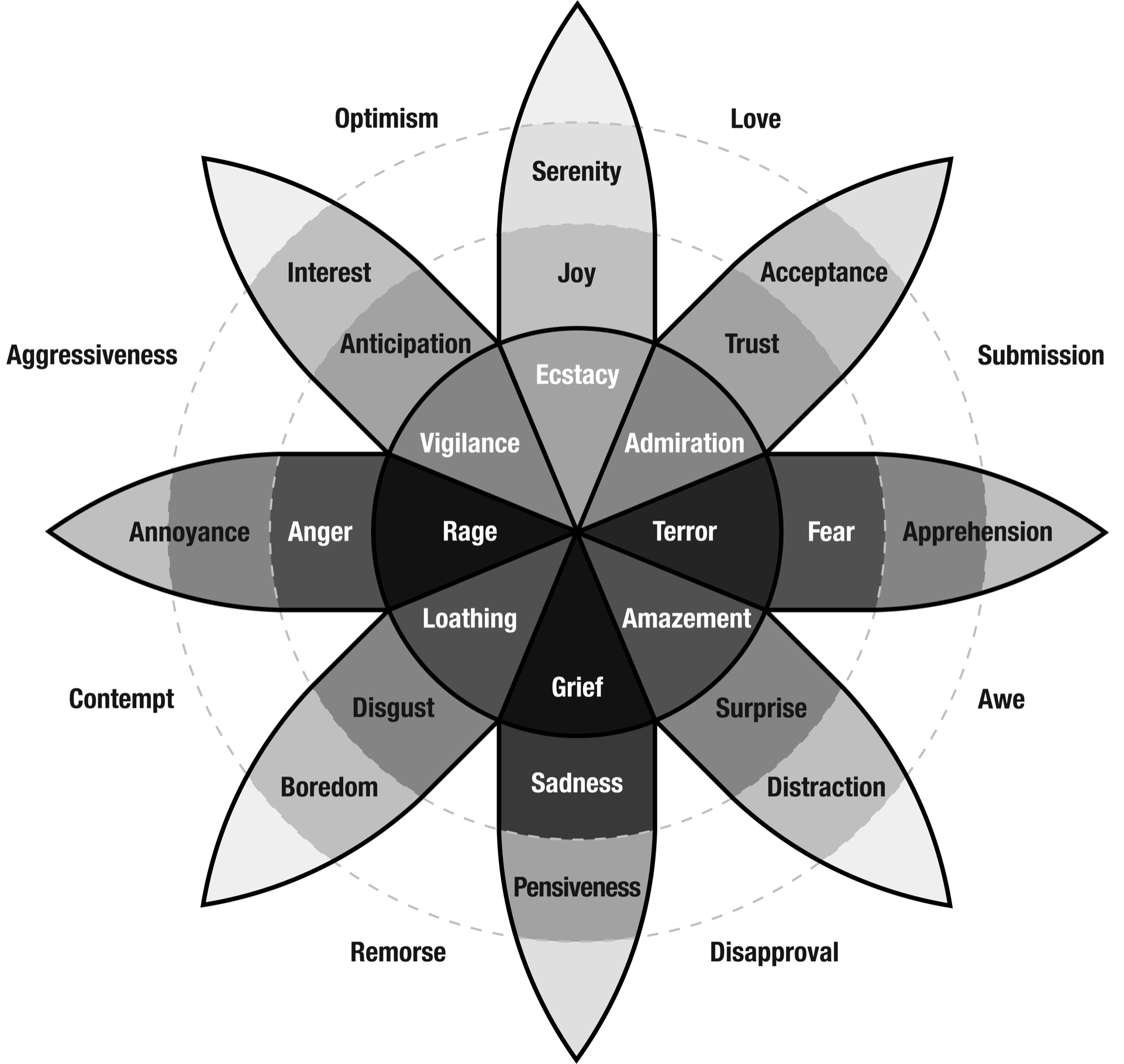
Figure 9-1: Plutchik’s Wheel of Emotions
In this diagram, Plutchik’s eight basic emotions are in the middle concentric circle: joy, trust, fear, surprise, sadness, disgust, anger, and anticipation. The eight basic emotions are combined in dyads and triads to arrive at secondary and tertiary emotions that can in turn be combined further to arrive at all of our emotional experiences, according to this theory. The words on the outer edges of the wheel, between two leaves, are secondary emotions arrived at by combining the two primary emotions represented by the leaves. For example, contempt is arrived at by combining anger and disgust. That appears to make sense. However, disapproval as a combination of sadness and surprise does not make as much sense. Would not anger be one of the components of disapproval? The idea that all of our emotional experiences can be arrived at by a combination of a limited number of basic or primary emotions quickly runs into such difficulties.
Plutchik’s wheel of emotions model can be considered to be a combination of the basic emotions approach we have seen so far and the dimensional approach to emotions that came later, which we will discuss next. In each leaf of Plutchik’s model, arousal increases as you move from the outside to the inside, generating emotional experiences of greater intensity. For example, fear with lower arousal is apprehension; fear with higher arousal yields terror. All emotional experiences vary along the dimension of arousal. This is a characteristic of the dimensional approach to emotions that distinguishes all emotional experiences in terms of two or three basic qualities, such as arousal.
The Dimensional Approach to Emotions
The dimensional approach to emotions is focused on capturing fundamental dimensions that characterize and differentiate all emotional experiences. For example, the circumplex model by James Russell arranges emotional experiences in a circle around two dimensions, arousal and valence (the degree to which an emotion is experienced as pleasant or unpleasant), as in figure 9.2. Calmness is a pleasant emotion characterized by low arousal or activation. Positive excitement is also a pleasant emotion but with a high arousal. Fatigue and tension are both unpleasant emotions at the opposite ends of the arousal or activation continuum. Russell, like other dimensional theorists, describes the valence dimension as the “core affect,” which is “the neurophysiological state consciously accessible as simply feeling good or bad, energized or enervated.”15
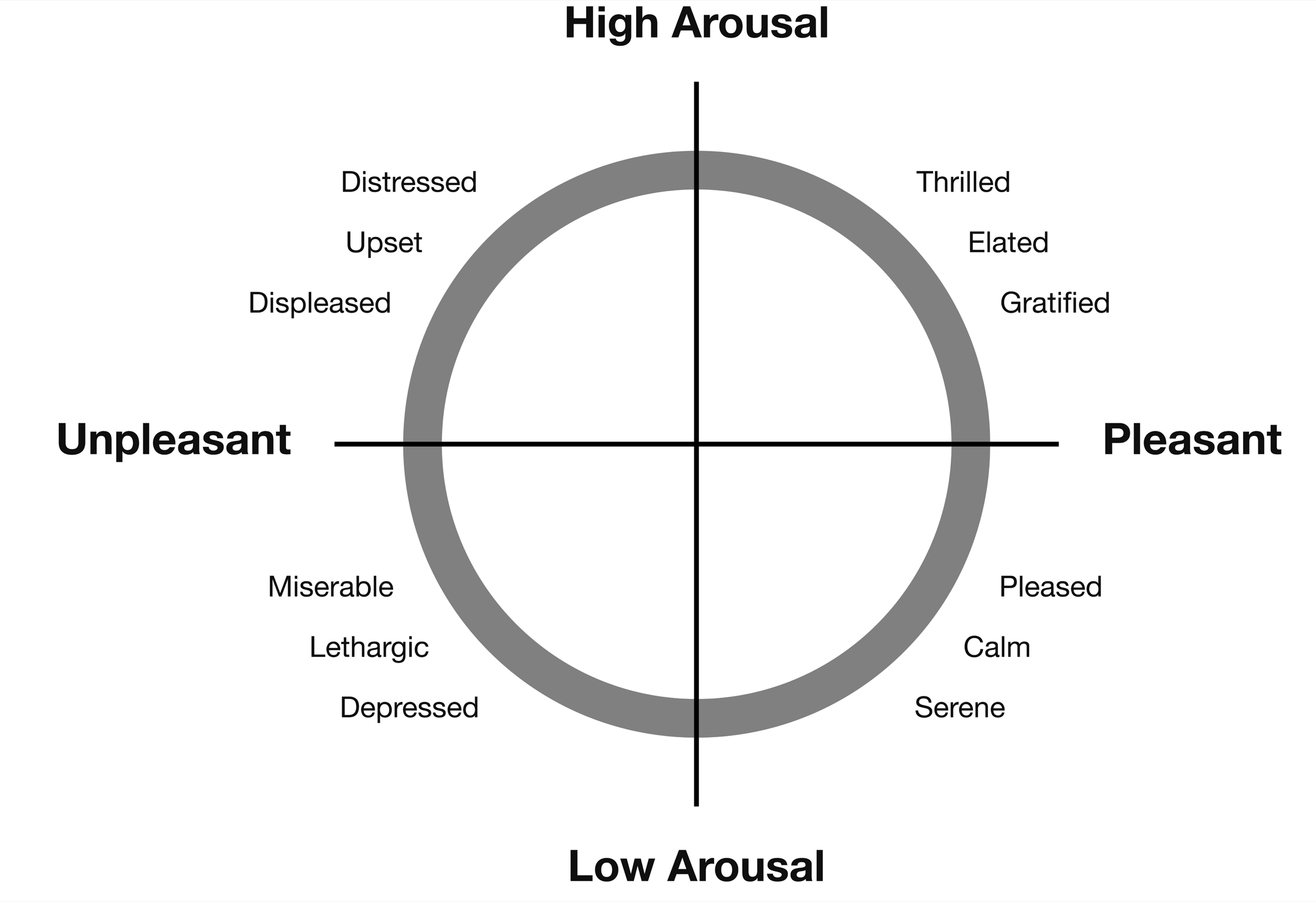
Figure 9-2: The Circumplex Model of Emotions
The Constructionist Approach to Emotions
As opposed to the basic emotions approach, which holds that evolution has built distinct physiological patterns for different emotional experiences into the architecture of the brain and the body, the constructionist approach to emotions posits that emotions are constructed in the present. Different constructionists emphasize different factors that contribute to the construction of emotions in the present. Social constructionists ignore biology and emphasize the importance of social roles, such as mother and father, and beliefs such as atheism, in the construction of emotions. According to psychological constructionists, emotions are not hardwired in the brain or the body but are constructed in the present from more basic ingredients such as thoughts and body experiences. Neuroconstructionists focus on how experience, in shaping the wiring of the brain, contributes to the construction of emotions in the present. The theory of constructed emotion by Lisa Feldman Barrett, combining social, psychological, and neuroconstructionist approaches, is the one used below in the discussion of differences between the basic emotions and constructionist approaches to emotions.16
Contrast between the Basic Emotions Approach and Constructionist Models of Emotion
In the basic emotions approach, every emotion is believed to have a distinct physiological pattern in the brain as well as the body. The number of basic emotions is limited, and all emotional experiences can be arrived at by a combination of two or more basic emotions. Therefore, the total number of emotional experiences is also limited in the basic emotions approach. In the constructionist approach, every situation first leads to predictions of likely emotion (impact of the situation on a person’s well-being) in the brain, based on recall of past experiences stored in the brain. This prediction is then updated with current experiences of one’s physiology in the situation. The brain then perceives very general physiological patterns (dimensions) in the updated information and links them to concepts in language, such as “it feels like a dagger in the heart,” to arrive at emotions.
The constructionist approach disputes the theory that there are universal emotional experiences across cultures. The constructionist approach also does not believe that there is a distinct physiological pattern in the brain or body physiology for every emotion across all cultures. It is not that the constructionists do not allow for any body patterns in the construction of emotions by the brain. Rather, the constructionists hold that the physiological patterns used by the brain to construct emotions are very general in nature, such as arousal and valence, as we saw in the circumplex model of emotions.
Constructionists posit that the lack of uniformity across cultures and even subcultures in emotional experience is due to variations in physiological experiences in different contexts, and in language concepts used to describe them. An important difference between the basic emotions model and constructionism is that there is no limit on the number of emotions possible in the constructionist theory of emotions. Because we are interested in the possibility of embodying emotions in as much of the physiology as possible, it is important to note that the concept that generating emotion involves the entire brain and body physiology is the constructionist approach. This is also true in the basic emotions approach, at least among those who allow a role for the body in emotional experience.
A More Expansive View of Basic Emotions
Basic emotions such as happiness, sadness, fear, anger, disgust, and surprise are extremely important. As we have seen, most basic emotion theorists believe that there are universal emotional experiences across cultures that are easier to express through facial and vocal expressions. The more they looked for emotions in facial and vocal expressions, the more they found. Babies are known to have the innate ability to express basic emotions through facial and vocal expression shortly after birth, and discerning mothers are known to be able to recognize these emotions from early on, meaning that these expressions make it easier for others to know what we are going through emotionally.17,18,19 Also, when we ask people what they are feeling, they usually respond in terms of such basic emotions. So it makes sense that we start exploring where we are emotionally or what others are going through emotionally with questions about the more easily available basic emotions that might be reasonably anticipated in a situation.
In the constructionist paradigm, the more complex, differentiated, and nuanced emotional experiences are called “specific instances of emotion.” In the differentiation of all emotional experiences (specific instances of emotion) along the basic physiological dimension from good to bad (valence), we can see that a “good feeling” or a “bad feeling” is a basic or core quality in all emotional experiences, something our brain can construct or abstract and report faster than the more complex emotional experiences themselves. In fact, as we will argue in the section on sensorimotor emotions later in this chapter, a good feeling or a bad feeling is even more basic than the basic emotions such as happiness and sadness, and it qualifies as a basic emotion because whether a person is feeling good or bad can also be easily discerned in a person’s facial or vocal expression, unless of course they are concealing it for some reason.
Why are basic emotions, such as sadness, easier to access than more granulated (complex, differentiated, and nuanced) emotional experiences, such as despair or the feeling of a knife twisting in the heart from a betrayal? Why is there so much research and evidence for specific brain locations and circuits for basic emotions, such as fear and anger? Why do they have more distinct physiological patterns in the face or the voice? The standard answer from the basic emotions approach to these questions is that evolution has chosen them and hardwired them into our brain and body physiology as quick, instinctual emotional reactions to different situations, to give us a survival advantage.
Yet how does one reconcile that answer with the evidence we have seen in chapter 5 that the brain is also capable of making emotions in other ways—by recalling past emotional experiences in similar situations to predict emotional responses to current situations, or by marrying specific or general patterns in the information on a situation’s impact on the physiology with language concepts? I struggled with this question for some time. And the answer I came to was relatively simple: basic emotions—whether they are generated through instinctual emotional circuits laid down by evolution in the brain or the body, or through recall of past emotional experiences, or from matching broad patterns of current information from the physiology with language concepts—are quick takes on the impact of a situation on our well-being, requiring less information processing from the brain than more complex emotions, which require more time and neurological resources to generate, if not make conscious.
It is well known that our brain is capable of arriving quickly at overall impressions of situations as good or bad, favorable or unfavorable, before it processes the situation thoroughly, and that it takes more time and neurological resources to arrive at a confirmation, a revision, or a more complex understanding of the initial impression. The amygdala, part of the so-called limbic brain, has been identified as an important structure involved in such rapid information processing.20 When the brain receives from the physiology complex information on the impact of a situation, it can use this ability for rapid information processing to get a quick take on how the situation is impacting us as well as how to respond to the situation. For example, we might quickly process a situation as unfavorable and respond to it with fear or anger, only to revise it later as requiring neither, upon further processing. As long as the initial emotional assessment or response such as happiness is not totally contradicted by subsequent analysis, all the subsequent detailed assessments of the impact—that is, all the subsequent emotions—will have happiness as a basic quality or dimension.
We can think of a basic emotion such as happiness and sadness as an underlying common quality or theme across a large number of similar instances of emotion (to use the language of the constructionists). A basic emotion can be arrived at before the construction of more complex emotions, as a quick take on the impact of the situation through instinctual emotional reactions in the brain or the body, from recall of past emotional experiences in the brain, or through quick processing of current information from the physiology. It could also be abstracted from the more complex emotions after their construction, as the brain is known to have the ability to abstract common qualities among similar experiences.
Let us illustrate these ideas with an excellent framework of emotions put forth by Gerrod Parrott at Georgetown University.21 Parrott’s list of basic emotions consists of love, joy, surprise, anger, sadness, and fear. He groups the other emotions into secondary and tertiary emotions, arriving at a grand total of 146 emotions. (This list is also useful for building our vocabulary of emotional experiences, organized into categories that make it easier to learn them.) You might have noticed that a secondary emotion such as affection is also listed as a tertiary emotion here. This is because Parrott’s model is in the form of a tree. Here, a secondary emotion is not a combination of primary emotions, and a tertiary emotion is not a combination of secondary emotions, as in the theory of basic emotions. Love is akin to a major branch of the tree of emotion; secondary emotions such as affection and lust are the smaller branches off the love branch; and tertiary emotions such as attraction and affection are still smaller branches off the affection branch. Affection appears as a secondary emotion as well as a tertiary emotion probably because affection is an emotion that can be experienced in so many different ways.
When we examine the secondary and tertiary emotional experiences associated with a basic emotion, we can see that the basic emotion is a basic or core quality in all of them. For example, sadness can be seen as a common quality that can be abstracted from depression, despair, hopelessness, gloom, glumness, unhappiness, grief, sorrow, woe, misery, and melancholy; or it can be arrived at prior to them as a quick take on the impact of a situation through instinct or history, and accorded the status of a basic emotion. In the same way, anger can be seen as a common quality in instances that generate rage, outrage, fury, wrath, hostility, ferocity, bitterness, hate, loathing, scorn, spite, vengefulness, dislike, and resentment, or it can be arrived at prior to them through instinct or history, and labeled as a basic emotion. When the basic emotions are arrived at prior to the generation of more differentiated versions of them, they might also prime the brain and make the analysis of current information from the physiology more efficient. For example, if happiness were triggered as a quick take by instinct or from historical data, the brain might first look for patterns that have happiness as their core quality in the current physiological information and in the search for language concepts to describe them.
Table 9-1: Parrott’s Framework of Emotions
| Primary Emotion | Secondary Emotion | Tertiary Emotion |
| Love | Affection | Adoration, affection, love, fondness, liking, attraction, caring, tenderness, compassion, sentimentality |
| Lust | Arousal, desire, lust, passion, infatuation | |
| Longing | Longing | |
| Joy | Cheerfulness | Amusement, bliss, cheerfulness, gaiety, glee, jolliness, joviality, joy, delight, enjoyment, gladness, happiness, jubilation, elation, satisfaction, ecstasy, euphoria |
| Zest | Enthusiasm, zeal, zest, excitement, thrill, exhilaration | |
| Contentment | Contentment, pleasure | |
| Pride | Pride, triumph | |
| Optimism | Eagerness, hope, optimism | |
| Enthrallment | Enthrallment, rapture | |
| Relief | Relief | |
| Surprise | Surprise | Amazement, surprise, astonishment |
| Anger | Irritation | Aggravation, irritation, agitation, annoyance, grouchiness, grumpiness |
| Exasperation | Exasperation, frustration | |
| Rage | Anger, rage, outrage, fury, wrath, hostility, ferocity, bitterness, hate, loathing, scorn, spite, vengefulness, dislike, resentment | |
| Disgust | Disgust, revulsion, contempt | |
| Envy | Envy, jealousy | |
| Torment | Torment | |
| Suffering | Agony, suffering, hurt, anguish | |
| Sadness | Sadness | Depression, despair, hopelessness, gloom, glumness, sadness, unhappiness, grief, sorrow, woe, misery, melancholy |
| Disappointment | Dismay, disappointment, displeasure | |
| Shame | Guilt, shame, regret, remorse | |
| Neglect | Alienation, isolation, neglect, loneliness, rejection, homesickness, defeat, dejection, insecurity, embarrassment, humiliation, insult | |
| Sympathy | Pity, sympathy | |
| Fear | Horror | Alarm, shock, fear, fright, horror, terror, panic, hysteria, mortification |
| Nervousness | Anxiety, nervousness, tenseness, uneasiness, apprehension, worry, distress, dread |
The Missing Emotions: Simple and Complex Sensorimotor Emotions
We saw earlier how it is expedient to initiate our inquiry with basic emotions such as happiness and sadness for a number of reasons. Unfortunately, basic emotions such as fear and anger are subject to social inhibition, especially because they are easy to express through our face and voice, unless of course we were fortunate enough to have plenty of support from others to express them while growing up. However, if we look closely at the statements people make when they seek our help, most of the time they are saying they need our help not to feel as bad as they have been feeling. “Feeling bad” is an emotion because it is an assessment that some situation in their life is having an adverse effect on their well-being, which is our definition of emotion. We can start the process of embodying that emotion by expanding it to as much of the body as possible. In James Russell’s dimensional theory of emotions that we saw earlier, feeling good and feeling bad are the polarities along the dimension of valence, but they are not identified as emotions in themselves or presented as such in the various lists of emotions. This probably explains why we might overlook them when our clients tell us they are feeling quite bad in the situations in which they find themselves.
We just saw above how basic emotions such as happiness and sadness can be thought of as abstract qualities of categories of emotions whose generation can precede or succeed more detailed emotions. We also saw how basic emotions might be quick first responses to situations from memory or activation of instinctual emotional circuits, and how they lend themselves to facial and vocal expressions recognized around the world. What about feeling good or bad? Whether one is going to feel good or bad in a situation is easy to access. These feelings are easy to express on one’s face and in one’s voice. It is easy to detect them in facial and vocal expressions of others, at times with greater ease than basic emotions such as sadness and happiness. They are easier to recall from memory. They are likely to have been built into instinctual emotional brain circuits, as we are often able to quickly come up with statements such as “I have a good/bad feeling about this” before we can differentiate them into more specific emotions.
So, feeling bad is the most basic of all unpleasant emotions, including basic emotions such as sadness and fear; or it is their core quality, generated before or after a variety of unpleasant emotions. Clients tell us they are feeling bad in the very act of seeking our help to alleviate their suffering. When other emotions are difficult to access because of social inhibition, we can go to this very basic emotion of feeling bad to start the process of emotional embodiment. We can tell them we understand that they are seeking help because they feel bad enough about something, and then we can ask them where in their body they feel bad, to start the process of embodying it.
If we can address what is in the core of any unpleasant emotion that makes it hard to tolerate the emotion, locate it in the body, and expand it to develop a capacity to tolerate it, we can build a capacity for all unpleasant emotions that have this universally undesirable quality in their core, and we can make it easier to allow them into our awareness and be with them. This is exactly what I often find when I am working with people who come in and have no access to the basic emotions such as sadness or fear. Linking their awareness of feeling bad in the body or brain physiology to facial expressions and vocalizations often helps them reach the next level of basic emotions such as sadness and fear. There are other emotions that are equivalent to feeling bad; feeling unpleasant, uncomfortable, painful, awful, terrible, overwhelming, and stressed are examples of other basic emotions that can be used instead of the simple emotion of feeling bad, and one of them might resonate with some people more than the simple emotion of feeling bad.
When we look at the lists of emotions, not only do we rarely find simple physical states such as good and bad; we also find other simple and more complex physiological states that can easily qualify as emotions. Feeling empty when a loved one is not around and feeling full when they are; feeling fragmented or together in one’s sense of self; feeling satisfaction or dissatisfaction, stressed or relaxed, pleasure or pain, weak or strong, and numb or alive are examples of relatively simple physiological states that qualify. More complex examples of this kind of emotion can be found in descriptions such as:
- I feel as though I have been run over by a truck.
- It felt as though she stabbed me in the heart and turned the knife a few times.
- My body feels like a black hole.
- The body felt like a rotting corpse infested with live maggots.
- To counteract the distaste of these rather unpleasant examples (and to make sure you do not drop this book), how about these:
- My body felt so sweet, as though it were my favorite chocolate.
- My body felt as though it were being streamed with wave after wave of grace.
- I felt as solid as a mountain.
We find such expressions abundantly in fiction and poetry, but rarely in our clinical settings, probably because the psychological literature on emotions generally excludes them, and because the body and its experience are by and large excluded in most psychological approaches.
What shall we call this type of emotion, which is more common and frequent in our experience than those we find on the lists—a name that will draw attention to itself and stick in one’s mind so it is not forgotten? We can call them “body emotions”; but then, are not all emotions of the body? I think I read somewhere that such psychologically meaningful physiological states could be called “sensorimotor emotions,” but I have not been able to backtrack and locate the source. Did I make it up? I am not sure. But when I use the term in my classes, it gets people’s attention. They start to differentiate it from other types of emotions and give it the importance it deserves. So, I have stuck to the term “sensorimotor emotions” to describe these emotions.
Sensorimotor emotions can be building blocks of other emotions. For example, loneliness is often experienced as an unbearable physiological experience of emptiness. Sensorimotor emotions can also be the sources of abstraction for better-known emotions. For example, happiness can be abstracted from states of pleasure or satisfaction. Sensorimotor emotions can also combine with basic emotions to offer better explanations of how some emotions might be constructed. For example, if emotions can be arrived at by combining other emotions, the experiences of despair or helplessness are better captured through the combination of sadness and loss of energy than from any combination of basic emotions.
If a person is not able to identify emotions in an adverse situation, we can guide that person to look for basic sensorimotor emotions such as feeling bad, awful, painful, stressful, upset, or unpleasant, in the brain or body physiology. At times, even when no other emotions emerge, embodying these basic sensorimotor emotions might be adequate to resolve the presenting symptoms. If they do not resolve, how do we go from these simple sensorimotor emotions to other emotions? Let us explore, first by discussing a bit of interesting information on the physiology of emotions as a background for our exploration.
Facial Affect System
In the physiology of emotions, the face and throat physiologies are somewhat special, as they have evolved to play multiple roles with respect to emotions. They are specialized to express emotions through facial expressions and vocalizations. They can express the many basic emotions, such as happiness and sadness, as well as simple sensorimotor emotions, such as pain and pleasure, soon after birth. Emotions are expressed through the face and throat physiology more than through other parts of the body physiology. Through facial and vocal expressions, we communicate our emotions to others and get the necessary help to regulate them. There is also some relief, or even pleasure, experienced from the very act of expressing emotions.
The face and throat physiologies are powerful generators of emotional experiences as well as defenders against them. If you doubt this, assume an unhappy face or voice and make the following statement: “I am happy now.” Experience for yourself the powerful contradiction between your happy statement and the unhappiness you have just generated in the face and the throat. Because our faces and voices can mimic the faces and the voices of others, they can help us physiologically simulate and generate the emotional experiences of others within us. Other parts of the physiology can do this as well, but not nearly to the same degree. Further, facial and vocal expressions of emotions are almost always accompanied by nonverbal expression and expansion of emotion in more of the brain and body physiology. Inhibiting the participation of facial muscles in emotional experiences is known to inhibit emotion processing and recall in the brain.22
In the physiology of emotions literature, there is a distinction between the facial affect system and the visceral affect system.23 According to this theory, the facial affect system is designed to express the emotional experience in the visceral affect system. The integration of these two affect systems is considered to be a developmental achievement in the growth of a human being, a development that is aided by caregivers. The lack of integration of the two systems is a fertile ground for psychophysiological symptom formation. When I read this theory, I wondered whether the facial affect system, which I expanded to include the throat, could be used to increase the range of emotional experiences—to increase emotional granularity, so to speak—in those whose emotional range is limited to simple sensorimotor emotions such as pain and pleasure (or to basic emotions such as happiness and sadness, for that matter). I also wondered whether the facial affect system could be used to resolve psychophysiological symptoms in those who are known to have had early adverse childhood experiences and limited capacity for emotional experiences.
To find out, I developed the following interventions and tried them on myself and my clients. When all a client could sense was a simple sensorimotor emotion of a bad feeling, discomfort, or pain in response to a situation, I first helped them expand the emotional experience in the body physiology to see if developing a capacity for it helped the client to get to more differentiated emotional experiences, more complex sensorimotor emotions, basic emotions, or other complex emotions that are the close cousins of the sensorimotor emotion.
If that intervention did not lead to more complex emotions, or if I could not get the client to expand emotion in the body physiology, I invited them to imagine someone else or themselves expressing the generic feeling in their body through facial expression or vocalization. Sometimes I would even have them actually express it on their face or in a vocalization, while I would mirror their facial expression or vocalization with my own, to support them and to get a sense of what they might be feeling. For those who are extremely inhibited, imagining someone else express the feeling facially and vocally, or just imagining themselves expressing the feeling that way, is often less threatening than doing it outwardly right away. This is how I found out that these simple manipulations of the emotional physiology of the face and throat areas could quickly lead to the emergence of more differentiated emotional experiences and to surprisingly quick resolution of long-term psychophysiological symptoms.
Bringing It All Together
We have expanded the range of possible emotional experiences by adding simple and complex sensorimotor emotions to the traditional simple and complex emotions on various lists. We have differentiated the physiology of emotions into the brain, the body, and the face and throat, the primary physiology of emotional expression. Let us now look at some ways in which we can bring them all together to find emotional experiences and embody them as quickly as possible.
Emotions can be generated in either the brain or the body first, or in both places at the same time, and they have the potential to spread throughout the brain and body physiology, if unimpeded.24 As we saw in chapter 7, their flow can be impeded by any number of psychological and physiological defenses that can remain in place or get reactivated whenever those emotional experiences get stimulated again, leading to cognitive, emotional, behavioral, and psychophysiological symptoms. The primary physiology used in emotional expression, the face and throat, can be used as an efficient bridge to bring together as well as to differentiate emotional experiences that arise in the brain or the body.
When the emotional experience is limited to the brain, we can expand it into the face and the neck through facial expression and vocalization. There is evidence that doing this improves the brain’s ability to process the emotion and its context, to differentiate them as well as to remember them.25 That is, the face and throat physiology can help us in understanding, decoding, and differentiating the emotional experiences that originate in the brain. It can also potentially increase the expansion of the emotion into the rest of the body because nonverbal expression and expansion of emotion in the body usually accompany the verbal (this time vocal) expression of it.
Expansion of the emotional experience into the rest of the body is very important. If emotional experiences are confined to the brain alone, they could be just reflective of our instinctual and historical emotional reactions. If they are not reality-tested against current information from the physiology, they are bound to be less than optimal, leading to inappropriate cognitive, emotional, and behavioral responses. So facial expression and vocalization, by connecting the brain and the rest of the body beyond the face and throat areas, can help in integrating the brain and body physiologies in emotional experience.
In the other direction, when the body physiology is contributing to emotional experience, the activation of the face and throat physiology through facial expression and vocalization can help the brain process the information from the body physiology for its emotional significance. The face and throat physiology can be a major bridge in expanding emotional experiences in both directions, from the brain to the body and vice versa.
We now turn to the methodology section, in which the concrete steps of emotional embodiment are presented in greater detail.