Team Dynamics
AUDIENCE
Whole Team
We steadily improve our ability to work together. Your team’s ability to work together forms the bedrock of its ability to develop and deliver software. You need collaboration skills, the ability to share leadership roles, and an understanding of how teams evolve over time. Together, these skills determine your team dynamics.
Team dynamics are the invisible undercurrents that determine your team’s culture. They’re the way people interact and cooperate. Healthy team dynamics lead to a culture of achievement and well-being. Unhealthy team dynamics lead to a culture of disappointment and dysfunction.
Anyone on the team can have a role in influencing these dynamics. Use the ideas in this practice to suggest ways to improve team members’ capability to work together.
What Makes a Team?
A team isn’t just a group of people. In their classic book, The Wisdom of Teams, Jon Katzenbach and Douglas Smith describe six characteristics that differentiate teams from other groups:
[A real team] is a small number of people with complementary skills who are committed to a common purpose, performance goals, and approach for which they hold themselves mutually accountable. [Katzenback2015] (ch. 5, emphasis mine)
The Wisdom of Teams
Arlo Belshee suggests another characteristic: a shared history. A group of people gain a sense of themselves as a team by spending time working together.
If you’ve followed the practices in this book, you have all the preconditions necessary to create a great team. Now you need to develop your ability to work together.
Team Development
In 1965, Bruce W. Tuckman created a well-known model of group development. [Tuckman1965] In it, he described four—later, five—stages of group development: Forming, Storming, Norming, Performing, and Adjourning. His model outlines shifts in familiarity and interactions over time.
No model is perfect. Don’t interpret the Tuckman model as an inevitable, purely linear progression. Teams can exhibit behaviors from any of the first four stages. Changes in membership, such as gaining members or losing valued teammates, may cause a team to slip into an earlier stage. When experiencing changes in environment, such as a move from colocated to remote work, or vice versa, a team may regress from later stages to earlier ones. Nevertheless, Tuckman’s model offers useful clues. You can use it to perceive patterns of behavior among your teammates and as a basis for discussions about how to best support one another.
Forming: The new kid in class
The team forms and begins working together. Individual team members recognize a sensation not unlike being the new kid in class: they’re not committed to working with others, but they want to feel included—or rather, not excluded—by the rest of the group. Team members are busy gaining the information they need to feel oriented and safe in their new territory.
You’re likely to see responses such as:
-
Excitement, anticipation, and optimism
-
Pride in individual skills
-
Concern about imposter syndrome (fear of being exposed as unqualified)
-
An initial, tentative attachment to the team
-
Suspicion and anxiety about the expected team effort
While forming, the team may produce little, if anything, that concerns its task goals. This is normal. The good news is, with support, most teams can move through this phase relatively quickly. Teams in the Forming stage may benefit from the wisdom gained from a senior team member’s prior team experiences, from a team member who gravitates toward group cohesion activities, or from coaching in team collaboration.
Support your teammates with leadership and clear direction. (More on team leadership roles later.) Start out by looking for ways for team members to become acquainted with the work and one another. Establish a shared sense of the team’s combined strengths and personalities. Purpose, context, and alignment chartering are excellent ways to do so. You may benefit from other exercises to get to know one another, such as “A CONNECTION-BUILDING EXERCISE”.
Along with chartering, take time to discuss and develop your team’s plan. Focus on the “do-able;” getting things done will build a sense of early success. (“Your First Week” describes how to get started.) Find and communicate resources available to the team, such as information, training, and support.
Acknowledge feelings of newness, ambivalence, confusion, or annoyance. They are natural at this stage. Although the chartering sessions should have helped make team responsibilities clear, clarify any remaining questions about work expectations, boundaries of authority and responsibility, and working agreements. Make sure people know how their team fits with other teams working on the same product. For in-person teams, explain what nearby teams are working on, even if it isn’t related to the team’s work.
During the Forming stage, team members need the following skills:
-
Peer-to-peer communication and feedback
-
Group problem solving
-
Interpersonal conflict management
Ensure the team has coaching, mentoring, or training in these skills as needed.
Storming: Group adolescence
The team begins its shift from a collection of individuals to a team. Though team members aren’t yet fully effective, they have the beginnings of mutual understanding.
During the Storming stage, the team deals with disagreeable issues. It’s a time of turbulence, collaboratively choosing direction, and making decisions together. That’s why Tuckman et al. called it “Storming.” Team members have achieved a degree of comfort—enough to begin challenging one another’s ideas. They understand one another well enough to know where areas of disagreement surface, and they willingly air differences of opinion. This dynamic can lead to creative tension or destructive conflicts, depending on how it’s handled.
Expect the following behaviors:
-
Reluctance to get on with tasks, or many differing opinions about how to do so.
-
Wariness about continuous improvement approaches.
-
Sharp fluctuations in attitude about the team and its chances of success.
-
Frustration with lack of progress or other team members.
-
Arguments between team members, even when they agree on the underlying issue.
-
Questioning the wisdom of the people who selected the team structure.
-
Suspicion about the motives of the people who appointed other members to the team. (These suspicions may be specific or generalized, and are often based more on past experience than the current situation.)
Support your Storming team by keeping an eye out for disruptive actions, such as defensiveness, competition between team members, factions or choosing sides, and jealousy. Expect increased tension and stress.
As you see these behaviors, be ready to intervene by describing the patterns you see. For example, “I notice that there’s been a lot of conflict around design approaches, and people are starting to form sides. Is there a way to bring it back to a more collegial discussion?” Maintain transparency, candor, and feedback, and surface typical conflict issues. Openly discuss the role of conflict and pressure in creative problem solving, including the connection between psychological safety and healthy conflict. Celebrate small team achievements.
When you notice an accumulation of storming behaviors on the team, typically a few weeks after the team first forms, pull the team together for a discussion of trust:
-
Think back on all your experiences as part of any kind of team. When did you have the most trust in your teammates? Tell us a short story about that time. What conditions allowed trust to build?
-
Reflect on the times and situations in your life when you have been trustworthy. What do you notice about yourself that you value? How have you built trust with others?
-
In your opinion, what is the core factor that creates and sustains trust in organizations? What is the core factor that creates, nurtures, and sustains trust among team members?
-
What three wishes would you make to heighten trust and healthy communication in this team?
This is a difficult stage, but it will help team members gain wisdom and lay the groundwork for the next stage. Watch for a sense of growing group cohesion. As cohesion grows, ensure that each member continues to express their diverse opinions, rather than shutting them down in favor of false harmony. (See “Don’t shy away from conflict”.)
Norming: We’re #1
Team members have bonded together as a cohesive group. They’ve found a comfortable working cadence and enjoy their collaboration. They identify as part of the team. In fact, they may identify so closely, and enjoy working together so much that symbols of belonging appear in the workspace. You might notice matching or very similar t-shirts, coffee cups with the team name, or coordinated laptop stickers. Remote teams might have “wear a hat” or “Hawaiian shirt” days.
Norming teams have created agreement on structure and working relationships. Informal, implicit behavior norms that supplement the team’s working agreements develop through their collaboration. People outside the team may notice and comment on the team’s “teamliness.” Some may envy it—particularly if team members begin to flaunt their successes or declare their team “the best.”
Their pride is warranted. Teams in the Norming stage make significant, regular progress toward their goals. Team members face risks together and work well together. You’ll see the following behaviors:
-
A new ability to express criticism constructively
-
Acceptance and appreciation of differences among team members
-
Relief that this just might all work out well
-
More friendliness
-
More sharing of personal stories and confidences
-
Open discussions of team dynamics
-
Desire to review and update working agreements and boundary issues with other teams
How do you encourage your Norming team? Look outside your team boundaries and broaden team members’ focus. Facilitate contact with customers and suppliers. (Field trips!) If the team’s work relates to the work of other teams, ask to train in cross-team groups.
Build your team’s cohesiveness and open your horizons, as well. Look for opportunities for team members to share experiences, such as volunteering together or presenting to other parts of the organization. Make sure these opportunities are suitable for all team members, so your good intentions don’t create in- and out-groups.
The skills needed by Norming teams include:
-
Feedback and listening
-
Group decision-making processes
-
Understanding the organizational perspective on the team’s work
Books such as What Did You Say? The Art of Giving and Receiving Feedback [Seashore2013] and Facilitators’ Guide to Participatory Decision-Making [Kaner1998] will help the team learn the first two skills, and including the whole team in discussions with organizational leaders will help with the third.
Watch out for attempts to preserve harmony by avoiding conflicts. In their reluctance to return to Storming, team members may display groupthink: a form of false harmony where team members avoid disagreeing with each other, even when it’s justified. Groupthink: Psychological Studies of Policy Decisions and Fiascoes [Janis1982] is a classic book that explores this phenomenon.
Discuss team decision-making approaches when you see the symptoms of groupthink. One sign is team members holding back on critical remarks to keep the peace, especially if they bring up their critiques later, after it’s too late to change course. Ask for critiques, and make sure team members feel safe to disagree.
One way to avoid groupthink is to start discussions by defining the desired outcome. Work toward an outcome rather than away from a problem. Experiment with the following ground rules for team decisions:
-
Agree that each team member will act as a critical evaluator.
-
Promote open inquiry rather than stating positions.
-
Adopt a decision process that includes identifying at least three viable options before a choice is made.
-
Appoint a “contrarian” to search for counterexamples.
-
Split the team into small groups for independent discussion.
-
Schedule a “second chance” meeting to review the decision.
Performing: Team synergy
The team’s focus has shifted to getting the job done. Performance and productivity are the order of the day. Team members connect with their part in the mission of the larger organization. They follow familiar, established procedures for making decisions, solving problems, and maintaining a collaborative work climate. Now the team is getting a lot of work done.
Performing teams transcend expectations. They exhibit greater autonomy, reach higher achievements, and have developed the ability to make rapid, high-quality decisions. Team members achieve more together than anyone would have expected from the sum of their individual effort. Team members continue to show loyalty and commitment to one another, while expressing less emotion about interactions and tasks than in earlier stages.
You’ll see these behaviors:
-
Significant insights into personal and team processes.
-
Little need for facilitative coaching. Such coaches will spend more time on liaising and mediating with the broader organization than on internal team needs.
-
Collaboration that’s understanding of team members’ strengths and limits.
-
Remarks such as, “I look forward to working with this team,” “I can’t wait to come to work,” “This is my best job ever,” and “How can we reach even greater success?”
-
Confidence in one another, and trust that each team member will do their part toward accomplishing team goals.
-
Preventing, or working through, problems and destructive conflicts.
Individuals who have worked on Performing teams always remember their experience. They have stories about feeling closely attached to their teammates. If the team spends much time in Performing, team members may be very emotional about potential team termination or rearrangement.
Although Performing teams are at the pinnacle of team development, they still need to learn to work well with people outside the team. They’re not immune to reverting to earlier stages, either. Changes in team membership can disrupt their equilibrium, as can significant organizational change and disruptions to their established work habits. And there are always opportunities for further improvement. Keep learning, growing, and improving.
Adjourning: Separating and moving on
The team inevitably separates. It achieves its final purpose, or team members decide it’s time to move on.
Effective, highly productive teams acknowledge this stage. They recognize the benefit of farewell “ceremonies” that celebrate the team’s time together and help team members move on to their next challenge.
Communication, Collaboration, and Interaction
Team members’ communication, interaction, and collaboration create group cohesion. These exchanges influence the team’s ability to work effectively—or not.
Consider my Team Communication Model, shown in Figure 11-1, which shows how effective team communication requires developing an interconnected, interdependent series of communication skills. It starts with developing just enough trust to get started. Each new skill pulls the team upward, while strengthening the supporting skills that follow.
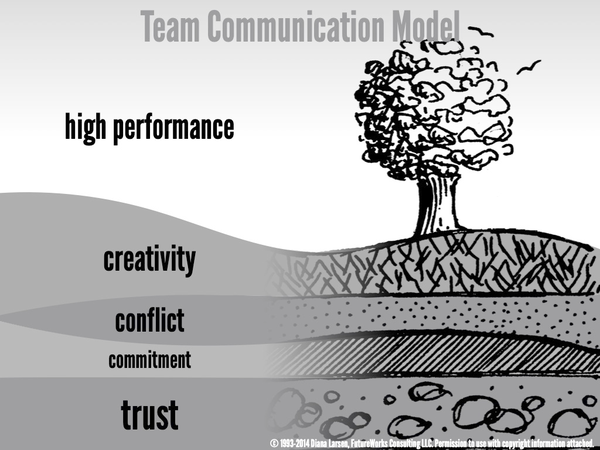
Figure 11-1. Larsen’s Team Communication Model
Start with a strong base of trust
As you form your team, concentrate on helping team members find trust in one another. It doesn’t need to be a deep trust; just enough to agree to work together and commit to the work. Alignment chartering and an emphasis on psychological safety both help.
Support your growing trust with three-fold commitment
From a foundation of trust, your team will begin exploring the three-fold nature of team commitment:
-
Commitment to the team’s purpose
-
Commitment to each other’s well-being
-
Commitment to the well-being of the team as a whole
Chartering purpose and alignment will help build commitment. As commitment solidifies, trust will continue to grow. People’s sense of psychological safety will grow along with it.
Once commitment and trust start improving psychological safety, it’s a good time to examine the power dynamics of the team. No matter how egalitarian your team may be, power dynamics always exist. They’re part of being human. Left unaddressed or hidden, power dynamics turn destructive. It’s best to keep them out in the open, so the team can attempt to level the field.
Power dynamics come from individual perceptions of each other’s influence, ability to make things happen, and preferential treatment. Bring them into the open by holding a discussion of the power dynamics that exist in the team, and how they affect collaboration. Discuss how the team’s collective and diverse powers can be used to help the whole team.
Right-size conflicts with feedback
The more team members recognize one another’s commitment, the more their approach to conflict adapts. Rather than “you against me,” they start approaching conflicts as “us against the problem.” Focus on developing team members’ ability to give and receive feedback, as described in “Learn how to give and receive feedback”. Approach feedback with the following goals:
-
The feedback we give and get is constructive and helpful.
-
Our feedback is caring and respectful.
-
Feedback is an integral part of our work.
-
No one is suprised by feedback; we wait for explicit agreement before giving feedback.
-
We offer feedback to encourage behavior as well as to discourage or change behavior.
Peer-to-peer feedback helps to deal with interpersonal conflicts while they’re small. Unaddressed, molehill resentments have the potential to grow into mountains of mistrust. The skills team members develop for feedback within the team will help them in larger conflicts with forces outside the team.
Spark creativity and innovation
What is team innovation, but the clash of ideas that sparks new potential? Retaining healthy working relationships while the sparks fly is a team skill. It rises from the ability to engage and redirect conflicts toward desired outcomes. It stimulates greater innovation and creativity. Team problem-solving capability soars.
Develop team creativity by offering learning challenges and playful approaches. Build it into the team’s routine. Use slack to explore new technologies, as described in “Dedicate time to exploration and experimentation”. Use retrospectives to experiment with new ideas. Make space for whimsy and inventive irrelevance. (Teach each other to juggle!)
Sustain high performance
When collaboration and communication skills join with task-focused skills, high performance becomes routine. The challenge lies in sustaining high performance. Avoid complacency. As a team, continue to refine your skills in building trust, committing to the work and one another, providing feedback, and sparking creativity. Look for opportunities to build resilience and further improve.
Toxic Behavior
Toxic behavior is any behavior that produces an unsafe environment, degrades team dynamics, or damages the team’s ability to achieve its purpose.
If a team member is exhibiting toxic behaviors, start by remembering the Retrospective Prime Directive: “Regardless of what we discover, we must understand and truly believe that everyone did the best job he or she could, given what was known at the time, his or her skills and abilities, the resources available, and the situation at hand.” [Kerth2001] (ch. 1) Assume the person is doing the best job they can.
Look for environmental pressures first. For example, a team member may have a new baby and not be getting enough sleep. Or a new team member may be solely responsible for a vital subsystem they don’t yet know well. Together, the team can make adjustments that help people improve their behavior. For example, agreeing to move the morning stand-up so the new parent can come in later, or sharing responsibility for the vital subsystem.
The next step is giving feedback to the person in question. Use the process described in “Learn how to give and receive feedback” to describe the impact of their behavior and request a change. Very often, that’s enough. They didn’t realize how their behavior affected the team and they do better.
Sometimes, teams can label colleagues as toxic when they aren’t actually doing anything wrong. This can easily happen to people who regularly take the Contrarian leadership role. They don’t go along with the rest of the team’s ideas, or they perceive a risk or obstacle that others miss and won’t let it go. Be careful not to misidentify Contrarians as toxic. Teams need Contrarians to avoid groupthink. However, it may be worth having a discussion about rotating the role.
If a person really is showing toxic behavior, they may ignore the team’s feedback, or refuse to adjust to the team’s psychological safety needs. If that happens, they are no longer a good match for the team. Sometimes, it’s just a personality clash, and they’ll do well on another team.
At this point, it’s time to bring in your manager, or whoever assigns team membership. Explain the situation. Good managers understand that every team member’s performance depends on every other team member. An effective leader will step in to help the team. For them to do so, the team members need to inform them of what they need, as well as the steps they’ve already taken to encourage changes in behavior.
Some managers may resist removing a person from the team, especially if they identify the team member as a “star performer.” They could suggest the team should accommodate the behavior instead. Unfortunately, this tends to damage the team’s performance as a whole. Ironically, it can make the “star performer” seem like even more of a star, as they push the people around them down.
In this situation, you can only decide for yourself whether the benefits from being part of the team are worth the toxic behavior you experience. If they’re not, your best option is to move to another team or organization.
Questions
Isn’t it important that a team have one leader—a “single, wringable neck”? How does that work with leaderful teams?
A “single, wringable neck” is a satisfying way to simplify a complex problem, but it’s not so satisfying for the person whose neck is being wrung. It’s also contrary to the Agile ideal of collective ownership (see “COLLECTIVE OWNERSHIP”). The team as a whole is responsible. There’s no scapegoat to take the fall when things go wrong, or reap the rewards when things go well, because success and failure are the result of a complex interaction between multiple participants and factors. Every team member’s contribution is vital.
This isn’t just abstract philosophy. Leaderful teams do better work, and develop into high-performing teams more quickly. Sharing leadership builds stronger teams.
What if I don’t have the skills to help improve our team dynamics?
If you’re not comfortable working on teamwork skills, that’s okay. You can still help. Watch for the folks who adopt the collaboration-oriented leadership roles. Make sure you support their efforts. If your team doesn’t have members willing to assume those roles, talk with your manager or sponsor about providing a coach or other team member skilled in team dynamics. (See “Coaching Skills”.)
Prerequisites
For these ideas to become reality, both your team and organization need to be on board. Team members need to be energized and motivated to do good work together. It won’t work if people are just interested in punching a clock and being told what to do. Similarly, your organization needs to invest in teamwork. This includes creating a whole team, a team room, and an Agile-friendly approach to management.
Indicators
When your team has healthy team dynamics:
-
Team members enjoy coming to work.
-
Team members say they can rely on their teammates to follow through on their commitments, or communicate when they can’t.
-
Team members trust that everyone on the team is committed to achieving the team’s purpose.
-
Team members know one another’s strengths and support one another’s limits.
-
Team members work well together and celebrate progress and successes.
Alternatives and Experiments
The material in this practice represents only a tiny portion of the valuable knowledge available about teams, team dynamics, managing conflicts, leadership, and many more topics that affect team effectiveness. The references throughout this practice and in the “Further Reading” section have a wealth of information. But even that only begins to scratch the surface. Ask a mentor for their favorites. Keep learning and experimenting. It’s a lifelong journey.
Further Reading
Keith Sawyer has spent his career exploring creativity, innovation, and improvisation, and their roots in effective collaborative effort. In Group Genius: The Creative Power of Collaboration [Sawyer2017], he offers insightful anecdotes and ideas.
Roger Nierenberg’s memoir and instruction guide for leaders, Maestro: A Surprising Story about Leading by Listening [Nierenberg2009], contributes “out of the box” ways of thinking about leadership. He also has a website with videos that demonstrate his techniques at http://www.musicparadigm.com/videos/.
The Wisdom of Teams: Creating the High-Performance Organization [Katzenback2015] is the classic, foundational book about high-performing teams, their characteristics, and the environments that help them flourish.
Shared Leadership: Reframing the Hows and Whys of Leadership [Pearce2002] is a compilation of the best ideas about leaderful teams and organizations. It can be a challenging read, but it’s well worth exploring to expand your ideas about who, and what, is a leader.
2 With the exception of “Diplomats,” these roles were developed by Diana Larsen and Esther Derby, based on [Benne1948].