7
Tobacco
In adults, we naturally think about the physiological consequences of tobacco use, chiefly cancer and emphysema, and then simply apply those fears to our adolescents. But what we keep learning is that the adult and adolescent brains are two different things and therefore the influence of behaviors such as smoking on the teenage brain is more complex and the consequences are particularly pernicious. One of the surprising things I’ve learned about sleep deprivation and teenagers is that it can lead to increased cigarette use. More surprisingly still, I learned that cigarette smoking can cause a variety of cognitive and behavioral problems, including attention deficit hyperactivity disorder and memory loss, and it has been associated with lower IQ in teenagers.
While smoking has actually decreased as a favored form of substance abuse in teens in the past decade, probably owing to the now ubiquitous health warnings, we can learn a lot from the ravages of smoking on prior teen generations.
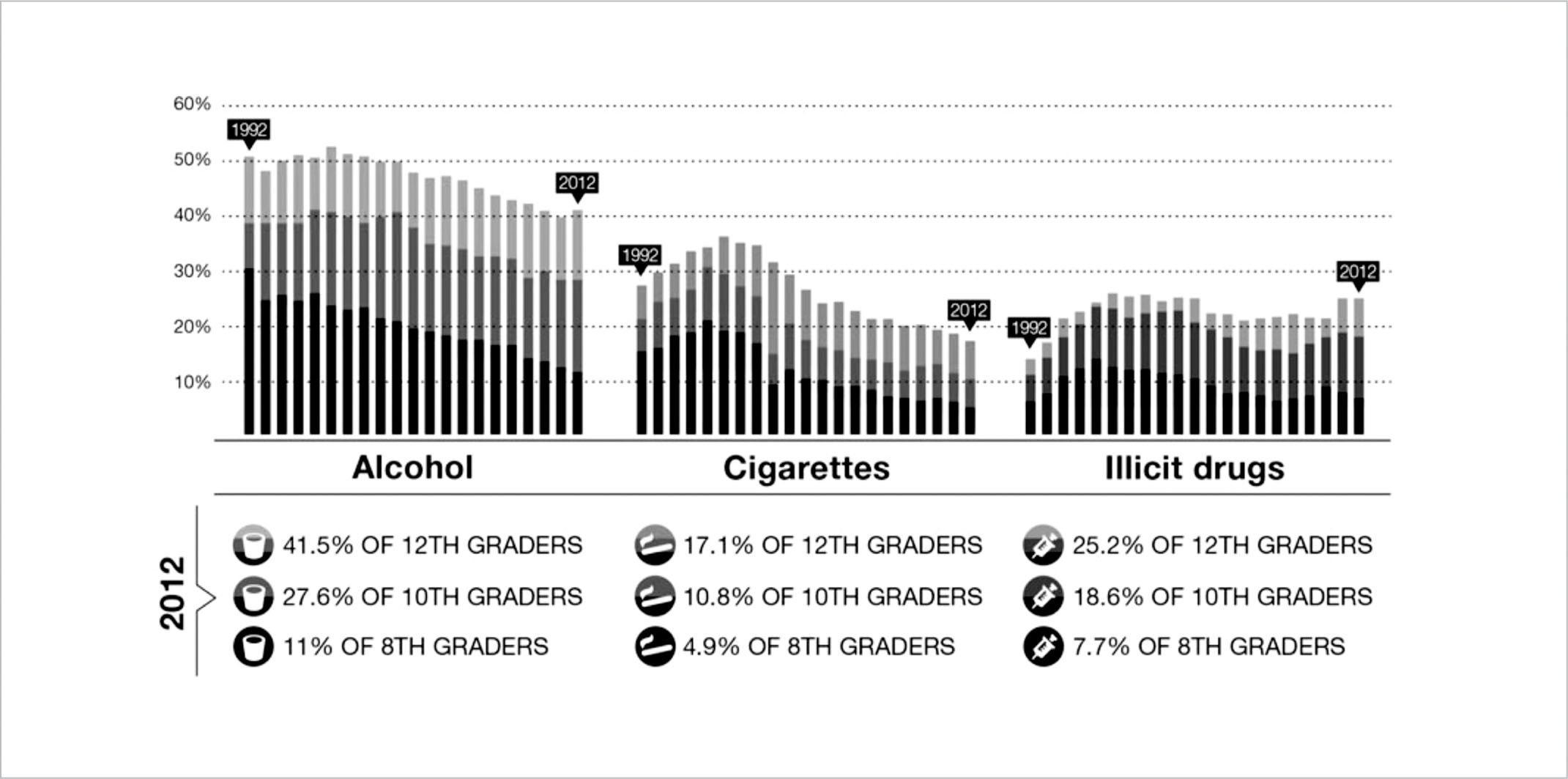
FIGURE 16. Rates of Alcohol, Cigarette, and Illicit Drug Use from the National Institutes of Health.
The fact is, teenagers get addicted to every substance faster than adults, and once addicted have much greater difficulty ridding themselves of the habit—and not just in their teen years but throughout the rest of their lives. It’s as if addiction hard-wires itself into the brain when adolescents are exposed to substances of abuse. Smoking is just one example, and sadly the health toll it’s taken on past generations is proof positive of the consequences. One important theme, which we will come back to in later chapters, is that because teenage brains are more plastic and primed for learning, they are, unfortunately, also more prone to addictions.
Figure 17 shows how similar the processes of learning and addiction are in the teen brain: they both arise from the adolescent brain’s repeated exposure to a stimulus, which is strengthened over time. In the case of learning, the result is a good memory, and in the case of addiction, it is an increased yearning for a substance of abuse.
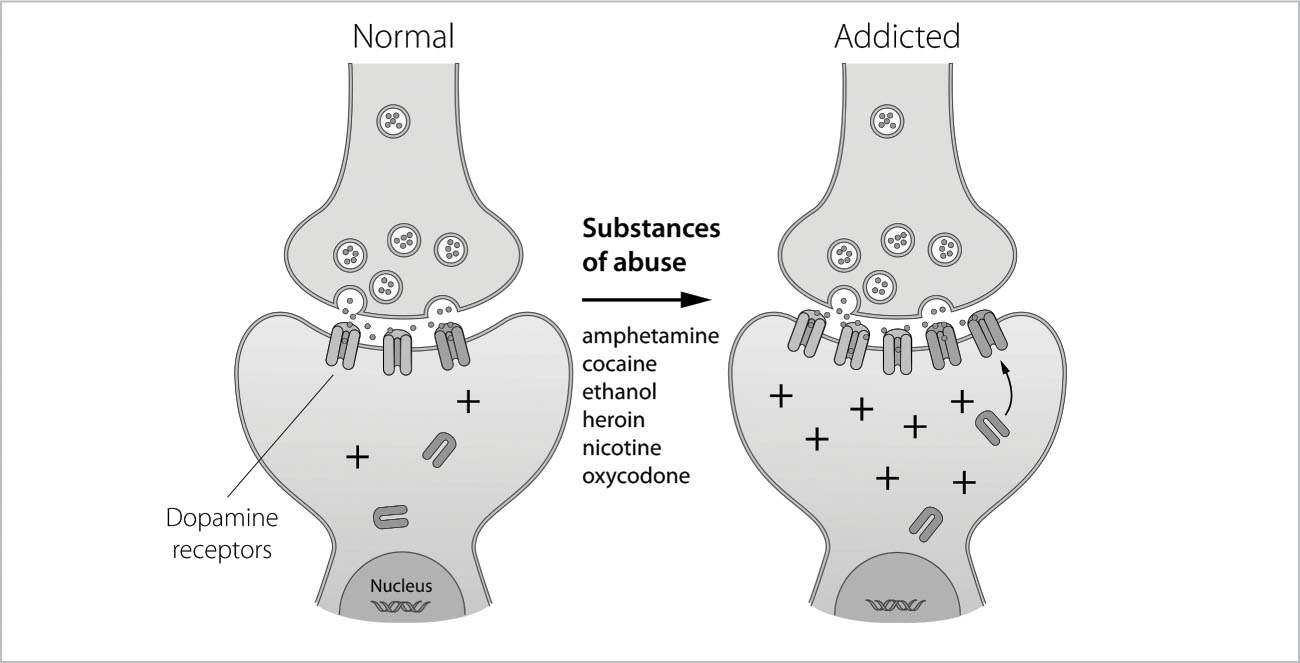
FIGURE 17. Shared Synaptic Biology of Learning and Addiction: As a stimulus, drugs have an effect on the synapses in the reward circuits of the VTA similar to that of the electric impulses in the LTP memory experiments. Both induce synaptic plasticity and reshape synapses by adding receptors; with drugs, this can lead to “craving.”
A single cigarette has more than four thousand elements and chemicals in it, and many of these chemicals, depending on the amount ingested, are toxic, including arsenic, cadmium, ammonia, and carbon monoxide. Although smoking among adolescents has declined over the past fifteen years from 27 percent to 19 percent, the rate of decline has slowed in recent years. Today, 90 percent of new smokers begin before the age of eighteen, according to a new report from the US Surgeon General’s office, and at least three-quarters of all adolescent smokers continue the habit into adulthood. More than 3 million high school students and more than 500,000 middle school students smoke cigarettes. It’s important to remember that smoking causes lung cancer, which remains a leading cause of preventable deaths in the United States.
In an Israeli study that looked at the smoking habits of 20,000 young men in the military, researchers found a connection between smoking and lower IQ. The IQ scores were lower for male adolescents who smoked compared with male adolescent nonsmokers. Those who smoked more than a pack of cigarettes a day had particularly low IQs of around 90. (An average intelligence IQ score ranges from 84 to 116.) The IQs of those who began smoking between the ages of eighteen and twenty-one were also lower than those of nonsmokers of the same age. It might be these people are among the third of individuals whose IQs have dropped during their teen years! Interestingly, there is research that suggests that children who are routinely exposed to secondhand smoke from cigarettes and cigars may suffer not only medical problems such as asthma, colic, and middle ear disease but also damage to their nervous systems, affecting the development of their intellect and reasoning abilities. More than a third of all children in the United States are routinely exposed to secondhand smoke in their homes.
The study, by the Cincinnati Children’s Environmental Health Center, used a biological marker called cotinine, a breakdown product of nicotine. In a sample of 4,399 children, ages six to sixteen, those with the highest levels of cotinine had the worst scores on tests of reading, math, and visuospatial skills, corresponding to a decrease of two to five IQ points over the control group of children with no exposure and no cotinine. Decreases in IQ were measured even at low levels of exposure to secondhand smoke.
The problem of smoking tobacco products, especially to a teenager who has never smoked before, is that it’s exciting. It can offer relief from stress, which, as we will see later in this book, occurs at high levels during adolescence, and it is something communal to do with friends. To a teenager, the harmful consequences also appear to lie far down the road and therefore out of sight. Remember that recent studies have shown that the frontal lobes, which control risk-taking, are less “connected” in teens than adults. One consistent finding in human brain imaging studies is that the more teens smoke, the less activity there is in their prefrontal cortex. Poor development or damaged development of the prefrontal cortex has been found to be a cause of poor decision-making in teens.
In controlled studies, teen smokers repeatedly show difficulty in making rational decisions about their own well-being, including the decision to stop smoking. Not only do teens have less ability to utilize their frontal lobes while young, but certain experiences and substances actually interfere with normal development and consequently leave them with issues for the rest of their lives. Peer pressure is certainly a factor since the problem of teenage tobacco use is complicated by the fact that it’s an activity that usually takes place among groups of adolescents, especially when they’re socializing.
Brain plasticity during adolescence seems to make the situation of tobacco use and addiction in adolescents that much more problematic. Some studies suggest that after just a few cigarettes, the adolescent brain begins to remodel itself and create new nicotine receptors, making quitting that much harder. In fact, researchers at the University of Massachusetts Memorial Medical Center found that just a cigarette a month for an adolescent can lead to an addiction. Dr. Joseph DiFranza, a coauthor of the study, tracked nicotine addiction among a group of more than twelve hundred middle school children for four years. DiFranza found a clear pattern of progressive symptoms among sixth graders that was related to the frequency with which the students said they smoked. After two years of the study, a third of the youths who had puffed a cigarette, even if it was only once a month, said they had little control over the habit. Three or more years into the study, a quarter of all the students who tried to stop smoking experienced withdrawal symptoms, including trouble concentrating, irritability, and sleep problems. “What happens is, when you first get addicted, one cigarette a month or one cigarette a week is enough to keep your addiction satisfied,” DiFranza told National Public Radio. “But as time goes by, you have to smoke cigarettes more and more frequently. So people may be addicted for more than a year before they feel the need to smoke a cigarette every day.”
Animal studies corroborate this enhanced response of the adolescent brain to nicotine. When rats were given a first exposure to nicotine and their brains were examined for activation, the adolescent rats showed many areas lighting up (no pun intended) while the adult rats had little to no response.
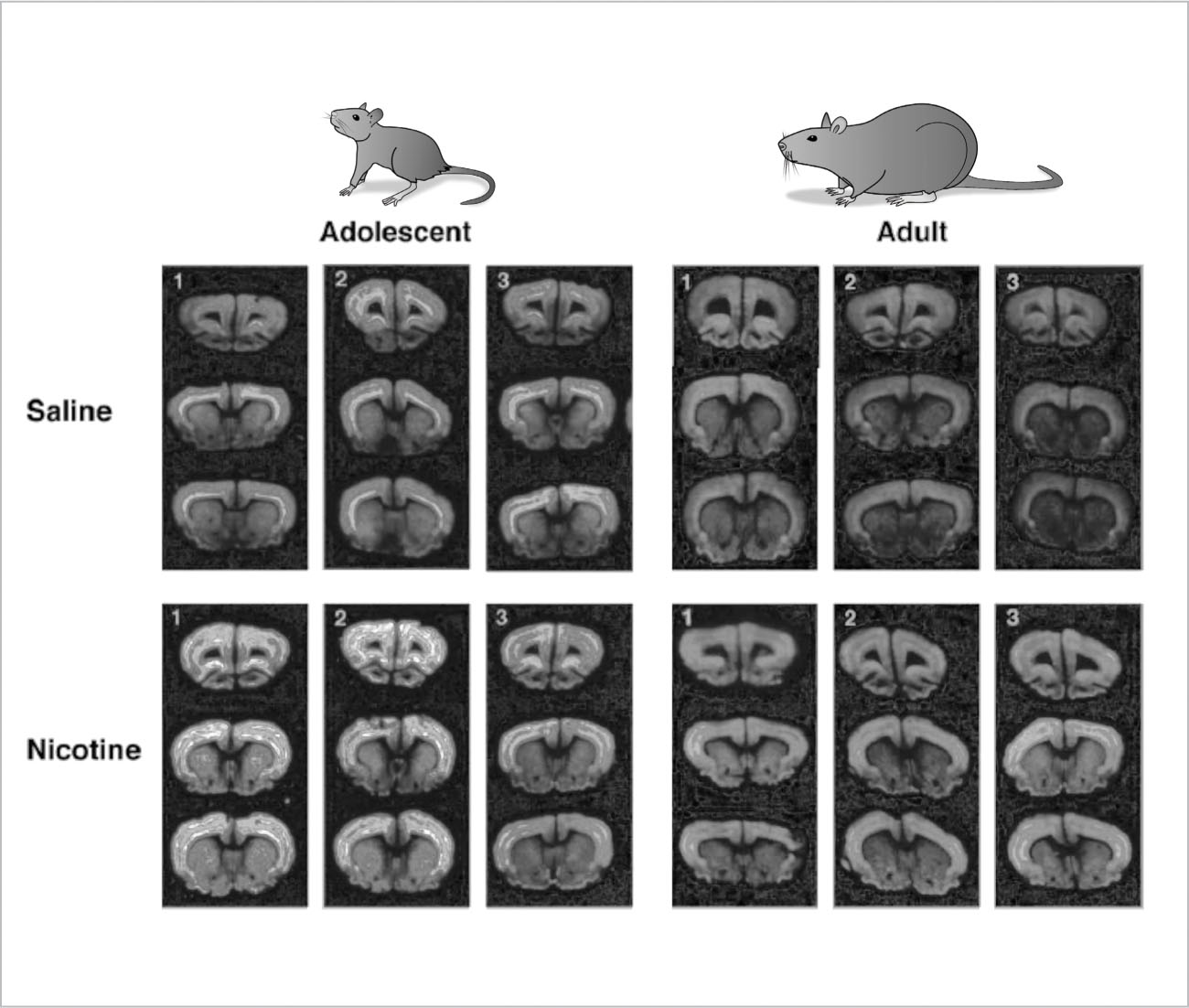
FIGURE 18. The Adolescent Brain Responds to Nicotine More Robustly Than the Adult Brain: Researchers looked at brain activation after exposure to nicotine in both adolescent and adult rats. Compared with the response to the placebo stimulus, saline, the adolescent brains “lit up” in response to nicotine, while the adults’ response was minimal.
Human studies have consistently shown that nicotine dependency is also high among people with mood disorders. The most recent research, in fact, indicates that cigarette smoking and dependency might actually precipitate these mood disorders, especially depression. Florida State University scientists conducted rat studies that demonstrated that a first exposure to nicotine during adolescence (and specifically not during adulthood) was highly associated with depression-like behavior, a decreased response to rewards, and an enhanced response to stress-inducing situations later in life. Astonishingly, the Florida State researchers found that even a single day of smoking cigarettes in adolescence can be enough to trigger a depression-like state later in adulthood.
Why might this be? One clue is that early exposure to chemicals that can act on the brain while it is growing can cause changes in the development of neurotransmitters and their synapses. A group of researchers at Duke showed that in rats, nicotine exposure during adolescence damaged the pathways producing serotonin in the brain. As a result, there was less serotonin, and as serotonin deficiency is one of the leading mechanisms of depression, that may explain why depression is more frequent in people who have been heavy smokers as teens.
Those who begin smoking in adolescence are also three times more likely to begin using alcohol, and long-term ingestion of nicotine has been shown to increase tolerance to alcohol, meaning it takes more alcohol to produce the same effect. Not surprisingly, smokers are ten times more likely than nonsmokers to develop alcoholism. For those teens who set off down this path, the effects of drinking are far more pronounced and the compulsion to do it again far greater than for adults who have recently decided to take this trip. Unfortunately, that compulsion, when coupled with an immature teenage cortex, frequently leads to catastrophic consequences.
So how do we steer our teenage sons and daughters away from this path? It’s important, first of all, to acknowledge the attraction for adolescents. You probably did it, too, and hopefully you didn’t follow through and continue after the “experiment.” Teenage smoking, since the 1950s, has been an expression of rebellion against parental control and a way of bonding with a particular group of friends. It’s also simply something new and different and, for that reason more than any other, tempting. Before you suspect your teenagers have started smoking, talk to them about it. Ask them, calmly, if any of their friends smoke. Affirm their own good sense not to smoke by pointing out the effects of tobacco on their growing brains. Tell them how each cigarette is hooking their brains into wanting another one and another one. Above all else, treat them with respect, acknowledging that they can learn facts. Engaging in conversation about smoking and other topics not only increases communication between you and your teenagers but also underscores their nascent sense of adult responsibility. This is also a chance to talk to them about how generations of teenagers have been manipulated by tobacco companies that portrayed smoking as glamorous in magazine ads, commercials, and movies. More pragmatically, you can help them count the weekly or monthly cost of cigarette smoking. You can even suggest ways around the peer pressure your son or daughter might feel when offered a cigarette, and appealing to teenage vanity is not out of bounds either. Remind adolescents that tobacco stains their teeth; makes their hair, clothes, and breath smell; and will probably leave them with a chronic cough and winded when trying to do sports. Remind them, too, of a relative or friend or a well-known celebrity who suffered severe health consequences directly related to smoking.
It’s difficult for teenagers to look into the future because their brains are not yet wired to consider distant consequences, but that shouldn’t stop you from bringing up those consequences and drilling them into your teens. They may dismiss you, they may put their hands over their ears or turn and walk away, but I promise you, it will register. Remember, they don’t miss a thing at this age.
If all else fails and your teenager has already picked up the habit, then ask him or her to at least consider smokeless tobacco, electronic cigarettes, or clove cigarettes. They aren’t harmless, of course, but they’re better than the alternative. More important than anything else, of course, is being a good role model for your teenager. You can’t preach abstinence if you’re still smoking.