RECOMMENDATION #3:
Keep only shared projects on shared platforms
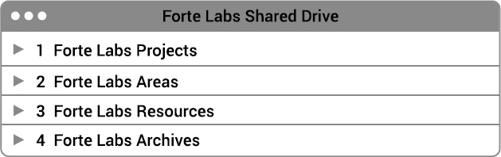
As you begin creating a shared PARA across your team or company, look out for a common mistake: moving every single digital asset into a single shared PARA system all at once.
The thinking goes: If this content is so valuable, then shouldn’t everyone have access to it?
The answer is no—you absolutely do not want everyone to have access to everything all the time. To understand why, you have to understand that it takes a tremendous amount of cognitive effort to effectively communicate a piece of knowledge.
I once had some personal notes on a book I read about modern project management techniques. They were free-form and messy, since I was the only person who needed to understand them. I wanted to share those insights with my team, but quickly realized that I couldn’t simply email them my informal notes. In order for that content to be understandable and relevant, I would need to add a lot more context and structure to them: defining key terms, adding headings and sections, including a table of contents, providing more background context, and carefully explaining my thinking.
These kinds of tasks aren’t free—they are cognitively expensive. They demand a lot of time and effort, which is time and effort not spent moving your top priorities forward. There is always a trade-off.
For that reason, I recommend advising your team to keep all their personal notes, files, and documents in their personal PARA system by default. Only when a project, area, or resource becomes collaborative, with multiple people involved, should it be moved to the shared folders in a company-wide PARA system.
This will ensure that everyone has access only to the information they need to do their jobs, and no more.